UEA in 2025: Our year in stories
)
As 2025 draws to a close, we’re taking time to reflect on a year packed with big wins, bold ideas and a few surprises along the way.
From Norwich being named a “perfect British university town” (we’ll forgive the town bit, we know we’re a city!) to the playful charm of our Little Norwich collaboration, this year has been packed with milestones and memorable moments.
We cheered on big wins at Derby Day, uncovered ground-breaking research (including a wild big cat love story), and celebrated one graduate’s rise to TikTok stardom.
This year wasn’t just about accolades though – we also welcomed back one of our most famous graduates, Greg James, to campus. But more on that later...
Check out 20 stories that made 2025 a year to remember:
1. A year full of promising milestones
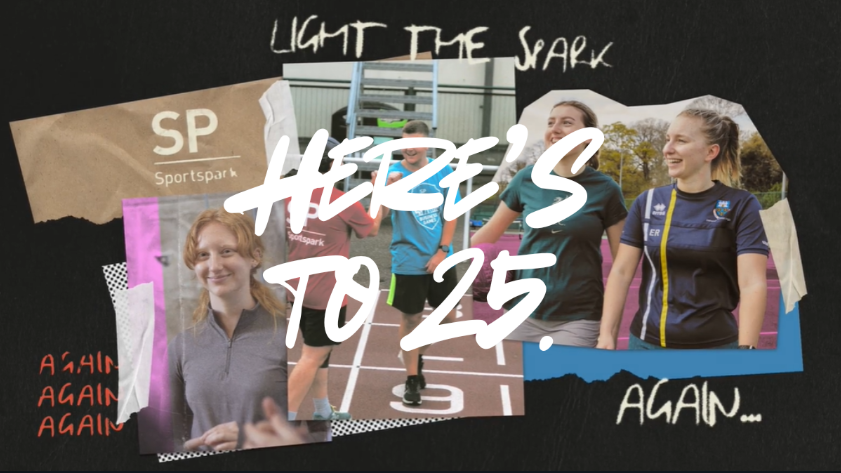
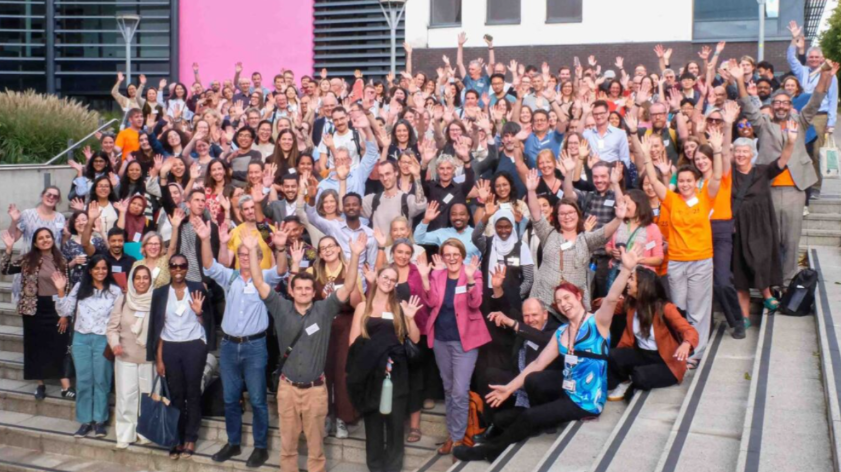
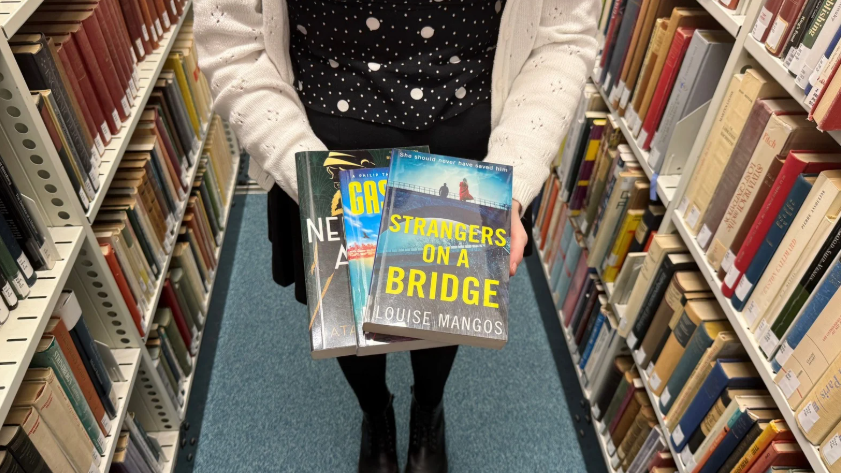
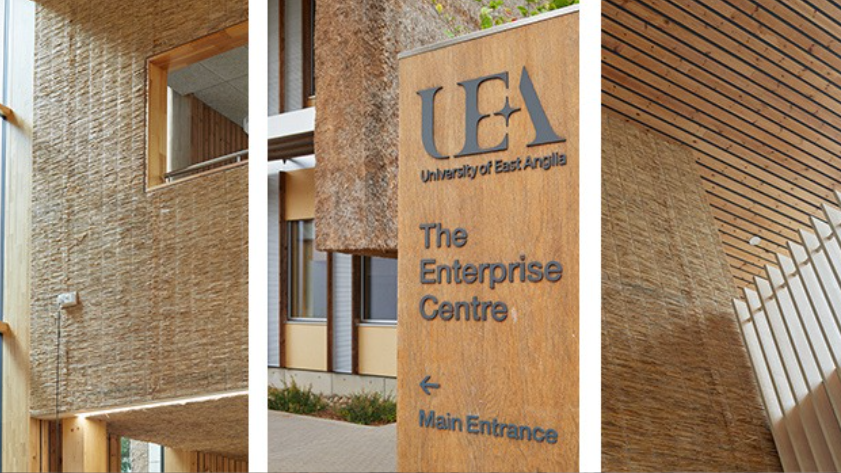
2025 has been a year defined by bold ideas, creative breakthroughs, and collaborative achievements that continue to shape our future.
We celebrated a quarter of a century for both our Sportspark and Tyndall Centre for Climate Change Research – highlighting 25 years dedicated to sporting excellence, community and groundbreaking research.
This year also marks a thriller of a decade for shaping literary talent through our MA Creative Writing Crime Fiction degree, the first creative writing course of its kind in the UK, proving that crime pays (creatively, of course).
It’s also been just over a year since we launched Dare to Do Different – our bold £100m campaign to change lives and shape a better future. Thanks to the support of our alumni and supporters, we’ve already made remarkable progress.
And who could forget the tenth anniversary of The Enterprise Centre? Known by some as the “hairy building” for its external thatch panels, this award-winning space reflects our commitment to environmental sustainability.
2. UEA Tennis Club serves up kindness
)
)
)
We kicked off the year with a win for our four-legged friends at Snetterton Dogs Trust, after UEA Tennis Club donated a stash of used tennis balls to the rehoming centre.
Supporting this worthy cause was a decision made by the club as part of their drive to be more sustainable and give back to the local community.
The club’s Publicity Officer and Co-Social Secretary, Ruby Pummell (pictured right) said: “We thought that by donating the balls to Dogs Trust, not only would the balls be repurposed and gain a new lease of life, but we could also help Dogs Trust to save money on resources and give the dogs something new to play with.”
Seems like everyone was a winner in this match.
:focus(2128x950:2129x951))
3. Experts that can outsmart optical illusions
)
Can you tell which of these orange circles looks smaller?
Radiologists could – they correctly identified the circle on the left as smaller than the one on the right.
New research shows that medical imaging experts, the people who interpret MRIs and X-rays, are better at judging size in optical illusions. In other words, they literally see better in everyday life.
Senior researcher Dr Martin Doherty (School of Psychology) says: “Optical illusions are designed to fool the brain. They can be a bit of fun, but they also help shed light on how our brains work.”
What's more, this study revealed that these visual skills can be developed through training, something previously thought to be near-impossible. So, who’s up for a round of brain training?
4. The search for a mystery snapper
)
A 1960s mystery resurfaced after nearly six decades, thanks to an unexpected discovery by photographer Attila Prester.
While in London, Attila purchased 13 rolls of unused film, only to uncover a hidden archive of campus from the 1960s. Two of the rolls had already been used, one revealing a glimpse of the Ziggurats (above right), offering a rare view of campus in its early years.
Another striking image from a black-and-white roll shows a person holding a bird, a moment Attila describes as “frozen in time, full of youth”. It’s thought to be the photographer, or perhaps a friend or family member.
The discovery has sparked intrigue and detective work across social media, even attracting attention from the BBC.
The hunt for the mystery snapper continues – here's hoping 2026 holds the answer.
)
5. Eleven’s heaven for our Derby Day heroes
)
)
)
History was made again at this year’s Derby Day, as we claimed our 11th consecutive win against the University of Essex.
The atmosphere was electric, with chants, cheers and unforgettable moments as our athletes delivered a stunning performance.
With a score of 44-17 by the final event, UEA's victory reflected a day of determination and teamwork, with sporting camaraderie shown across the board.
A huge well done to everyone who took part – athletes, supporters, organisers and the uea+sport team – all representing the very best of ambition, collaboration, empowerment and respect in action, on and off the field.
A special shoutout goes to our Social Media Assistant for the hand-drawn starter pack, which captured UEA’s spirit perfectly ahead of the big day.
)
)
6. Strengthening the future of regional foster care
)
Back in April, we announced the launch of our Therapeutic Fostering programme, the UK’s first course of its type at Higher Education level.
Therapeutic fostering is a type of foster care which recognises and supports young people and children who may have dealt with trauma, abuse or a severe disruption to their lives.
Developed by our School of Social Work in collaboration with Foster East, the course offers a Level 4 qualification for local authority foster carers across the East of England, aiming to strengthen support in the region.
Dr Mark Gregory (School of Social Work) says: “This course has been designed to help foster carers understand trauma-related behaviour through a therapeutic lens, to ensure they have the tools needed to build and maintain supportive relationships with children and young people in their care.”
With more than 7,000 children in care in the region, and 150 more entering care each month, the need for specialist training has never been greater.
7. Uncovering the truth behind Harvard’s Magna Carta
)
Could this be the best $30 ever spent?
Prof Nicholas Vincent (School of History and Art History) made headlines when Harvard Law’s copy of Magna Carta was revealed as an original.
The believed-to-be-copy was bought in 1946 for a sum of $27.50 – but it wasn’t until Prof Vincent teamed up with Prof David Carpenter (King’s College London), to investigate the document using ultraviolet light and spectral imaging, that it was discovered to be an original.
Prof Vincent said: “The Magna Carta is a totem of liberty, central to our sense of who we are: a freedom-loving, free-born people.
“It is an icon both of the Western political tradition and of constitutional law. If you asked anybody what the most famous single document in the history of the world is, they would probably name Magna Carta.”
The discovery has since gained worldwide coverage, being reported on more than 2,000 times, from outlets such as the BBC, The Guardian, and ABC News.
This moment was proof that history still holds surprises, and that our researchers are at the forefront of uncovering them.
8. Celebrating half a century on two wheels
:focus(385x311:386x312))
:focus(3134x1936:3135x1937))
Graduates and current members of our UEA Bike Club reunited in June to mark 50 years of throttles, friendships and shared journeys.
It was a four-day motorcycle celebration in Norfolk, blending nostalgia with the roar of engines, as they hosted camping, ride-outs and even a special return to their old stomping ground on campus.
Originally part of the University Car Club, the Bike Club gained independence in 1975 and quickly gained popularity with motorcycle enthusiasts across the University and beyond.
Myles Newby (BIO78), who studied Biological Sciences from 1978-1981, was one of the primary organisers of the 50th anniversary event. Still local to Norwich, he said:
“Those were formative years for many of us. We’ve been holding annual reunions for the past 25 years, and what was noticeable from the very first gathering was that none of us had changed fundamentally.
“We'd lived different lives, and had different experiences, but the friendships just picked up where they left off. It’s a combination of good people and a shared passion for motorcycling, which has not diminished.”
9. Showcasing world-leading research at Westminster
)
In the UK, an estimated one in eight men will be diagnosed with prostate cancer in their lifetime.
It’s the most common cancer in men and catching it early can save lives, something our researchers have dedicated more than a decade to.
Prof Colin Cooper (Norwich Medical School) and his team took their impactful research – focused on developing smarter, faster tests that can spot prostate cancer earlier and more accurately – to the House of Commons in June.
At this parliamentary reception, two new tests were showcased – the Prostate Urine Risk (PUR) Test and the Tiger Test – which could transform diagnosis and treatment for thousands of lives across the UK.
The event, hosted by Norwich North MP Alice Macdonald and sponsored by the Alan Boswell Group, brought together MPs, peers, senior NHS officials, charities, and research partners to learn about the lifesaving potential of this vital research.
)
)
10. Celebrating improvements in the UK's biggest student survey
)
We took a moment to celebrate in July, when the results of the 2025 National Student Survey (NSS) revealed improvements across the board – showing an increase in positivity score across all seven themes, and on 24 of the 27 individual questions asked.
The NSS is the UK’s biggest student survey, giving-final year undergraduates the opportunity to provide feedback on their time at university, with questions about various aspects of their education and experiences.
Notably, organisation and management (previously a weaker area) saw significant improvements, including a seven-point increase for course organisation. Student voice performed similarly well, with a four-point increase for how much students felt their course feedback was valued.
These results reflect the hard work going on across UEA to improve the student experience wherever possible, and that this work is paying off.
11. From farewells to fresh starts
)
)
)
This summer, we said goodbye to more than 5,300 students as they returned to campus to celebrate Graduation 2025 with their loved ones – each with their own inspiring story.
Among them was Monica Curran, who earned her PhD in discourse analysis at the age of 80, while also appearing in a BAFTA-winning documentary about the Manchester Corinthians women’s football team, of which she is a former player.
Award-winning historian and novelist Katherine Howe graduated that same week with a PhD by Publication, having been drawn to UEA for its strong reputation in American Studies: “I have loved exploring Norwich. I particularly enjoy how walkable it is, and poking around old inns and taverns along the riverbank.”
After saying our goodbyes to familiar faces, there wasn’t long to wait until we were welcoming new ones onto campus...
At Welcome Week, we inducted our newcomers into UEA life with an alphabet of events to get stuck into, from cuddling therapy dogs to Zumba in the LCR. It was a fantastic week full of sun, fun and firepits by the lake – the perfect way to kick off the new academic year.
12. The return of Greg James
)
)
This year, our very own Greg James (DRA04) returned to campus, in more ways than one.
Looking back to the height of summer, the UEA graduate and BBC Radio 1 presenter reclaimed his former stomping ground in the station’s Giant Face Off competition, a nationwide challenge between Greg and drivetime presenter Jamie Laing.
When presented with an opportunity to regain lost territories, after the first listener to find two hidden flags on campus chose Team Jamie, Greg didn’t hesitate to choose UEA: “I’m capturing back my old university. That’s the one that hurt the most.”
To mark the moment, Greg’s flag was proudly hoisted on campus, officially marking UEA and Norfolk as Team Greg!
But that’s not all – later in the year, Greg himself paid a visit to our students’ Livewire1350 station, where he once launched his own radio career. Sitting down to chat with the current Livewire team, it was an inspiring, full-circle moment that finished with a handwritten note from Greg on the Livewire alumni board:
“This station changed my life and I’ll love it forever.”
Whether his flag is flying on campus or not, UEA will always be Team Greg.
13. Jaguar love in the wild
)
A rare sighting was captured when our researchers documented a black-coated jaguar mating with a spotted jaguar – something never before seen in the wild.
Jaguars are naturally elusive and this footage, recorded in Serra do Pardo National Park along the Xingú River, gives a unique insight into jaguar conservation.
Prof Carlos Peres (School of Environmental Sciences) highlights the beauty and urgency of protecting these magnificent creatures:
“We hit the proverbial jackpot and captured the first ever video trap footage of a black jaguar mating with a spotted male in the wild. The video reveals courtship and copulation, and if they’d moved a few metres, we would have missed everything.”
The video proved a hit on social media, receiving more than 35,000 views on YouTube and high engagement across our other channels.
14. Sainsbury Centre receives national grant to give art its best life
)
Our Sainsbury Centre art museum received a major national government grant this year from the Department for Culture, Media & Sport through Arts Council England, which will ensure all art in its care is given its best life.
The funding will enable essential upgrades to the environmental control system in its public gallery spaces and refurbish the goods lift to safely move artworks, maintaining the Centre’s ability to host world-class exhibitions and protect its collections.
This investment is part of a national £20m scheme to improve access to arts and preserve cultural assets, ensuring the Sainsbury Centre can continue its mission to make art accessible for all, while supporting vibrant learning programmes and partnerships.
15. Graduate reunions galore at this year’s Global Gatherings
)
)
)
Our graduates came together from all over the world for Global Gatherings, reconnecting in cities from Norwich and London to Singapore, to celebrate their shared UEA identity and lifelong friendships.
These alumni-led events are held in September and October each year, centred around UEA’s birthday on 29 September, and focus on creating space to reminisce and network with other graduates across the globe.
From Ghana to Taiwan and Moscow, there were a variety of first meetings and decade-long reunions all over the world – and LinkedIn was lit up with snapshots and reflections to mark them all.
We look forward to supporting many more Global Gatherings next year.
)
)
16. The transplant journey that shaped one student’s future
)
)
)
For one of our medical students, Alex Gibbs, a personal transplant journey didn’t just change his health – it became a powerful motivation to pursue a career in renal medicine.
Diagnosed with a rare kidney disease at age four, Alex underwent his second transplant earlier this year, after five years of needing dialysis to survive. Now back on campus for his second year of medical studies, he’s found himself with a deepened interest for renal and transplant medicine:
“I have spent so much time among kidney patients, and I can relate to a lot of what these patients go through from my own history. Patients often say their doctors don’t understand what they’re going through. I want to be an exception to that complaint in my career.”
Within five months post-op, Alex was also elected President of UEA’s Badminton Club, won second place in badminton at the British Transplant Games, and has been a consistent champion for organ donation.
From his progression with recovery to restarting his second year of university, Alex is undoubtedly thriving – both academically and personally.
17. Revolutionary blood test offers hope for ME/CFS
)
Prof Dmitry Pshezhetskiy (Norwich Medical School), alongside scientists at Oxford Biodynamics, unveiled a revolutionary blood test for Myalgic Encephalomyelitis (ME/CFS), offering hope to thousands of affected people nationwide.
ME/CFS, also known as Chronic Fatigue Syndrome, is a condition that affects more than 400,000 people in the UK. This new test is the first of its kind to diagnose the condition with 96% accuracy.
The discovery made headlines with more than 300 news stories, including coverage in The Guardian, The Times and The Telegraph.
The future of this research looks brighter still, as it is hoped the blood test could pave the way for a similar discovery to diagnose long Covid, proving once again that UEA research is leading the way for innovative healthcare solutions.
18. Celebrating partnerships without borders
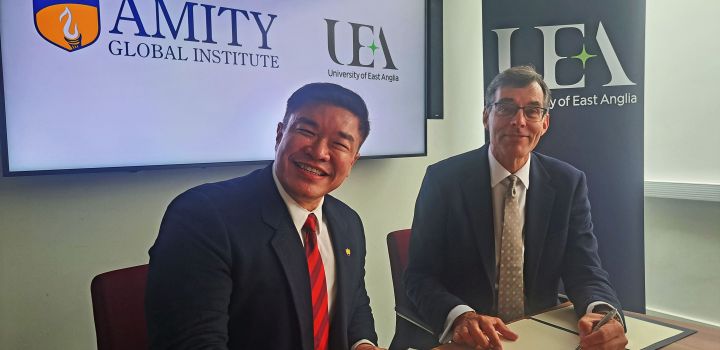
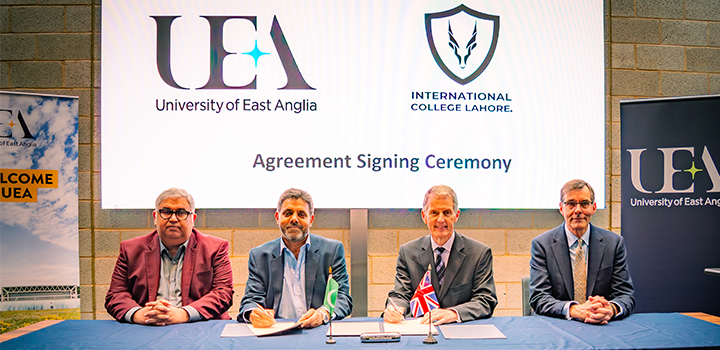
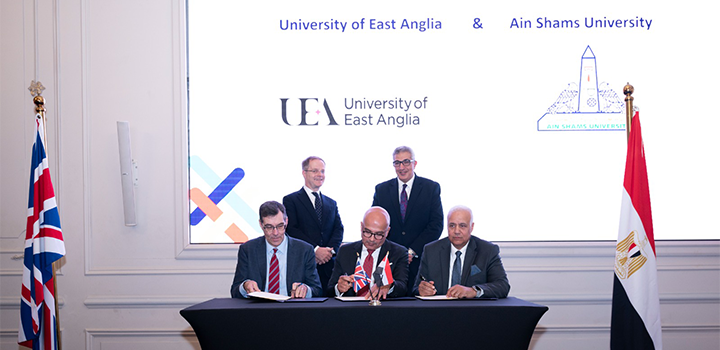
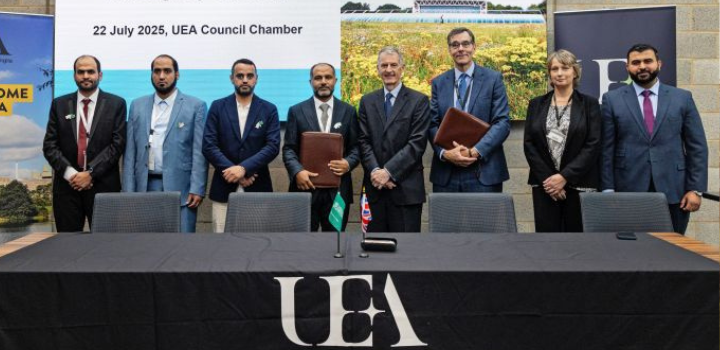
We strengthened ties with academic institutions worldwide, forging new collaborations and partnerships around the world.
Our new partnerships with Amity Global Institute in Singapore and International College Lahore in Pakistan will see UEA degrees delivered in these countries, enabling students to pursue internationally recognised degrees – including Computing Science, Law and Global Communication – without heading abroad.
New collaborations with Ain Shams University and Majmaah University will also focus on joint research and academic exchange, creating opportunities far beyond Norwich.
19. The ‘Like’ button comes home to Norwich
)
Did you know that the internet’s iconic ‘Like’ button traces back to a UEA graduate’s imagination?
Bob Goodson (EAS99), one of our 2002 graduates, returned all the way from Silicon Valley to Norwich to host this year’s annual Lasdun Lecture. His talk explored his journey from UEA to the heart of tech innovation, the rise of digital culture, and his role in shaping the early concept of the ‘Like’ button.
Bob – who is now an entrepreneur, UX designer, and the President and founder of Silicon Valley-based company, Quid – also explored his UEA roots back in April, from UEA Yoga to Yelp.
It was an inspiring homecoming all around, and a rare opportunity for attendees to hear from a thought leader whose ideas have transformed how billions of people connect online.
20. Good Old Gab’s TikTok triumph
And what better way to wrap up the year than with some brilliant recognition for a talented individual?
Norwich creator Gab Astorga (BIO18) recently won Books & Learning Creator of the Year at the UK & Ireland TikTok Awards, bringing local talent to the national stage.
Gab’s no stranger to UEA – a recent graduate, he has worked with our Social Media team during his time here, creating content for Clearing, Norwich Pride and much more.
Originally living locally and applying through Clearing, Gab went on to study BSc Biomedicine, start his own TikTok channel (@goodoldgab), and now, after completing his PhD, has garnered more than 432k followers and 23 million likes for his nature-inspired content.
This incredible achievement is a testament to Gab’s creativity and determination, highlighting the innovation and talent of our graduates.
:focus(206x137:207x138))