Clearing is open
Register for updates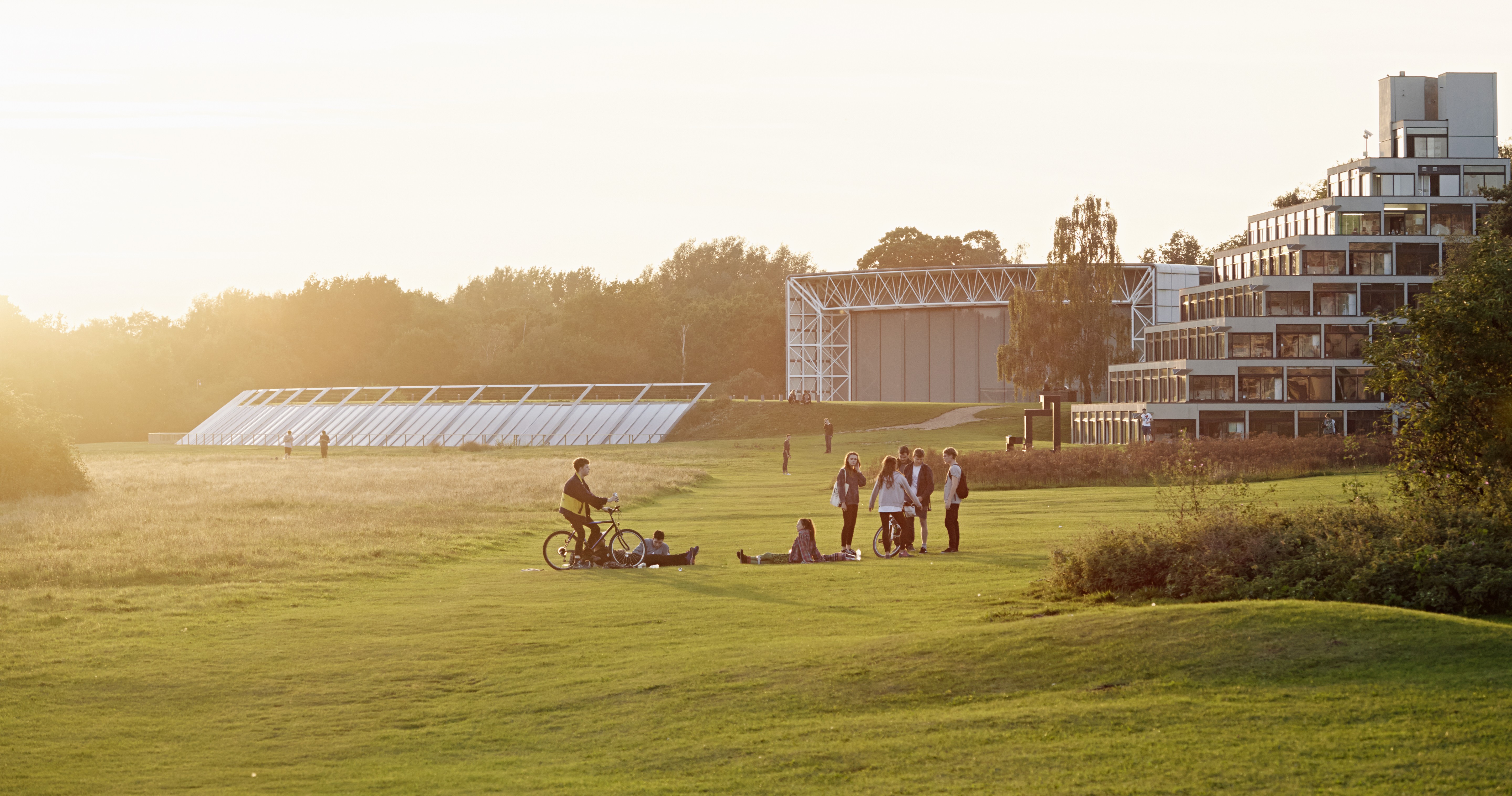

BA (Hons) Media Studies
Key details
- Award
- Degree of Bachelor of Arts
- UCAS Course Code
- P300
- Typical Offer
- ABB
- Contextual Offer
- BBC
- Course Length
- 3 years
- Course Start Date
- September 2026
)
Explore our Campus
Visiting UEA is the best way to find out if you could imagine yourself studying and living on our beautiful campus. Explore our virtual and in person events now.
89%
Of graduates go on to work and/or study within 15 months after the course
Graduate Outcome Survey 2020Course Overview
Media shapes our lives, today more than ever before. As the world becomes increasingly connected and fast-paced, studying Media Studies has never been more relevant and important. At UEA, we’ve created an exciting course designed to equip you with the critical and creative skills needed to thrive in today’s digital workplace.
Our friendly and supportive academic team combines world-leading researchers and experienced media professionals. Their cutting-edge insights in media analysis and creative industry practice offer you a powerful blend of expert knowledge and practical skills. You'll engage with essential concepts, theories and debates in media studies as well as hone your media production skills. This could be in film or TV production, podcasting, radio, or other digital media forms.
Our dedicated resource for digital creativity, known as BLOC, provides access to state-of-the-art media technologies, including UEA’s Television Studio and Media Suite, enabling you to develop skills in using a variety of media tools. You'll also have the chance to gain real-world experience as our internship scheme provides an opportunity to work and network with industry professionals. Norwich is a vibrant regional media hub and previous UEA students have interned at a range of companies, both local (e.g., Eastern Daily Press, Forward) and international (Warner Bros).
Across the degree, you'll develop many transferable skills equipping you for a wide range of careers in the creatives industries and beyond. These include skills in communication and creative thinking, research and analysis, media production, as well as team-working and leadership.
Previous graduates have gone on to work across the media and cultural sectors and the course is especially relevant to careers in digital and social media, film and television, video games, journalism, publishing, advertising, marketing, press and public relations.
)
Careers
Career Pathways
Examples of careers you could enter include:
- Social media
- Publicity officers
- Radio
- Television production
- Journalism
- Publishing (books, magazines, newspapers)
Discover more on our Careers webpages.
After the Course
You’ll graduate with the skills required to find work in the creative industries, both in the UK and elsewhere in the world. You could enter broadcasting, social media, public relations or a content agency. Alternatively, you could continue your academic passion with postgraduate study at UEA.
Study and Modules
Structure
In the first year, you’ll be introduced to major debates and theories in media studies, providing you with the foundational knowledge needed to progress with confidence into the more specialist modules of years two and three. Modules in this first year will introduce you to some of the core characteristics of the media industries. You’ll consider the material, social and institutional contexts in which media forms are produced and explore the technologies and platforms driving digital media. As well as exploring audio-visual and audio formats ranging from television to podcasts, you’ll learn how to analyse and think about media representations. Alongside your journey through these subject areas, you’ll develop key skills needed to analyse a range of media forms and be encouraged to develop and apply your creative and critical voice as both a researcher and writer.
Compulsory Modules
Whilst the University will make every effort to offer the modules listed, changes may sometimes be made arising from the annual monitoring, review and update of modules. Where this activity leads to significant (but not minor) changes to programmes and their constituent modules, the University will endeavour to consult with students and others. It is also possible that the University may not be able to offer a module for reasons outside of its control, such as the illness of a member of staff. In some cases optional modules can have limited places available and so you may be asked to make additional module choices in the event you do not gain a place on your first choice. Where this is the case, the University will inform students.
Teaching and Learning
In your first year, you’ll acquire skills vital to independent learning and develop the analytical skills which you’ll need throughout your course. You’ll have access to dedicated sessions designed to help you make the most of UEA’s state-of-the-art library facilities. Through these sessions and your academic modules, you’ll develop skills in finding resources and critically assessing sources. You’ll be given opportunities to practise essay writing and presentation skills as well as working in groups to develop the skills necessary for effective collaboration.
In addition to timetabled lectures and seminars, teaching staff hold dedicated office hours where you can seek advice and guidance on a one-to-one basis. You’ll also be assigned an academic adviser who can support you through your studies.
Assessment
Throughout the degree, you’ll be assessed in a variety of ways, from essays to presentations and group work (there are no exams). Assessments in the first year range from essays and presentations to case study projects and creative-critical portfolios. In this year, assessment largely focuses on ensuring you’ve the key critical and analytical skills needed to work more independently in your second year.
Structure
In the second year, you’ll deepen your knowledge, with modules looking in greater detail at areas such as digital media, exploring different facets of media industries or developing your research skills. At this stage in your degree, you’ve the freedom to begin to specialise in areas that excite you the most, perhaps exploring media practice through film or television studio production, investigating media’s role in society relation to identity or learning about media audiences, market research or digital subcultures. In this year you’ll also have the opportunity to complete an internship.
Compulsory Modules
Optional A Modules
(Credits: 20)Optional B Modules
(Credits: 60)Whilst the University will make every effort to offer the modules listed, changes may sometimes be made arising from the annual monitoring, review and update of modules. Where this activity leads to significant (but not minor) changes to programmes and their constituent modules, the University will endeavour to consult with students and others. It is also possible that the University may not be able to offer a module for reasons outside of its control, such as the illness of a member of staff. In some cases optional modules can have limited places available and so you may be asked to make additional module choices in the event you do not gain a place on your first choice. Where this is the case, the University will inform students.
Teaching and Learning
In your second year, you’ll develop as a self-motivated researcher and independent creative thinker. The second year offers a wider range of learning and teaching methods from teacher-led surveys to student-centred practice, or independent study.
Assessment
In year two you’ll engage in a wide variety of assessments, depending on your chosen modules. These might take the form of more critical and theoretical projects (e.g., essays, reflective writing, case studies) as well as more practical and creative outputs (e.g., short films, production portfolios, presentations, scripts, documentary treatments, original publications or other digital media products). In addition to practical and critical skills assessments, by the end of your second year, your assessment will have prepared you for independent research.
Structure
This year allows you to specialise further and develop your research skills in our dissertation module which includes a period of supervised independent study. You may also choose from optional modules that are taught by our world-leading academics and cover topics such as creative media work, making digital media, screen exhibition, gender, science fiction or adaptation, for example.
Compulsory Modules
Optional A Modules
(Credits: 40)Optional B Modules
(Credits: 60)Whilst the University will make every effort to offer the modules listed, changes may sometimes be made arising from the annual monitoring, review and update of modules. Where this activity leads to significant (but not minor) changes to programmes and their constituent modules, the University will endeavour to consult with students and others. It is also possible that the University may not be able to offer a module for reasons outside of its control, such as the illness of a member of staff. In some cases optional modules can have limited places available and so you may be asked to make additional module choices in the event you do not gain a place on your first choice. Where this is the case, the University will inform students.
Teaching and Learning
In your final year, the focus is on realising your potential. You’ll have the opportunity to write a dissertation on a topic of your choice under the supervision of one of our experts. The emphasis in the final year is on taking the skills you’ve learned and applying them to topics you’re interested in.
Assessment
In the final year, you’ll encounter a variety of assessment activities, dependent on your module choices. Alongside essays, presentations and case studies, you may be creating a digital storytelling project, an adapted screenplay or a short documentary. Alternatively, you might be developing a pitch for a television drama, writing a report based on research with a creative media worker or organising a film screening event. In this final year you’ll also have the opportunity to work closely with an expert supervisor in completing a dissertation on a topic of your own devising. Students in the past have focused their projects on a range of topics, from Barbie (Gerwig, 2023) to YouTube algorithms, to advertising in the fitness industry.
Entry Requirements
- This course is open to
UK and International fee-paying students. Choose UK or International above to see relevant information. The entry point is in September each year.
We welcome and value a wide range of qualifications, and we recognise that some students might take a mixture of different qualifications. We have listed typical examples that we accept for entry.
You should hold or be working towards the specified English and Mathematics requirements and one of the examples of typical entry qualifications listed below. If your qualifications aren’t listed, or if you are taking a combination of qualifications that isn’t specified, please contact Admissions.
- English and Mathematics
All applicants must hold or be working towards GCSEs in English Language and Mathematics at minimum grade 4 or grade C.
In place of Mathematics GCSE we can also consider Functional Skills Level 2 Mathematics.
We accept a wide range of English Language qualifications, please see our English Language equivalencies(opens in a new window) page.
- Contextual Offers
UEA are committed to ensuring that Higher Education is accessible to all, regardless of their background or experiences. One of the ways we do this is through our contextual admissions schemes(opens in a new window).
- Typical UK Entry Requirements
A levels
ABB
Contextual offer: BBC
BTEC
Level 3 Extended Diploma: DDM
Contextual offer: DMM
BTEC in Public Services, Uniformed Services and Business Administration are all excluded from our BTEC offers
Access to HE Diploma
Access to Humanities and Social Sciences Pathway.
Pass the Access to HE Diploma with Distinction in 30 credits at Level 3 and Merit in 15 credits at Level 3
Contextual offer: Pass the Access to HE Diploma with Merit in 30 credits at Level 3 and pass in 15 credits at Level 3
T levels
Obtain an overall Merit.
Foundation Year options:
If you do not meet the academic requirements for direct entry, you may be interested in one of our Foundation Year programmes such as - Media Studies with a Foundation Year.
- Further Examples of Typical Entry Requirements
International Baccalaureate
32 points overall
Irish Leaving Certificate
3 subjects at H2, 3 subjects at H3
Scottish Highers
AAABB
Scottish Advanced Highers
BCC.
A combination of Advanced Highers and Highers may be acceptable
- Deferred Entry
We welcome applications from students who have already taken or intend to take a gap year. We believe that a year between school and university can be of substantial benefit. You are advised to indicate your reason for wishing to defer entry on your UCAS application.
- Admissions Policy
Our Admissions Policy applies to the admissions of all undergraduate applicants.
- Progression
Once enrolled onto a course at UEA, your progression and continuation (which may include eligibility for study abroad, overseas experience, placement or year in industry opportunities) is contingent on meeting the assessment requirements which are relevant to the course on which you are enrolled.
- This course is open to
UK and International fee-paying students. Choose UK or International above to see relevant information. The entry point is in September each year.
We welcome and value a wide range of qualifications, and we recognise that some students might take a mixture of different qualifications. We have listed typical examples that we accept for entry.
You should hold or be working towards the specified English and Mathematics requirements and one of the examples of typical entry qualifications listed below. If your qualifications aren’t listed, or if you are taking a combination of qualifications that isn’t specified, please contact Admissions.
- English and Mathematics
All applicants must hold or be working towards GCSEs in English Language and Mathematics at minimum grade 4 or grade C.
In place of Mathematics GCSE we can also consider Functional Skills Level 2 Mathematics.
We accept a wide range of English Language qualifications, please see our English Language equivalencies(opens in a new window) page.
- Typical International Entry Requirements
A levels
ABB
International Baccalaureate
32 points overall
We accept many international qualifications for entry to this course. For specific details about your country, view our information for International Students(opens in a new window).
- UEA International Study Centre
If you do not meet the academic and/or English language requirements for direct entry our partner, UEA International Study Centre offers progression on to this undergraduate degree upon successful completion of a preparation programme. Depending on your interests, and your qualifications you can take a variety of routes to this degree.
- English Foreign Language
Applications from students whose first language is not English are welcome. We require evidence of proficiency in English (including writing, speaking, listening and reading):
-
IELTS: 6.0 overall (minimum 5.5 in all components)
We also accept a number of other English language tests. Review our English Language Equivalencies(opens in a new window) for a list of example qualifications that we may accept to meet this requirement.
Test dates should be within two years of the course start date.
If you do not yet meet the English language requirements for this course, UEA International Study Centre offers a variety of English language programmes which are designed to help you develop the English skills necessary for successful undergraduate study:
-
- Deferred Entry
We welcome applications from students who have already taken or intend to take a gap year. We believe that a year between school and university can be of substantial benefit. You are advised to indicate your reason for wishing to defer entry on your UCAS application.
- Admissions Policy
Our Admissions Policy applies to the admissions of all undergraduate applicants.
- Progression
Once enrolled onto a course at UEA, your progression and continuation (which may include eligibility for study abroad, overseas experience, placement or year in industry opportunities) is contingent on meeting the assessment requirements which are relevant to the course on which you are enrolled.
)
Fees and Funding
Tuition Fees
View our information for Tuition Fees(opens in a new window).
Scholarships and Bursaries
We are committed to ensuring that costs do not act as a barrier to those aspiring to come to a world leading university and have developed a funding package to reward those with excellent qualifications and assist those from lower income backgrounds. View our range of Scholarships(opens in a new window) for eligibility, details of how to apply and closing dates.
Course Related Costs
Please see Additional Course Fees for details of other course-related costs.
How to Apply
UCAS Hub is a secure online application system that allows you to apply for full-time undergraduate courses at universities and colleges in the United Kingdom.
Your application does not have to be completed all at once. Register or sign in to UCAS to get started.
Once you submit your completed application, UCAS will process it and send it to your chosen universities and colleges.
The Institution code for the University of East Anglia is E14.
View our guide to applying through UCAS for useful tips, key dates and further information: