This course is available in Clearing
Call now 01603 944838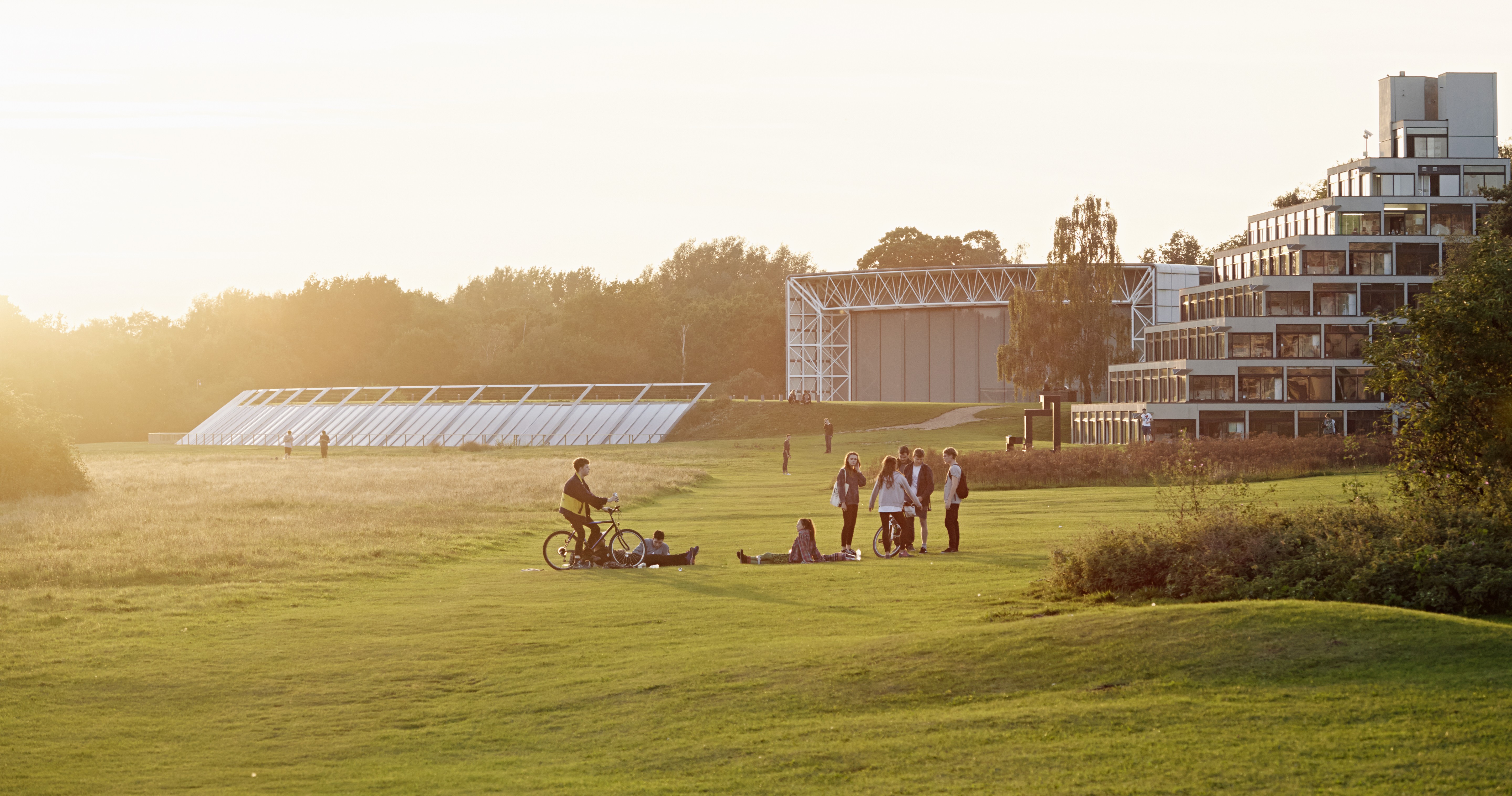

BA (Hons) History of Art (with a Foundation Year)
Key details
- Award
- Degree of Bachelor of Arts
- UCAS Course Code
- V35F
- Course Length
- 4 years
- Course Start Date
- September 2026
)
Explore our Campus
Visiting UEA is the best way to find out if you could imagine yourself studying and living on our beautiful campus. Explore our virtual and in person events now.
9th
In the UK for History of Art, Architecture and Design
The Times/Sunday Times Good University Guide 2023Course Overview
At UEA, we believe everyone should have the chance to study at degree level. You might not yet have the required grades. You may need a little extra support. You may need time to decide where your interests lie. If so, then our BA History of Art with a Foundation Year course is the perfect choice.
Our Humanities Foundation Year is an intensive and exciting year of study. You’ll focus on the topics which interest you. And you'll create a tool kit of essential academic skills.
We provide a supportive and rewarding learning environment. You'll study with dedicated lecturers from UEA’s Interdisciplinary Institute for the Humanities. You’ll explore a wide range of related academic subjects, including History, Literature, Philosophy, Film, Media, and Politics. We’ll help you make connections between different disciplines and spark your curiosity. We'll also encourage you to work towards your own individual learning goals.
During your History of Art degree, you’ll have access to all the opportunities and resources that UEA has to offer. Including the amazing Sainsbury Centre for Visual Arts(opens in a new window) right on your doorstep.
As you develop your own academic interests and passions, you’ll then be well-placed to progress onto the degree that’s the best fit for you. After successfully completing your foundation year, you’ll move straight onto the BA History of Art(opens in a new window) degree. Alternatively, you can request to transfer to one of a selection of other undergraduate course within the Faculty of Arts and Humanities, subject to taking the required prerequisite. Use the foundation year to springboard onto the degree of your choice and take control of your future studies.
Careers
Career Pathways
Recent graduates have entered a number of fields, including:
- Museums and art galleries
- Commercial art galleries
- Event management
- Publishing
- Journalism
- Teaching/lecturing
Discover more on our Careers webpages(opens in a new window).
After the Course
Once you successfully finish your foundation year, you’ll go straight on to the BA History of Art(opens in a new window) degree.
If, during the year, you discover your interests and ambitions lie elsewhere, you can switch to one of the other degrees offered by the Faculty of Arts and Humanities, subject to taking the required prerequisite modules. In the case of BA degrees with Creative Writing, you’ll need to submit a short portfolio of your writing (c. 5 pages) for approval by the creative writing team.
Explore your options, look at our courses, and decide where you want your degree to take you.
Study and Modules
Structure
During your foundation year, you’ll study a mixture of compulsory and optional modules. This enables you to tailor your studies to your interests. And it ensures you’ll develop the knowledge, skills and confidence to achieve your full potential during the rest of your degree.
Our core modules provide you with an academic toolkit. You’ll hone your essential critical thinking and skills of analysis, so you’ll thrive on your future degree. Plus, you’ll have the opportunity to discover a range of academic approaches and methodologies. Together with your lecturers and peers, you’ll explore important theories and ideas in the humanities. You’ll learn how they relate to their political, social, historical and cultural contexts. For example, you might study ideology and myth, post-colonialism, gender and sexuality or power. We also provide you with the space to practice essential skills to give you confidence to progress with your studies. For example, you’ll learn how to research, write, and properly reference your assignments, as well as how to make the most out of the amazing study and support resources that UEA has to offer.
There are a range of subject-specific modules for you to choose from throughout your foundation year. You can focus on History, Literature, Visual Cultures or Politics. Alternatively, you can choose to study a language. By studying a combination of disciplines, you’ll be able to investigate key areas of your future degree and gain an interdisciplinary perspective. This is your opportunity to develop your knowledge and skills in subjects closely tied to the rest of your degree or even try something new.
For information on subsequent years, please see the full BA History of Art(opens in a new window) course.
Compulsory Modules
Optional A Modules
(Credits: 20)Whilst the University will make every effort to offer the modules listed, changes may sometimes be made arising from the annual monitoring, review and update of modules. Where this activity leads to significant (but not minor) changes to programmes and their constituent modules, the University will endeavour to consult with students and others. It is also possible that the University may not be able to offer a module for reasons outside of its control, such as the illness of a member of staff. In some cases optional modules can have limited places available and so you may be asked to make additional module choices in the event you do not gain a place on your first choice. Where this is the case, the University will inform students.
Teaching and Learning
Our modules are taught via seminars, lectures and workshops. We use a variety of teaching methods and study tasks to prepare you for the different types of learning and teaching you’ll experience during the rest of your degree. Through seminars, interactive training sessions and supportive feedback, you’ll be able to develop skills in areas such as essay writing, research, and understanding and critically evaluating scholarly arguments. Your foundation year will be taught by award-winning lecturers who are specialists in their fields. Our teaching is informed by cutting-edge subject research and a strong commitment to innovative and engaging teaching practice.
Independent study
Your foundation year will be an intensive course. You’ll need to work independently between classes to make sure you’re fully prepared for seminars, workshops and assessments. We’ll help you to make the most of the resources and facilities available to you at UEA. We’ll support you as you develop your ability to study independently, cultivating skills that will be of great benefit in your degree, and your later career.
Each module will be accompanied by a detailed reading list that directs you towards essential reading, recommended texts, and multimedia resources. This means that you can easily organise and prioritise your research and wider reading. Study materials are also available via Blackboard (UEA’s online learning platform). Specially designed study tasks will help you to work effectively between classes.
Assessment
During your Art History Foundation Year, you’ll be assessed in a variety of ways, which will allow you to explore different learning styles and become familiar with the format and expectations of degree-level assessment.
We use innovative methods to enable you to learn from your peers as well as from teaching staff. This in turn will help you to build confidence in your abilities and develop into a more independent learner. You’ll receive feedback on your written work, allowing you to continue to hone your critical thinking.
You’ll also benefit from the support of one of the course lecturers as an adviser throughout your programme, receiving individual tutorials to ensure you’re progressing well and are achieving your full potential.
Entry Requirements
- This course is open to
UK fee-paying students only. The entry point is in September each year.
We welcome and value a wide range of qualifications, and we recognise that some students might take a mixture of different qualifications. We have listed typical examples that we accept for entry.
You should hold or be working towards the specified English and Mathematics requirements and one of the examples of typical entry qualifications listed below. If your qualifications aren’t listed, or if you are taking a combination of qualifications that isn’t specified, please contact Admissions.
- English and Mathematics
All applicants must hold or be working towards GCSEs in English Language and Mathematics at minimum grade C or grade 4.
In place of Mathematics GCSE we can also consider Functional Skills Level 2 Mathematics.
We accept a wide range of English Language qualifications, please see our English Language equivalencies(opens in a new window) page.
- Contextual Offers
UEA are committed to ensuring that Higher Education is accessible to all, regardless of their background or experiences. One of the ways we do this is through our contextual admissions schemes(opens in a new window).
- Typical UK Entry Requirements
A Levels
CCC
Contextual offer: CDD
BTEC
Level 3 Extended Diploma: MMM
Contextual offer: MMP
Access to HE Diploma
Access to Humanities & Social Sciences pathway. Pass the Access to HE Diploma with 45 credits at Level 3.
T Levels
Obtain an overall Pass
- Further Examples of Typical Entry Requirements
We welcome applications from students with non-traditional academic backgrounds. If you have been out of study for the last three years and you do not have the entry grades for our three year degree, we will consider your educational and employment history, along with your personal statement and reference to gain a holistic view of your suitability for the course. You will still need to meet our GCSE English Language and Mathematics requirements.
International Baccalaureate
28 points overall
Irish Leaving Certificate
6 subjects at H4
Scottish Highers
BBCCC
Scottish Advanced Highers
DDD A combination of Advanced Highers and Highers may be acceptable
- Deferred Entry
We welcome applications from students who have already taken or intend to take a gap year. We believe that a year between school and university can be of substantial benefit. You are advised to indicate your reason for wishing to defer entry on your UCAS application.
- Admissions Policy
Our Admissions Policy applies to the admissions of all undergraduate applicants.
- Progression
Once enrolled onto a course at UEA, your progression and continuation (which may include eligibility for study abroad, overseas experience, placement or year in industry opportunities) is contingent on meeting the assessment requirements which are relevant to the course on which you are enrolled.
Progression from a Foundation Year may also be dependent on meeting the prerequisite module requirements of the course you wish to progress to. Please note subsequent changes to study or course can affect your tuition fee liability and the amount you are required to pay.
)
Fees and Funding
Tuition Fees
View our information for Tuition Fees(opens in a new window).
Scholarships and Bursaries
We are committed to ensuring that costs do not act as a barrier to those aspiring to come to a world leading university and have developed a funding package to reward those with excellent qualifications and assist those from lower income backgrounds. View our range of Scholarships(opens in a new window) for eligibility, details of how to apply and closing dates.
Course Related Costs
Please see Additional Course Fees(opens in a new window) for details of course-related costs.
How to Apply
UCAS Hub is a secure online application system that allows you to apply for full-time undergraduate courses at universities and colleges in the United Kingdom.
Your application does not have to be completed all at once. Register or sign in to UCAS to get started.
Once you submit your completed application, UCAS will process it and send it to your chosen universities and colleges.
The Institution code for the University of East Anglia is E14.
View our guide to applying through UCAS for useful tips, key dates and further information: