
)
History at UEA
Find out more about studying History at UEA, and browse our other courses.
Find out moreYour story starts here
Book your Open Day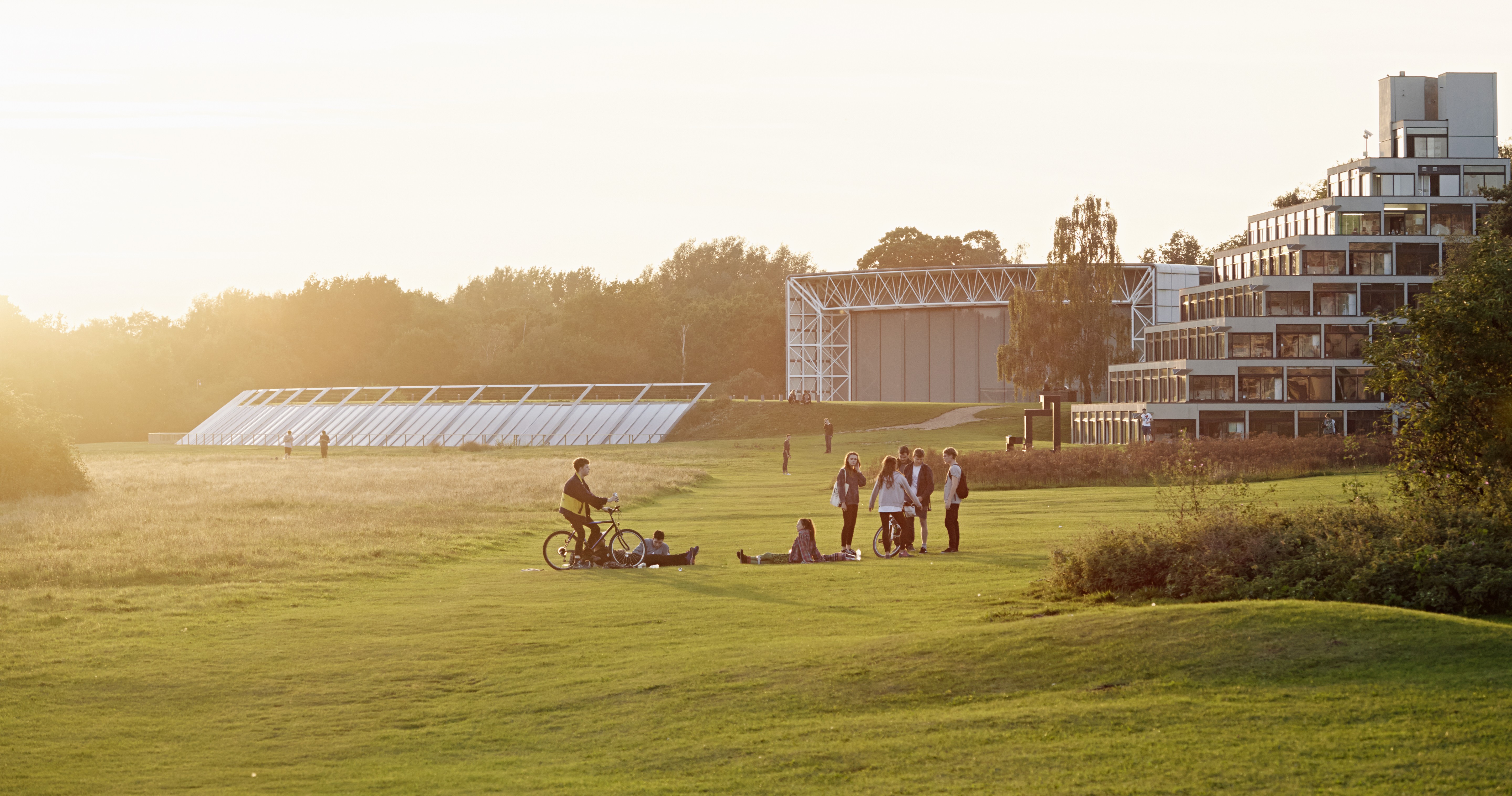
Key details
Visiting UEA is the best way to find out if you could imagine yourself studying and living on our beautiful campus. Explore our virtual and in person events now.
UEA is ranked 3rd overall for research quality in History
Times Higher Education REF 2021 AnalysisOf graduates go on to work and/or study within 15 months after the course
Graduate Outcomes Survey 2022-23Imagine decoding the Bayeux Tapestry, examining Henry VIII’s armour, or exploring the social and political power of jazz. These are some of the paths you could choose on our BA History degree programme. From the Roman Empire to Thatcher’s Britain, you’ll study the political, social, economic and cultural forces that have shaped the world.
You’ll be taught by a team of internationally recognised historians and learn about developments around the globe: from Britain and its empire, across continental Europe and the Middle East, to South and East Asia and North America. You’ll learn how to develop and communicate your own ideas, and how to interpret historical sources.
Choice will be at the heart of your History degree. Building on a firm grounding in your first year, in your second and third years you’ll choose from a wide range of optional modules. You’ll decide how to build your course, tailoring your studies to your interests.
Norwich is an ideal place to study history, with a wealth of medieval buildings nestled inside a lively modern city. On our beautiful campus, you’ll benefit from our strengths in British, European and global research, including internationally renowned centres in Eastern European history and East Anglian studies. Partnerships with local heritage organisations such as Norfolk Museums give you hands-on experience of history.
The skills you learn during this BA History course will be invaluable in the workplace. Our graduates have gone on to careers as varied as the Civil Service, media, local government, international organisations, law, marketing, finance, heritage, teaching and many more besides. And if you’re thinking of taking your study of history further, our degree will provide a vital foundation.
)
Find out more about studying History at UEA, and browse our other courses.
Find out moreRecent graduates have entered several fields, including:
Discover more on our Career pages.
History graduates have the world at their fingertips. As well as subject-specific skills and knowledge, you’ll develop transferable skills and qualities, including communication skills, critical thinking, team working, leadership, self-management, and sophisticated digital literacy. Such skills open doors to a wide variety of professions and careers.
History at UEA has a proven track record of leading to careers in law, finance, teaching, local government and administration, the heritage and tourism sector, Civil Service, political lobbying, non-governmental organisations, think-tanks and many more. Or you could further your research by going on to postgraduate study.
Your first year will give you a solid foundation in the main periods in British, European and global history. Compulsory modules will span across the Middle Ages to the 20th century. In your second semester, you’ll choose from a range of more specialist modules on subjects such as witchcraft or global 20th-century history. You’ll explore established methodologies and theories of historical inquiry, developing skills in thinking about the past that will underpin your degree. Throughout the year, you’ll also engage with our Key Skills programme, which will prepare you in the research, analysis and debate skills necessary to succeed in your history degree.
Whilst the University will make every effort to offer the modules listed, changes may sometimes be made arising from the annual monitoring, review and update of modules. Where this activity leads to significant (but not minor) changes to programmes and their constituent modules, the University will endeavour to consult with students and others. It is also possible that the University may not be able to offer a module for reasons outside of its control, such as the illness of a member of staff. In some cases optional modules can have limited places available and so you may be asked to make additional module choices in the event you do not gain a place on your first choice. Where this is the case, the University will inform students.
Our academics are leading historians who are hugely enthused by their research and experience. This translates directly into excellence in teaching and supervision.
Teaching
In the first year, you’ll learn key historical methods, how to critique effectively, and be able to take a long view on some of the most influential and important current debates. Through a mixture of lectures and seminars, you’ll learn how to listen to and discuss the ideas of others, as well as how to present and defend your own ideas, in a supportive, friendly environment.
Independent Learning
Making use of UEA’s state-of-the-art library facilities, you’ll explore the library and discover the wealth of physical and online resources available to enrich your studies. With guidance from your lecturers and seminar leaders, you’ll develop your skills in independent reading and research.
Academic support
Our ‘History Key Skills’ programme is designed to help you make an effective and successful transition into university work. You’ll engage with targeted training sessions throughout your first year to develop key academic skills.
Based in Student Support Services, our Learning Enhancement Team will help you to get the most out of your studies and ensure you’re achieving your full potential. Their support covers:
If you have additional support needs due to disabilities such as sensory impairment, or learning difficulties such as dyslexia, please talk to Student Support Services about how they can help. Student Support also assists with all matters of personal wellbeing, and this is integral to the supportive learning environment we nurture at UEA.
We offer help and guidance with assessment throughout your studies. At all stages of your degree, you’ll receive regular written and verbal feedback on your assignments to help you improve. And each year, in each module, you’ll have a chance to test your skills through practice assessments (also known as formative work).
In your first year, you’ll be assessed by a mixture of essays, presentations and document commentaries. You’ll gain experience and confidence with these assessments, without them counting towards your final degree.
In year two, you’ll be able to choose from a wide range of modules. You’ll design your own pathway through the degree course, either specialising in a historical focus or keeping it broad. Our wide range of modules cover topics from Roman history to the present day, from America, India and Japan to East Anglia.
There is one compulsory module this year, which develops the analytical and research skills necessary for a historian. Beyond this, the year is completely flexible and will allow you to tailor your learning to the topics that most interest you, all the while honing your skills of critical thinking and argument.
You can also choose to study abroad in your second year, learn a new language, and/or broaden your studies by taking modules chosen from those offered by other disciplines in the Faculty of Arts and Humanities. You might also undertake a short-term placement (perhaps in one of Norwich’s rich network of museums) to put the skills you’ve been learning into practice.
Whilst the University will make every effort to offer the modules listed, changes may sometimes be made arising from the annual monitoring, review and update of modules. Where this activity leads to significant (but not minor) changes to programmes and their constituent modules, the University will endeavour to consult with students and others. It is also possible that the University may not be able to offer a module for reasons outside of its control, such as the illness of a member of staff. In some cases optional modules can have limited places available and so you may be asked to make additional module choices in the event you do not gain a place on your first choice. Where this is the case, the University will inform students.
Teaching
In year two, you’ll continue to be taught through lectures and seminars and be offered a wide choice of modules from the Roman Empire to the modern era, engaging with social and cultural history, political and religious history, gender and landscape. You can develop your own pathway and start to specialise in a particular area of your choice. You may also choose modules from those offered by other disciplines in the Faculty of Arts and Humanities or learn a new foreign language.
Independent Learning
You’ll deepen your ability to read sources critically to analyse and evaluate them within context through independent study. You’ll gain the confidence to take more risks in your academic work, finishing the year with a real sense of how history influences our everyday lives.
Academic Support
You’ll continue to have access to all the training in study skills, academic writing, research, critical thinking, and tackling assessments that’s offered by our Learning Enhancement Team (described in Year 1 in more detail). And that team is just one part of our Student Support Services, who’ll continue to be there throughout your second year to nurture your studies, whether that’s by providing additional support for disabilities or by looking out for your wellbeing.
In your second year, a broader range of assessments will allow you to use different skills as you develop them. There are no exams: instead, your assignments will include essays, presentations, reviews, source commentaries, problem-based exercises and reflective analyses. Feedback will help you to work with increasing confidence as a historian.
In your final year, you’ll specialise further and master the intellectual skills required of a historian. You’ll select one specialist subject from a range that typically includes topics from the Middle Ages through to Thatcher’s Britain. Each topic is led by academics who are researching that specific area – so it’ll be like reading their books before they’ve been written.
In addition to your specialist subject, you’ll study two advanced modules, covering subjects such as the Vikings, sport, Victorian underworlds, race and migration, and Russia. Alternatively, you can opt to take just one advanced module and write a dissertation on a historical topic of your choice, subject to meeting the relevant criteria.
Whilst the University will make every effort to offer the modules listed, changes may sometimes be made arising from the annual monitoring, review and update of modules. Where this activity leads to significant (but not minor) changes to programmes and their constituent modules, the University will endeavour to consult with students and others. It is also possible that the University may not be able to offer a module for reasons outside of its control, such as the illness of a member of staff. In some cases optional modules can have limited places available and so you may be asked to make additional module choices in the event you do not gain a place on your first choice. Where this is the case, the University will inform students.
This is your opportunity to delve into specific topics that have sparked your imagination in the first two years. As part of a Special Subject, you can explore your chosen topic through longer seminars, in discussion with a specialist in the field. You can also pursue a dissertation, working one-to-one with an expert in the field, or you can choose to take another advanced module.
We believe one of the best ways to learn is by doing, so selected modules will include interesting and thought-provoking field trips or field work, where you’ll consider history in a real-world setting. The trips vary, but past trips have included visits to Henry VII’s Chapel at Westminster Abbey, Blickling Hall and the Churchill Archives in Cambridge.
Independent Learning
You’ll bring together all the skills and confidence you’ve developed over the previous two years through independent research and critical analysis of documents as you master your field of study. The skills you’ve honed throughout your history degree, such as critical thinking, problem-solving, time management and organisational abilities will prove invaluable in any career path.
Academic Support
In your final year of study, our Student Support Services will be on hand to continue to help you flourish, whether that’s by providing ongoing support for your disabilities or by offering a timely session on research skills that enables you to sharpen your work on your dissertation (if you’ve chosen to do one).
In your final year, having honed your skills over years one and two, you’ll be assessed via written coursework and presentations, along with an extended essay, and a dissertation, if you choose to do one. All the feedback you continue to receive will enable you to deepen your work as a historian and to graduate with a host of flexible skills that are valued by employers.
UK and International fee-paying students. Choose UK or International above to see relevant information. The entry point is in September each year.
We welcome and value a wide range of qualifications, and we recognise that some students might take a mixture of different qualifications. We have listed typical examples that we accept for entry.
You should hold or be working towards the specified English and Mathematics requirements and one of the examples of typical entry qualifications listed below. If your qualifications aren’t listed, or if you are taking a combination of qualifications that isn’t specified, please contact Admissions.
All applicants must hold or be working towards GCSEs in English Language and Mathematics at minimum grade 4 or grade C.
In place of Mathematics GCSE we can also consider Functional Skills Level 2 Mathematics.
We accept a wide range of English Language qualifications, please see our English Language equivalencies(opens in a new window) page.
UEA are committed to ensuring that Higher Education is accessible to all, regardless of their background or experiences. One of the ways we do this is through our contextual admissions schemes(opens in a new window).
AAB
Contextual offer: BBB
Level 3 Extended Diploma: DDD
Contextual offer: DDM
BTEC in Public Services, Uniformed Services and Business Administration are all excluded from our BTEC offers
Access to Humanities and Social Sciences Pathway. Pass Access to HE Diploma with Distinction in 36 credits at Level 3 and Merit in 9 credits at Level 3
Contextual offer: Access to Humanities & Social Sciences pathway. Pass the Access to HE Diploma with Merit in 30 credits at Level 3 and Pass in 15 credits at Level 3
Obtain an overall Distinction.
If you do not meet the academic requirements for direct entry, you may be interested in one of our Foundation Year programmes such as - BA (Hons) History With a Foundation Year
33 points overall
4 subjects at H2, 2 subjects at H3
AAAAA
BBC. A combination of Advanced Highers and Highers may be acceptable
We welcome applications from students who have already taken or intend to take a gap year. We believe that a year between school and university can be of substantial benefit. You are advised to indicate your reason for wishing to defer entry on your UCAS application.
Our Admissions Policy applies to the admissions of all undergraduate applicants.
Once enrolled onto a course at UEA, your progression and continuation (which may include eligibility for study abroad, overseas experience, placement or year in industry opportunities) is contingent on meeting the assessment requirements which are relevant to the course on which you are enrolled.
UK and International fee-paying students. Choose UK or International above to see relevant information. The entry point is in September each year.
We welcome and value a wide range of qualifications, and we recognise that some students might take a mixture of different qualifications. We have listed typical examples that we accept for entry.
You should hold or be working towards the specified English and Mathematics requirements and one of the examples of typical entry qualifications listed below. If your qualifications aren’t listed, or if you are taking a combination of qualifications that isn’t specified, please contact Admissions.
All applicants must hold or be working towards GCSEs in English Language and Mathematics at minimum grade 4 or grade C.
In place of Mathematics GCSE we can also consider Functional Skills Level 2 Mathematics.
We accept a wide range of English Language qualifications, please see our English Language equivalencies(opens in a new window) page.
AAB
33 points overall
If you do not meet the academic and/or English language requirements for direct entry our partner, UEA International Study Centre(opens in a new window) offers progression on to this undergraduate degree upon successful completion of a preparation programme. Depending on your interests, and your qualifications you can take a variety of routes to this degree.
Applications from students whose first language is not English are welcome. We require evidence of proficiency in English (including writing, speaking, listening and reading):
IELTS: 6.0 overall (minimum 5.5 in all components)
We also accept a number of other English language tests. Review our English Language Equivalencies(opens in a new window) for a list of example qualifications that we may accept to meet this requirement.
Test dates should be within two years of the course start date.
If you do not yet meet the English language requirements for this course, UEA International Study Centre offer a variety of English language programmes which are designed to help you develop the English skills necessary for successful undergraduate study:
We welcome applications from students who have already taken or intend to take a gap year. We believe that a year between school and university can be of substantial benefit. You are advised to indicate your reason for wishing to defer entry on your UCAS application.
Our Admissions Policy applies to the admissions of all undergraduate applicants.
Once enrolled onto a course at UEA, your progression and continuation (which may include eligibility for study abroad, overseas experience, placement or year in industry opportunities) is contingent on meeting the assessment requirements which are relevant to the course on which you are enrolled.
Tuition Fees
View our information for Tuition Fees(opens in a new window).
Scholarships and Bursaries
We are committed to ensuring that costs do not act as a barrier to those aspiring to come to a world leading university and have developed a funding package to reward those with excellent qualifications and assist those from lower income backgrounds. View our range of Scholarships(opens in a new window) for eligibility, details of how to apply and closing dates.
The cost of individual field trips will vary, and all such trips are optional.
Please see Additional Course Fees for details of other course-related costs.
)
Apply for the Ben Greenstone History Scholarship, open to a UK applicant for our BA History course from September 2026. The award recognises passion for History’s modern relevance and includes financial support, mentorship, and an internship at a London Public Affairs Agency to enhance academic and career development.
Find out moreUCAS Hub is a secure online application system that allows you to apply for full-time undergraduate courses at universities and colleges in the United Kingdom.
Your application does not have to be completed all at once. Register or sign in to UCAS to get started.
Once you submit your completed application, UCAS will process it and send it to your chosen universities and colleges.
The Institution code for the University of East Anglia is E14.
View our guide to applying through UCAS for useful tips, key dates and further information:
History starting September 2026 for 3 years
)