
)
Biological Sciences at UEA
Find out more about studying Biological Sciences at UEA, and browse our other courses.
Find out moreYour story starts here
Book your Open Day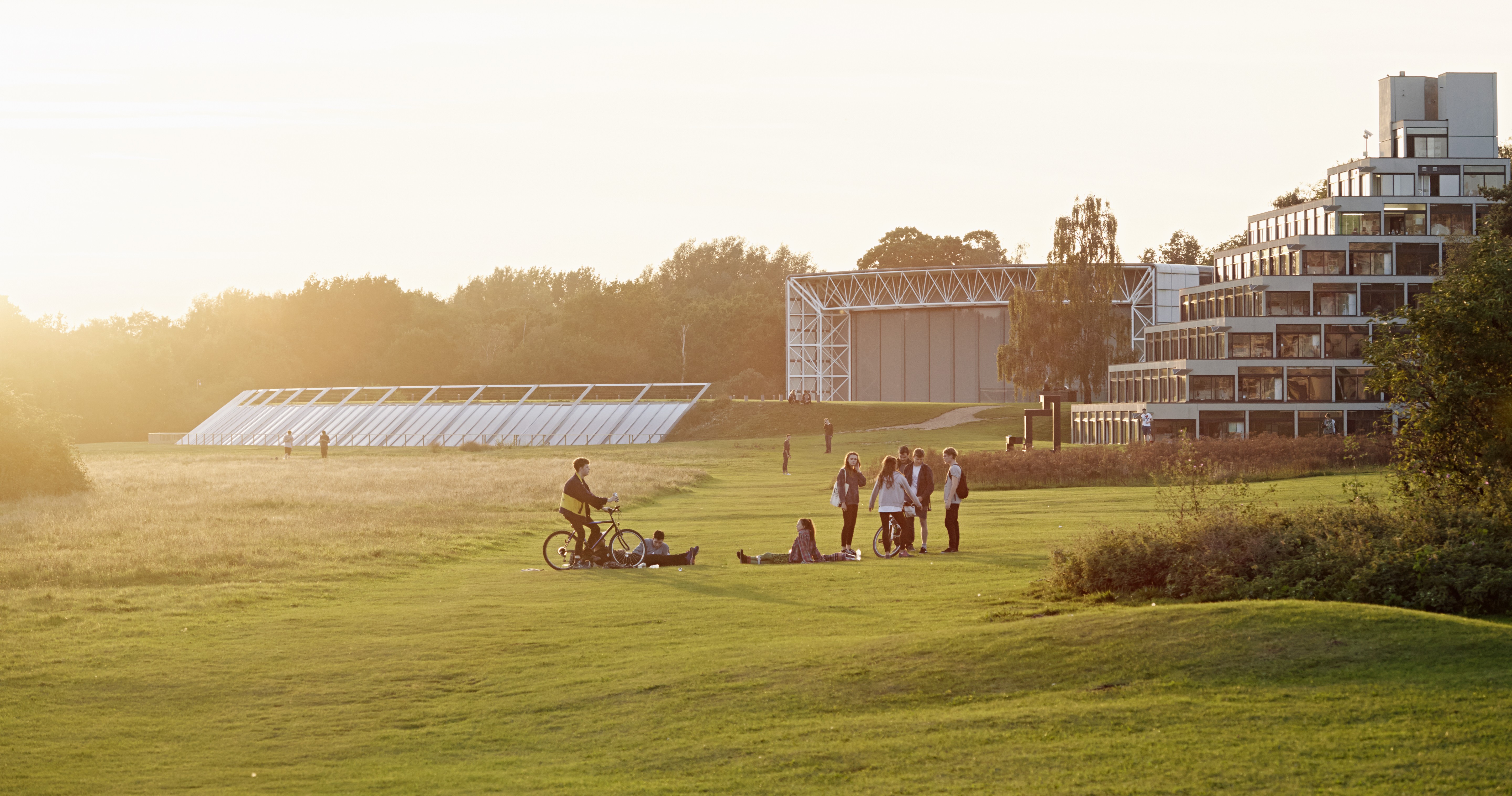
Key details
Visiting UEA is the best way to find out if you could imagine yourself studying and living on our beautiful campus. Explore our virtual and in person events now.
UEA is ranked 17th overall for research quality in Biological Science
The Times Higher Education REF 2021 AnalysisOf graduates go on to work and/or study within 15 months after the course
Graduate Outcome Survey 2020Study life itself, from its origins and the early stages of evolution to the minutiae of molecular, cellular, and organismal processes. Study growth and development, investigate the complex entanglements of ecosystems, and learn about health and disease. Discover how biology can be applied to major global challenges, including disease, food security, and climate change.
On our dynamic BSc Biological Sciences with a Year Abroad course, you’ll benefit from exposure to our brilliant academics and cutting-edge research. We’re part of the Norwich Research Park (NRP), and academics from the hospital and four world-renowned NRP research institutes will teach on your course.
Flexibility and choice are key features of your Biological Sciences degree. A structured first year ensures you gain a broad foundation in the subject, providing a strong platform for further study. In your second and fourth years, a wide range of module options allows you to delve deeper into the areas of biology that interest you most. Your third year will be spent studying abroad at one of our exciting partner institutions across the globe, gaining invaluable international experience to enhance your studies and future career.
UEA offers excellent facilities, including fantastic new teaching laboratories. We have brand-new, state-of-the-art research labs and our beautiful campus is home to diverse organisms that you’ll have the opportunity to study.
Your degree will lay the foundations for a career in research, but you’ll also develop transferable skills (such as critical thinking, communication skills, time and project management, data science, and IT) that will prepare you for a career outside of biology, for instance in science communication, data analysis, and publishing. This degree is accredited by the Royal Society of Biology, affirming its high standards in teaching and skills development. According to the latest Graduate Outcomes Survey, 95% of our graduates were in employment or further study shortly after completing the course.
)
Find out more about studying Biological Sciences at UEA, and browse our other courses.
Find out moreComplete years one and two successfully and you’ll spend year three studying at one of our partner universities in North America, Europe, or Australasia. We’ll take your academic interests and placement preferences into account when allocating the university that we feel is your best fit, from your chosen short-list.
For further details, check out Study Abroad.
Examples of careers that you could enter include:
Discover more on our Careers webpages.
You’ll not only gain scientific knowledge, you’ll also develop your skills in areas of research and communication, IT and data science data collection, analytics and critical thinking. This combination makes you highly employable.
Our graduates have gone on to establish careers in pharmaceuticals, the food and brewing industries, medical laboratories, forensic sciences, conservation management, environmental assessment, teaching, science communication and more. Many of our graduates have progressed on to higher degrees (e.g. MSc, PhD) and an academic career.
In the first year of your degree, you’ll be given a thorough introduction to biological sciences, alongside other core elements relating to the study of biology, such as chemistry, mathematics, and data science. You’ll also begin to learn the key scientific skills essential to your future research projects and develop creative and innovative problem-solving skills.
Whilst the University will make every effort to offer the modules listed, changes may sometimes be made arising from the annual monitoring, review and update of modules. Where this activity leads to significant (but not minor) changes to programmes and their constituent modules, the University will endeavour to consult with students and others. It is also possible that the University may not be able to offer a module for reasons outside of its control, such as the illness of a member of staff. In some cases optional modules can have limited places available and so you may be asked to make additional module choices in the event you do not gain a place on your first choice. Where this is the case, the University will inform students.
Our school is home to world-class academics and internationally recognised researchers. We’re proud to say we have some of the best facilities in the country, including our fantastic undergraduate practical laboratories.
In year one, you’ll study a core set of subjects that encompass the breadth of biological science, from ecosystems to molecular biology. This ensures that you’ll have the platform knowledge required to progress to year two, where you’ll have a greater choice in your areas of study. In giving you a taste of different aspects of the biosciences, this structure will enable you to see which aspects of biology you're most interested in pursuing further.
Most of your learning will take place in lectures, seminars, practical laboratory sessions and fieldwork, where you’ll gain hands-on experience and benefit from invaluable contact time with lecturers. In each of your modules, you’ll undertake applied work in collecting, analysing and reviewing data, plus making observations on biological processes, with a particular emphasis on the critical assessment of existing knowledge. In seminars and group discussions, you’ll hone your problem posing and solving skills. And in your first year you’ll focus heavily on cultivating your mathematical and statistical skills.
Independent Study
You’ll have plenty of opportunities for independent study throughout your course, developing skills you’ll use throughout your career. You’ll also be assigned an Academic Adviser, who meet with you throughout your time at UEA to provide you with support in all areas of your academic life. You’ll also find that your lecturers are friendly and happy to answer questions and support your learning.
You’ll encounter a range of assessment methods, including examinations, project reports, lab and fieldwork reports, presentations, essays, multiple-choice and short-answer tests. Many modules have a mixture of examination and coursework; some are 100% coursework. None are assessed only by examination.
You’ll be assessed using a variety of methods, including low-stakes tests that will enable you to track your learning as modules progress. You’ll be asked to write lab reports, a form of assessment that will enable you to develop skills in analysing and reporting scientific data.
Your second year will enable you to pursue your interests in specialist biology subjects through a range of optional modules. You’ll be trained in practical skills, which will strengthen your analytical, innovative and professional abilities, thus further preparing you for the final year research project. In addition, you’ll have the option of learning from another science school or acquiring a language, subject to the approval of the desired school of study.
Whilst the University will make every effort to offer the modules listed, changes may sometimes be made arising from the annual monitoring, review and update of modules. Where this activity leads to significant (but not minor) changes to programmes and their constituent modules, the University will endeavour to consult with students and others. It is also possible that the University may not be able to offer a module for reasons outside of its control, such as the illness of a member of staff. In some cases optional modules can have limited places available and so you may be asked to make additional module choices in the event you do not gain a place on your first choice. Where this is the case, the University will inform students.
In your second year, you’ll have greater freedom in choosing subjects of particular interest to you, and you may also choose to pursue the study of a language learn the basics of another science. You might choose to focus primarily on human health and disease, molecular biology and biotechnology, or ecology, conservation, evolutionary and population biology. Or you might choose to mix and match from each of those areas. The emphasis in this year is on flexibility and on allowing you to create your own path through the course. We firmly believe that you’ll learn best if you’re studying what interests you most.
There is a continued emphasis on assessment coursework. Most modules also have exams.
Complete years one and two successfully and you’ll spend your third year studying overseas at one of our partner universities in Australasia, North America, or Europe. All universities have their own area of research focus, reflected in their teaching, so your year abroad is a fantastic chance to cover aspects of biology that aren’t our focus at UEA. This means that not only will you get to experience another country and culture, but you’ll also have the opportunity to broaden your academic horizons.
Whilst the University will make every effort to offer the modules listed, changes may sometimes be made arising from the annual monitoring, review and update of modules. Where this activity leads to significant (but not minor) changes to programmes and their constituent modules, the University will endeavour to consult with students and others. It is also possible that the University may not be able to offer a module for reasons outside of its control, such as the illness of a member of staff. In some cases optional modules can have limited places available and so you may be asked to make additional module choices in the event you do not gain a place on your first choice. Where this is the case, the University will inform students.
On your year abroad, you’ll explore modules from your host institution. You’ll have the opportunity to benefit from a different university with different teaching techniques and areas of expertise. You’ll also be exposed to a culture different from your own and network with scientists in a new area of the world.
On your year abroad you’ll be assessed by your host institution. You’ll need to pass your year abroad, but the marks don’t count to your final degree classification.
In your final year, you’ll have an even greater range of modules to choose from which will focus on specific biological topics ranging from food security to cancer biology. You’ll study topics in greater depth and can acquire a variety of skills that will support you as you conduct your substantial independent research project.
Whilst the University will make every effort to offer the modules listed, changes may sometimes be made arising from the annual monitoring, review and update of modules. Where this activity leads to significant (but not minor) changes to programmes and their constituent modules, the University will endeavour to consult with students and others. It is also possible that the University may not be able to offer a module for reasons outside of its control, such as the illness of a member of staff. In some cases optional modules can have limited places available and so you may be asked to make additional module choices in the event you do not gain a place on your first choice. Where this is the case, the University will inform students.
In your final year, a third of your time will be spent on a larger research project. This is your chance to investigate a new problem, from designing the experiment, to conducting the lab or field work, to collecting and interpreting your findings. This project is your capstone experience, allowing you to bring together the skills you’ve gained over your previous years in the course. For many students it's also the most rewarding part of their studies.
The other two thirds of the year will be spent similarly to your second year. At this level, topics will be more advanced, often taught by academics who are leading researchers in their subject areas. This is your chance to solidify your area of interest within biological science.
The emphasis on assessment continues as you’ll complete an extended research project, with assessment based on a research proposal, report, and presentation. Most non-project modules have exams.
UK and International fee-paying students. Choose UK or International above to see relevant information. The entry point is in September each year.
We welcome and value a wide range of qualifications, and we recognise that some students might take a mixture of different qualifications. We have listed typical examples that we accept for entry.
You should hold or be working towards the specified English and Mathematics requirements and one of the examples of typical entry qualifications listed below. If your qualifications aren’t listed, or if you are taking a combination of qualifications that isn’t specified, please contact Admissions.
All applicants must hold or be working towards GCSEs in English Language and Mathematics at minimum grade C or grade 4.
We accept a wide range of English Language qualifications, please see our English Language equivalencies(opens in a new window) page.
UEA are committed to ensuring that Higher Education is accessible to all, regardless of their background or experiences. One of the ways we do this is through our contextual admissions schemes(opens in a new window).
ABB including Biology or Human Biology
Contextual offer: BCC including Biology or Human Biology
Where applicable Science A levels awarded by an English Exam board require a pass in the practical element. Not accepted: Critical Thinking and General Studies.
Level 3 Extended Diploma: DDM in Applied Science (Medical Science/Biomedical Science) or Forensic and Criminal Investigation or Countryside Management OR DDD plus B at A-Level Biology or Human Biology .
Contextual offer: DMM in Applied Science (Medical Science/Biomedical Science) or Forensic and Criminal Investigation or Countryside Management.
Access to Science pathway. Pass Access to HE Diploma with Distinction in 30 credits at Level 3 and Merit in 15 credits at Level 3 including 12 credits in Biology
Contextual Offer: Pass the Access to HE Diploma with Merit in 30 credits at Level 3 and pass in 15 credits at Level 3 including 12 credits in Biology at Merit.
Obtain an overall Merit. We accept: Science pathway.
If you do not meet the academic requirements for direct entry, you may be interested in one of our Foundation Year programmes such as - BSc Biological Sciences with a Foundation Year
32 points overall with HL5 in Biology
3 subjects at H2, 3 subjects at H3 including Biology
AAABB including Biology.
BCC including Biology.
A combination of Advanced Highers and Highers may be acceptable
We welcome applications from students who have already taken or intend to take a gap year. We believe that a year between school and university can be of substantial benefit. You are advised to indicate your reason for wishing to defer entry on your UCAS application.
Our Admissions Policy applies to the admissions of all undergraduate applicants.
Once enrolled onto a course at UEA, your progression and continuation (which may include eligibility for study abroad, overseas experience, placement or year in industry opportunities) is contingent on meeting the assessment requirements which are relevant to the course on which you are enrolled.
We would prefer you to be able to demonstrate evidence of recent academic study within 5 years of the start of the course. If your last qualification will have been completed more than 5 years ago by the time the course starts, please contact Admissions.
UK and International fee-paying students. Choose UK or International above to see relevant information. The entry point is in September each year.
We welcome and value a wide range of qualifications, and we recognise that some students might take a mixture of different qualifications. We have listed typical examples that we accept for entry.
You should hold or be working towards the specified English and Mathematics requirements and one of the examples of typical entry qualifications listed below. If your qualifications aren’t listed, or if you are taking a combination of qualifications that isn’t specified, please contact Admissions.
All applicants must hold or be working towards GCSEs in English Language and Mathematics at minimum grade C or grade 4.
We accept a wide range of English Language qualifications, please see our English Language equivalencies(opens in a new window) page.
ABB including Biology or Human Biology
Where applicable Science A Levels awarded by an English Exam board require a pass in the practical element. Not accepted: Critical Thinking and General Studies.
32 points overall with HL 5 in Biology
If you do not meet the academic and/or English language requirements for direct entry our partner, UEA International Study Centre(opens in a new window) offers progression on to this undergraduate degree upon successful completion of a preparation programme. Depending on your interests, and your qualifications you can take a variety of routes to this degree.
Applications from students whose first language is not English are welcome. We require evidence of proficiency in English (including writing, speaking, listening and reading):
IELTS: 6.0 overall (minimum 5.5 in all components)
We also accept a number of other English language tests. Review our English Language Equivalencies(opens in a new window) for a list of example qualifications that we may accept to meet this requirement.
Test dates should be within two years of the course start date.
If you do not yet meet the English language requirements for this course, UEA International Study Centre offer a variety of English language programmes which are designed to help you develop the English skills necessary for successful undergraduate study:
We welcome applications from students who have already taken or intend to take a gap year. We believe that a year between school and university can be of substantial benefit. You are advised to indicate your reason for wishing to defer entry on your UCAS application.
Our Admissions Policy applies to the admissions of all undergraduate applicants.
Once enrolled onto a course at UEA, your progression and continuation (which may include eligibility for study abroad, overseas experience, placement or year in industry opportunities) is contingent on meeting the assessment requirements which are relevant to the course on which you are enrolled.
We would prefer you to be able to demonstrate evidence of recent academic study within 5 years of the start of the course. If your last qualification will have been completed more than 5 years ago by the time the course starts, please contact Admissions.
Tuition Fees
View our information for Tuition Fees(opens in a new window).
Scholarships and Bursaries
We are committed to ensuring that costs do not act as a barrier to those aspiring to come to a world leading university and have developed a funding package to reward those with excellent qualifications and assist those from lower income backgrounds. View our range of Scholarships(opens in a new window) for eligibility, details of how to apply and closing dates.
You’re eligible for reduced fees during the year abroad. Further details are available on our Tuition Fees website.
There will be extra costs related to items such as travel and accommodation during your year abroad, which will vary depending on location. Please see Additional Course Fees for details of other course-related costs.
UCAS Hub is a secure online application system that allows you to apply for full-time undergraduate courses at universities and colleges in the United Kingdom.
Your application does not have to be completed all at once. Register or sign in to UCAS to get started.
Once you submit your completed application, UCAS will process it and send it to your chosen universities and colleges.
The Institution code for the University of East Anglia is E14.
View our guide to applying through UCAS for useful tips, key dates and further information:
Biological Sciences with a Year Abroad starting September 2026 for 4 years
)