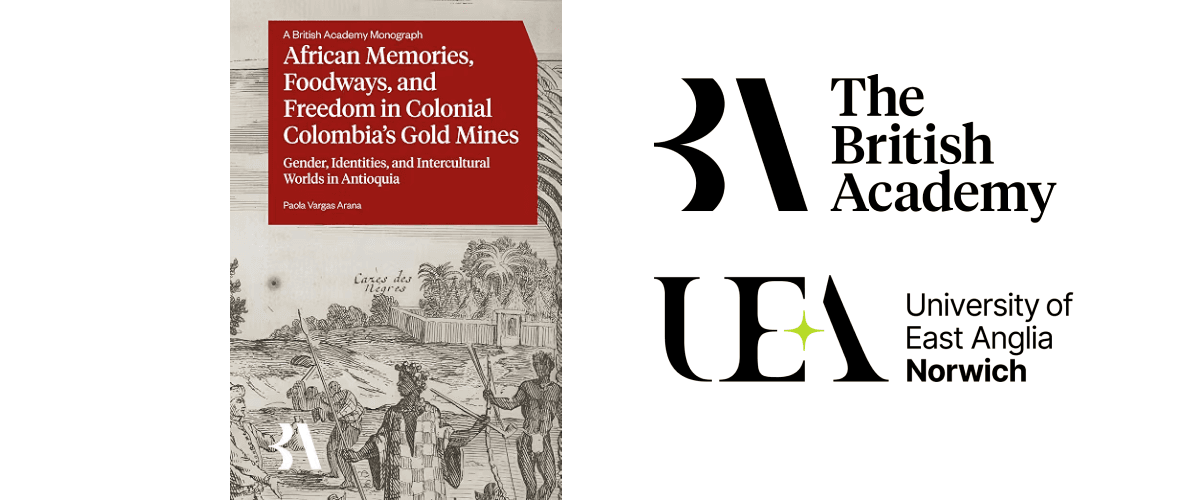
Dr Paola Vargas Arana will provide a seminar launching her book “African Memories, Foodways, and Freedom in Colonial Colombia’s Gold Mines: Gender, Identities, and Intercultural Worlds in Antioquia” and her ERC Starting Grant: “Practices, Livelihoods, Agriculture, Taste and Ecology (PLATE)”.
How did the marginalised diet of enslaved African women in remote colonial gold mines become Colombia’s staple food to this day? Drawing on West African agricultural traditions and exchange with Indigenous peoples, women from present-day Gambia and Guinea-Bissau cultivated rice, plantain, and yam, alongside maize, beans and cassava in mining settlements where colonisers invested nothing in local agriculture, relying exclusively on imported provisions. Women’s expertise, largely overlooked in the records, transformed a region dismissed as barren and driven to bankruptcy into a productive agricultural landscape, sustained self-governing communities, and fashioned the national diet that endures today.
Launching her monograph and her ERC Starting Grant, Vargas Arana lecture addresses a broader question: what can history contribute to Development Studies? Tracing how food economies, knowledge systems and gendered inequalities were produced and persist, her research connects the historical erasure of women’s agricultural expertise to its continued marginalisation in food security policy today. The ERC project seeks to recognise how women’s food heritage, sustained across centuries of Atlantic separation, constitutes a strategic contribution to food security and climate adaptation in The Gambia and Afro-Colombian territories.