
)
Education at UEA
Find out more about studying Education at UEA, and browse our other courses.
Find out moreThis course is available in Clearing
Call now 01603 944838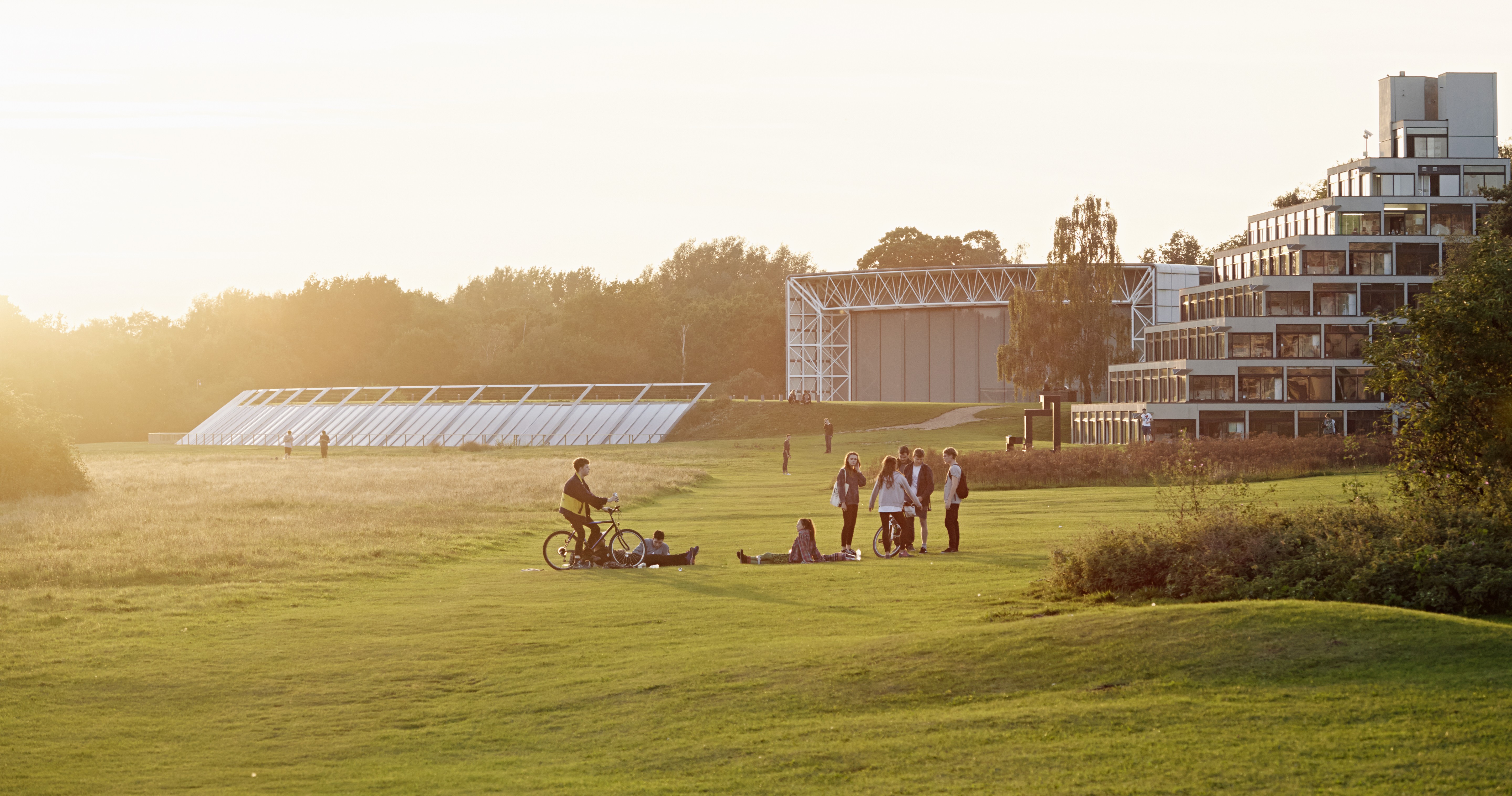
Key details
Course options
Visiting UEA is the best way to find out if you could imagine yourself studying and living on our beautiful campus. Explore our virtual and in person events now.
Of graduates go on to work and/or study within 15 months after the course
Graduate Outcome Survey 2020Of students were positive about the support provided by teaching staff
Graduate Outcomes Survey 2024-25Education is one of the most exciting and impactful fields of study, influencing every stage of life, from childhood to old age. It plays a crucial role in shaping individuals and societies and holds the potential to address some of the world’s most pressing challenges.
On UEA’s Education course you’ll be taught by leading experts and practitioners across a range of disciplines. You’ll work with experts in sociology, psychology, linguistics, philosophy, art, mathematics, media studies, and other fields. Our team will spark your curiosity and guide you in exploring what education means to you.
You’ll have the flexibility to shape your studies to suit your interests and career aspirations. You’ll explore art and creativity, the human brain, nature and outdoor learning, AI and digital technology, and so much more.
Studying on our vibrant campus in the heart of Norwich, you'll have access to our state-of-the-art facilities and take advantage of our strong connections to the local community. You’ll gain hands-on experience through placements in educational settings, and hear from local practitioners, gaining valuable real-world insights. You can also explore the stunning Norfolk coast and fens and take inspiration from renowned museums and galleries like the Sainsbury Centre.
You’ll be supported in pursuing a wide range of career pathways through our strong links to teaching training, including PGCEs, as well as opportunities in educational research, the government, charity sector, or youth work. Education opens doors to countless possibilities, and our dedicated team will work closely with you to help unlock your next steps.
)
Find out more about studying Education at UEA, and browse our other courses.
Find out moreExample of careers that you could enter include:
Discover more on our Careers webpages.
You’ll graduate as a skilled and confident advocate for education. You could go on to work in a range of sectors, including educational management and administration, youth, community or charity work, social work, occupational therapy, museum and gallery education.
Or you could continue your studies and research, undertaking other postgraduate courses, including Master’s degrees such as MA in Education, MRes in Social Sciences, or MSc in Occupational Therapy.
You’ll begin your degree by establishing a solid foundation in the major theories, concepts, and issues in education. You’ll explore education in the context of psychology, sociology, history, and philosophy, and discover how such contexts help us to understand education in society today. You’ll also link these key concepts and issues to real-life examples, thinking about education around the world and how technology is changing education today. We’ll also equip you with the skills needed to study effectively and introduce key study techniques such as reflection and academic writing.
We deliver a common suite of year one modules for our BA Education courses, which means you’ll have the opportunity to transfer to one of the following courses after year one:
BA Education, Learning and Teaching
Whilst the University will make every effort to offer the modules listed, changes may sometimes be made arising from the annual monitoring, review and update of modules. Where this activity leads to significant (but not minor) changes to programmes and their constituent modules, the University will endeavour to consult with students and others. It is also possible that the University may not be able to offer a module for reasons outside of its control, such as the illness of a member of staff. In some cases optional modules can have limited places available and so you may be asked to make additional module choices in the event you do not gain a place on your first choice. Where this is the case, the University will inform students.
You’ll learn in a combination of large lecture groups and smaller seminar groups. In all sessions, you’ll engage with group and individual tasks. These support learning and understanding of key issues. In many sessions you’ll be asked to draw on your own educational experiences.
Alongside your taught sessions, you’ll be required to work both independently and with your peers in groups. You’ll also develop the skills to find readings on your own, which you’ll be expected to bring to taught sessions.
You’ll be assessed across a range of coursework-based assignments. These may include essays, reflective portfolios, group projects, presentations, designing creative resources, arts-based projects and research reports.
At this stage, you’ll begin to discover methods in educational research and experience theory in practice. We’ll teach you the skills required to undertake empirical research and provide you with the opportunity to undertake experiences and placements to gain practical knowledge of education.
You can also choose optional modules to tailor your learning to your interests. You’ll have access to a range of modules available within the School of Education and Lifelong Learning, along with selected modules in other schools across UEA. These focus on topics such as educational psychology, childhood and youth studies, special educational needs, teaching, and language and education. You can also choose to learn a new language or broaden your studies by taking selected cross-disciplinary modules.
Whilst the University will make every effort to offer the modules listed, changes may sometimes be made arising from the annual monitoring, review and update of modules. Where this activity leads to significant (but not minor) changes to programmes and their constituent modules, the University will endeavour to consult with students and others. It is also possible that the University may not be able to offer a module for reasons outside of its control, such as the illness of a member of staff. In some cases optional modules can have limited places available and so you may be asked to make additional module choices in the event you do not gain a place on your first choice. Where this is the case, the University will inform students.
You’ll continue to work in larger lecture groups and small seminar groups. Group size will vary depending on the module – your optional module lecture groups may be smaller. Throughout the year, your tutors will continue to develop your understanding of key concepts. You’ll build upon key skills introduced in year one, including team-working and communication, academic reading and writing skills, higher order thinking (critical analysis, synthesis and evaluation) and further understanding the link between theory and practice.
We’ll help you to develop knowledge, insights and attributes that are readily transferable into future work settings. This will include developing and growing your independent learning skills, using independent and collaborative learning strategies and conducting small-scale, informal investigations, placement opportunities, and more.
You’ll be assessed by coursework related to your core, compulsory and optional modules. These range from more traditional methods like essays and presentations to more practical applied methods which will prepare you for the workplace.
During your final year, you’ll continue specialising and working with educational theories, concepts, and issues, picking modules that reflect your interests. Module topics include looking at media and education, motivation, creativity, and political debates in education. You’ll also complete a dissertation research project under the supervision of a lecturer. This will enable you to develop an in-depth appreciation of the breadth and scope of education as a subject, and build skills for pathways beyond this degree, including continuing into research through Master's and PhD studies, continuing into education through business, or various other career pathways that we’ll support you in exploring.
Whilst the University will make every effort to offer the modules listed, changes may sometimes be made arising from the annual monitoring, review and update of modules. Where this activity leads to significant (but not minor) changes to programmes and their constituent modules, the University will endeavour to consult with students and others. It is also possible that the University may not be able to offer a module for reasons outside of its control, such as the illness of a member of staff. In some cases optional modules can have limited places available and so you may be asked to make additional module choices in the event you do not gain a place on your first choice. Where this is the case, the University will inform students.
You’ll continue to work in larger lecture groups and small seminar groups. You’ll complete your dissertation will improve your independent study skills and provide you with the opportunity to undertake a substantial piece of independent research. This will enable you to organise, design, conduct, and communicate interests and issues within the exciting field of education.
Your final year is assessed by coursework related to your compulsory and optional modules, similarly to your first two years, and a subject dissertation. For your dissertation, you’ll work closely with a supervisor who will provide you with formative feedback throughout the process.
UK and International fee-paying students. Choose UK or International above to see relevant information. The entry point is in September each year.
We welcome and value a wide range of qualifications, and we recognise that some students might take a mixture of different qualifications. We have listed typical examples that we accept for entry.
You should hold or be working towards the specified English and Mathematics requirements and one of the examples of typical entry qualifications listed below. If your qualifications aren’t listed, or if you are taking a combination of qualifications that isn’t specified, please contact Admissions.
All applicants must hold or be working towards GCSEs in English Language and Mathematics at minimum grade C or grade 4.
We accept a wide range of English Language qualifications, please see our English Language equivalencies(opens in a new window) page.
UEA are committed to ensuring that Higher Education is accessible to all, regardless of their background or experiences. One of the ways we do this is through our contextual admissions schemes(opens in a new window).
BBB
Contextual offer: BCC
Level 3 Extended Diploma: DDM
Contextual offer: DMM
BTEC in Public Services, Uniformed Services and Business Administration are all excluded from our BTEC offers
Pass Access to HE Diploma with Merit in 45 credits at Level 3
Contextual Offer: Pass the Access to HE Diploma with Merit in 30 credits at Level 3 and Pass in 15 credits at Level 3.
Obtain an overall Merit
31 points overall
2 subjects at H2, 4 subjects at H3
AABBB
CCC. A combination of Advanced Highers and Highers may be acceptable
Grade B or above in the following subjects:
We welcome applications from students who have already taken or intend to take a gap year. We believe that a year between school and university can be of substantial benefit. You are advised to indicate your reason for wishing to defer entry on your UCAS application.
Our Admissions Policy applies to the admissions of all undergraduate applicants.
Once enrolled onto a course at UEA, your progression and continuation (which may include eligibility for study abroad, overseas experience, placement, or year in industry opportunities) is contingent on meeting the assessment requirements which are relevant to the course on which you are enrolled.
UK and International fee-paying students. Choose UK or International above to see relevant information. The entry point is in September each year.
We welcome and value a wide range of qualifications, and we recognise that some students might take a mixture of different qualifications. We have listed typical examples that we accept for entry.
You should hold or be working towards the specified English and Mathematics requirements and one of the examples of typical entry qualifications listed below. If your qualifications aren’t listed, or if you are taking a combination of qualifications that isn’t specified, please contact Admissions.
All applicants must hold or be working towards GCSEs in English Language and Mathematics at minimum grade C or grade 4.
We accept a wide range of English Language qualifications, please see our English Language equivalencies(opens in a new window) page.
BBB
31 points overall
If you do not meet the academic and/or English language requirements for direct entry our partner, UEA International Study Centre(opens in a new window) offers progression on to this undergraduate degree upon successful completion of a preparation programme. Depending on your interests, and your qualifications you can take a variety of routes to this degree.
Applications from students whose first language is not English are welcome. We require evidence of proficiency in English (including writing, speaking, listening and reading):
We also accept a number of other English language tests. Review our English Language Equivalencies(opens in a new window) for a list of example qualifications that we may accept to meet this requirement.
Test dates should be within two years of the course start date.
If you do not yet meet the English language requirements for this course, UEA International Study Centre offer a variety of English language programmes which are designed to help you develop the English skills necessary for successful undergraduate study:
We welcome applications from students who have already taken or intend to take a gap year. We believe that a year between school and university can be of substantial benefit. You are advised to indicate your reason for wishing to defer entry on your UCAS application.
Our Admissions Policy applies to the admissions of all undergraduate applicants.
Once enrolled onto a course at UEA, your progression and continuation (which may include eligibility for study abroad, overseas experience, placement, or year in industry opportunities) is contingent on meeting the assessment requirements which are relevant to the course on which you are enrolled.
Tuition Fees
View our information for Tuition Fees(opens in a new window).
Scholarships and Bursaries
We are committed to ensuring that costs do not act as a barrier to those aspiring to come to a world leading university and have developed a funding package to reward those with excellent qualifications and assist those from lower income backgrounds. View our range of Scholarships(opens in a new window) for eligibility, details of how to apply and closing dates.
Please see Additional Course Fees for details of additional course-related costs.
UCAS Hub is a secure online application system that allows you to apply for full-time undergraduate courses at universities and colleges in the United Kingdom.
Your application does not have to be completed all at once. Register or sign in to UCAS to get started.
Once you submit your completed application, UCAS will process it and send it to your chosen universities and colleges.
The Institution code for the University of East Anglia is E14.
View our guide to applying through UCAS for useful tips, key dates and further information:
Education starting September 2026 for 3 years
)