Your story starts here
Book your Open Day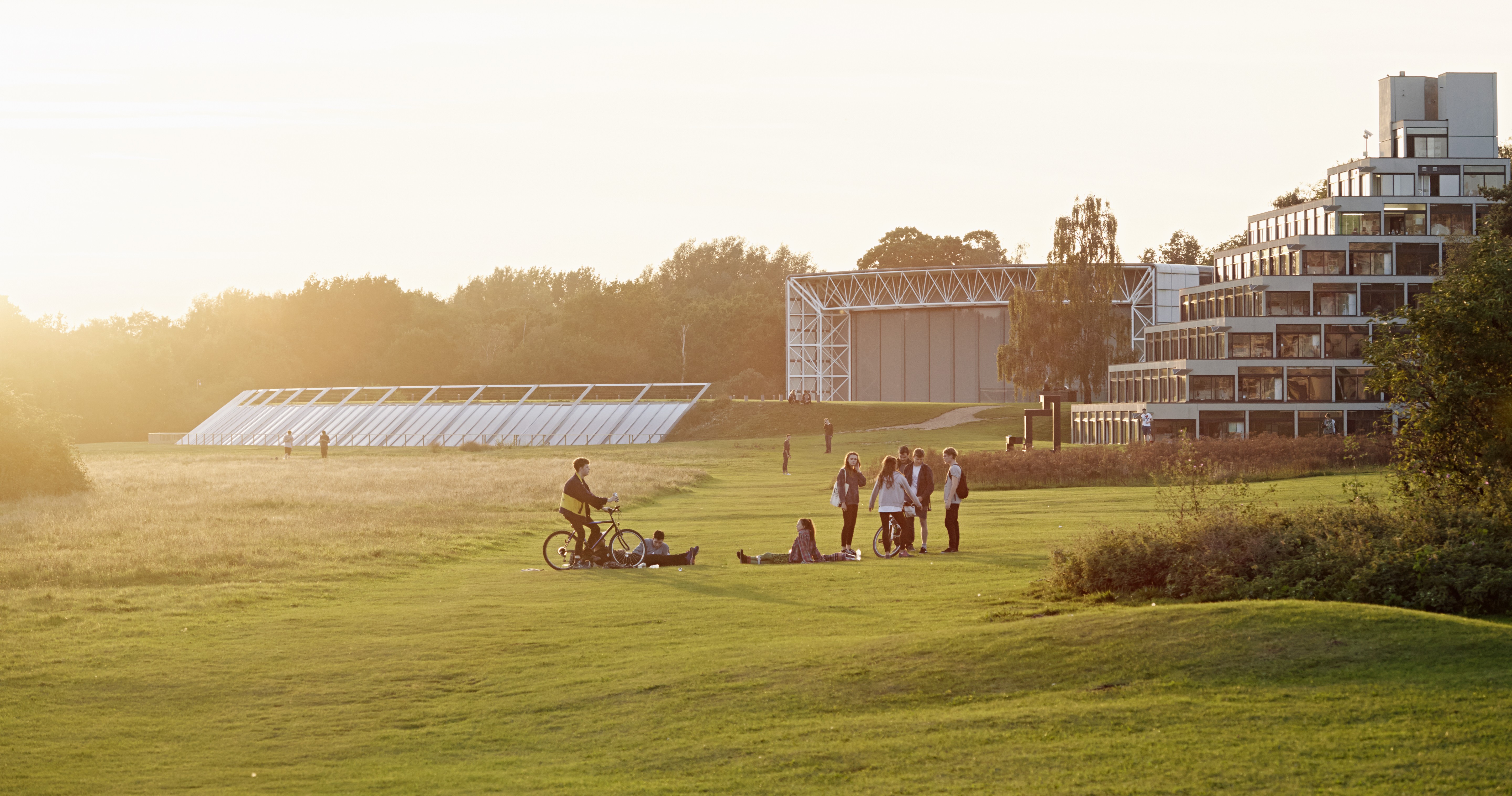

BA (Hons) History of Art with Archaeology and Anthropology
Key details
- Award
- Degree of Bachelor of Arts
- UCAS Course Code
- V0L0
- Typical Offer
- ABB
- Contextual Offer
- BBC
- Course Length
- 3 years
- Course Start Date
- September 2026
)
Explore our Campus
Visiting UEA is the best way to find out if you could imagine yourself studying and living on our beautiful campus. Explore our virtual and in person events now.
Course Overview
How are society’s views, beliefs and actions recorded in the things we make, use and value? On this course you’ll learn how to examine the visual and material culture of societies across the world, from prehistory to the present. Based in the world-famous Sainsbury Centre, you’ll become part of a unique community. We’re the only History of Art Department in the UK located within a world-renowned art museum.
This dynamic course provides a grounding in History of Art, Archaeology and Anthropology. You’ll analyse and interpret visual and material culture from around the world. You'll gain key skills in interpreting the past and understanding its role in the present.
Our course is distinctive in studying creativity as a global phenomenon. You’ll gain detailed knowledge of the many ways people have made, displayed, and interpreted art by engaging with artworks. Alongside significant aspects of European art history, you’ll explore the work of artists and material culture from Africa, Asia, Oceania, and the Americas.
This BA History of Art with Archaeology and Anthropology course allows you to immerse yourself in the historic city of Norwich. You’ll study in the collections of the Sainsbury Centre, where you'll examine objects and artworks at first hand. You'll learn about the processes and politics of collecting, while considering diverse communities and audiences. Learning from world-leading experts, you’ll gain different perspectives on art and material culture.
We’re part of an international network for the study and display of art. This includes the Sainsbury Centre, Sainsbury Research Unit for the Arts of Africa, Oceania and the Americas, and Sainsbury Institute for the Study of Japanese Arts and Cultures. This network provides opportunities to connect you with regional and national museums. Our graduates have gone on to rewarding careers in the cultural, creative, and heritage sectors. We look forward to you joining our community.
Careers
Career Pathways
Recent graduates have entered several fields, including:
- Museums and art galleries
- Commercial art galleries
- Event management
- Publishing
- Journalism
- Teaching/lecturing
Discover more on our Careers webpages.
After the Course
You’ll graduate ready for a wide range of careers in the art world, the heritage industry, academia, art publishing, teaching, and business. You’ll be equipped with sought-after skills such as independent and critical thinking, time management, teamwork, organisation and research skills, public speaking and more. Your experience of studying in a world-famous art museum will give you an edge in the sector. You’ll also be well placed to study for a postgraduate degree either here at UEA or at another university. Our Careers Service is here to support you with advice on writing CVs and applying for internships. In the department, we work closely with the Careers Service to provide workshops and seminars with successful alumni.
Study and Modules
Structure
You’ll begin your studies by establishing firm foundations for the study of art and material culture. You’ll start with studies of artists, artisans, and the processes of creating. Here you’ll engage directly with artworks first-hand, exploring different techniques and visual effects and deepening your appreciation of their different functions and meanings. At the same time, you’ll get to know the principles of art history, archaeology and anthropology.
Compulsory Modules
Whilst the University will make every effort to offer the modules listed, changes may sometimes be made arising from the annual monitoring, review and update of modules. Where this activity leads to significant (but not minor) changes to programmes and their constituent modules, the University will endeavour to consult with students and others. It is also possible that the University may not be able to offer a module for reasons outside of its control, such as the illness of a member of staff. In some cases optional modules can have limited places available and so you may be asked to make additional module choices in the event you do not gain a place on your first choice. Where this is the case, the University will inform students.
Teaching and Learning
You’ll be taught by leading scholars in the field of art history, archaeology, and anthropology, studying through a combination of lectures, small group seminars and tutorials combined with independent learning. A representative week will consist of 15-20% class time, 40% work on assessments and 40% on independent learning.
Our seminars allow for plenty of dialogue between tutors and students. Teaching methods vary but most sessions are organised around investigation of particular topics supported by close analysis of artworks, material objects, and texts. As you progress through your course, you'll expand your knowledge, skills and understanding as you become familiar with different practices and techniques in the study of art history, anthropology and archaeology.
In lecture modules, you’ll engage with a range of problems and methods in your subjects. Your lectures will be delivered by members of staff from art history, anthropology, and archaeology, plus specialist guest speakers.
In your first year, you’ll be guided to prepare material for classes, which you'll often later use as a starting point for an assessment. You’ll also have the opportunity to engage with a diverse range of relevant presentation styles such as catalogue entries and exhibition reviews.
Assessment
You won’t sit any formal examinations. Instead, each year you’ll be assessed on written coursework, usually in the form of essays, presentations, critiques, posters, exhibition catalogues to name only a few. Our assessment methods have been developed to measure your skills, but also to aid your learning.
In your first year, assessment will be aimed at cultivating the skills of close analysis and critical thinking you'll need throughout the degree.
Structure
At this stage of your course, you’ll explore the most recent theoretical approaches to material culture studies and also develop your knowledge of archaeology. You’ll learn to think about the strange and varied ‘lives of objects’ as they move through different contexts and how art history interacts with anthropology and archeology. In your spring semester, you’ll consider how your historical studies relate to contemporary debates about the status of art and the role of galleries and museums in the present. Alongside these lectures, you’ll choose from a range of optional modules through which you’ll develop more specialist knowledge of particular problems and periods.
Compulsory Modules
Optional A Modules
(Credits: 20)Optional B Modules
(Credits: 40)Whilst the University will make every effort to offer the modules listed, changes may sometimes be made arising from the annual monitoring, review and update of modules. Where this activity leads to significant (but not minor) changes to programmes and their constituent modules, the University will endeavour to consult with students and others. It is also possible that the University may not be able to offer a module for reasons outside of its control, such as the illness of a member of staff. In some cases optional modules can have limited places available and so you may be asked to make additional module choices in the event you do not gain a place on your first choice. Where this is the case, the University will inform students.
Teaching and Learning
As the course progresses, you’ll have the opportunity to explore more specialised topics that reflect the current research of those teaching the modules. Each year, as your knowledge and study skills become more advanced, you’ll be introduced to material that will encourage your own independent research on topics that interest you.
Assessment
In your second year, you’ll have more autonomy over the way you respond to your assessment prompts, devising your own essay topics and further developing your perspective as an art historian.
Structure
In your final year of study, you’ll take three optional modules which involve close engagement with advanced topics in art history, archaeology and anthropology. You’ll also write a dissertation on a topic that has most sparked your interest, working closely with a supervisor to design your own research programme.
Compulsory Modules
Optional A Modules
(Credits: 60)Optional B Modules
(Credits: 30)Whilst the University will make every effort to offer the modules listed, changes may sometimes be made arising from the annual monitoring, review and update of modules. Where this activity leads to significant (but not minor) changes to programmes and their constituent modules, the University will endeavour to consult with students and others. It is also possible that the University may not be able to offer a module for reasons outside of its control, such as the illness of a member of staff. In some cases optional modules can have limited places available and so you may be asked to make additional module choices in the event you do not gain a place on your first choice. Where this is the case, the University will inform students.
Teaching and Learning
In the spring semester of your third year, independent learning increases again in line with work towards your dissertation.
As you develop specialist knowledge in your final year, you’ll also begin work on a dissertation. This will enable you to refine your understanding of a particular topic, develop confidence and independence as an art historian, archaeologist, and anthropologist. You’ll graduate ready to take all the skills you’ve learnt beyond university.
Assessment
In your final year, you’ll work on an assessment designed to take a deep dive into the specialisms of our research-active staff. You’ll also write a dissertation which is a piece of independent research on a topic you’ll devise and develop while working closely with an academic supervisor.
Entry Requirements
- This course is open to
UK and International fee-paying students. Choose UK or International above to see relevant information. The entry point is in September each year.
We welcome and value a wide range of qualifications, and we recognise that some students might take a mixture of different qualifications. We have listed typical examples that we accept for entry.
You should hold or be working towards the specified English and Mathematics requirements and one of the examples of typical entry qualifications listed below. If your qualifications aren’t listed, or if you are taking a combination of qualifications that isn’t specified, please contact Admissions.
- English and Mathematics
All applicants must hold or be working towards GCSEs in English Language and Mathematics at minimum grade 4 or grade C.
In place of Mathematics GCSE we can also consider Functional Skills Level 2 Mathematics.
We accept a wide range of English Language qualifications, please see our English Language equivalencies(opens in a new window) page.
- Contextual Offers
UEA are committed to ensuring that Higher Education is accessible to all, regardless of their background or experiences. One of the ways we do this is through our contextual admissions schemes(opens in a new window).
- Typical UK Entry Requirements
A levels
ABB
Contextual: BBC
BTEC
Level 3 Extended Diploma: DDM
Contextual: DMM
BTEC in Public Services, Uniformed Services and Business Administration are all excluded from our BTEC offers
Access to HE Diploma
Access to Humanities and Social Sciences Pathway. Pass Access to HE Diploma with Distinction in 30 credits at Level 3 and Merit in 15 credits at Level 3
Contextual Offer: Access to Humanities and Social Sciences Pathway. Pass the Access to HE Diploma with Merit in 30 credits at Level 3 and Pass in 15 credits at Level 3
T levels
Obtain an overall Merit.
Any subject is acceptable.
Foundation Year options:
If you do not meet the academic requirements for direct entry, you may be interested in one of our Foundation Year programmes such as - History of Art with a Foundation Year.
- Further Examples of Typical Entry Requirements
International Baccalaureate
32 points overall
Irish Leaving Certificate
3 subjects at H2, 3 subjects at H3
Scottish Highers
AAABB
Scottish Advanced Highers
BCC. A combination of Advanced Highers and Highers may be acceptable
- Deferred Entry
We welcome applications from students who have already taken or intend to take a gap year. We believe that a year between school and university can be of substantial benefit. You are advised to indicate your reason for wishing to defer entry on your UCAS application.
- Admissions Policy
Our Admissions Policy applies to the admissions of all undergraduate applicants.
- Progression
Once enrolled onto a course at UEA, your progression and continuation (which may include eligibility for study abroad, overseas experience, placement or year in industry opportunities) is contingent on meeting the assessment requirements which are relevant to the course on which you are enrolled.
- This course is open to
UK and International fee-paying students. Choose UK or International above to see relevant information. The entry point is in September each year.
We welcome and value a wide range of qualifications, and we recognise that some students might take a mixture of different qualifications. We have listed typical examples that we accept for entry.
You should hold or be working towards the specified English and Mathematics requirements and one of the examples of typical entry qualifications listed below. If your qualifications aren’t listed, or if you are taking a combination of qualifications that isn’t specified, please contact Admissions.
- English and Mathematics
All applicants must hold or be working towards GCSEs in English Language and Mathematics at minimum grade 4 or grade C.
In place of Mathematics GCSE we can also consider Functional Skills Level 2 Mathematics.
We accept a wide range of English Language qualifications, please see our English Language equivalencies(opens in a new window) page.
- Typical International Entry Requirements
A levels
ABC
International Baccalaureate
32 points overall
We accept many international qualifications for entry to this course. For specific details about your country, view our information for International Students(opens in a new window).
- UEA International Study Centre
If you do not meet the academic and/or English language requirements for direct entry our partner, UEA International Study Centre(opens in a new window) offers progression on to this undergraduate degree upon successful completion of a preparation programme. Depending on your interests, and your qualifications you can take a variety of routes to this degree.
- English Foreign Language
Applications from students whose first language is not English are welcome. We require evidence of proficiency in English (including writing, speaking, listening and reading):
-
IELTS: 6.0 overall (minimum 5.5 in all components)
We also accept a number of other English language tests. Review our English Language Equivalencies(opens in a new window) for a list of example qualifications that we may accept to meet this requirement.
Test dates should be within two years of the course start date.
If you do not yet meet the English language requirements for this course, UEA International Study Centre offer a variety of English language programmes which are designed to help you develop the English skills necessary for successful undergraduate study:
-
- Deferred Entry
We welcome applications from students who have already taken or intend to take a gap year. We believe that a year between school and university can be of substantial benefit. You are advised to indicate your reason for wishing to defer entry on your UCAS application.
- Admissions Policy
Our Admissions Policy applies to the admissions of all undergraduate applicants.
- Progression
Once enrolled onto a course at UEA, your progression and continuation (which may include eligibility for study abroad, overseas experience, placement or year in industry opportunities) is contingent on meeting the assessment requirements which are relevant to the course on which you are enrolled.
)
Fees and Funding
Tuition Fees
View our information for Tuition Fees(opens in a new window).
Scholarships and Bursaries
We are committed to ensuring that costs do not act as a barrier to those aspiring to come to a world leading university and have developed a funding package to reward those with excellent qualifications and assist those from lower income backgrounds. View our range of Scholarships(opens in a new window) for eligibility, details of how to apply and closing dates.
Course Related Costs
You may need to pay some small additional costs for field trips, which are subsidised by the department.
Please see Additional Course Fees for details of other course-related costs.
How to Apply
UCAS Hub is a secure online application system that allows you to apply for full-time undergraduate courses at universities and colleges in the United Kingdom.
Your application does not have to be completed all at once. Register or sign in to UCAS to get started.
Once you submit your completed application, UCAS will process it and send it to your chosen universities and colleges.
The Institution code for the University of East Anglia is E14.
View our guide to applying through UCAS for useful tips, key dates and further information: