£6.75m boost for East of England creative industries
By: Communications
More than 250 creative businesses will benefit from a major new programme led by the University of East Anglia, helping create up to 500 skilled jobs across the East of England.
The programme, called CreateSci, will connect the region’s creative businesses with major tech partners including BT, ElevenLabs and industrial software company AVEVA - providing access to new technology, expertise and potential markets.
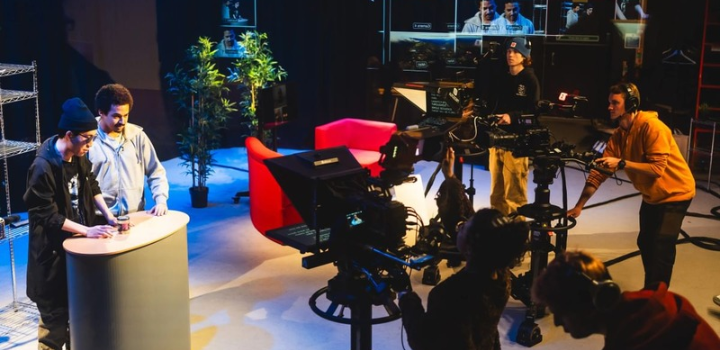
Norwich University of the Arts will bring its partnership with Sony to the programme, opening up its Virtual Production Studio so that businesses can work hands-on with cutting-edge virtual production and immersive technology.
The £6.75 million initiative is being funded by the UK Research and Innovation (UKRI) and delivered by the Arts and Humanities Research Council (AHRC).
It is one of only a handful of creative clusters being funded across the UK, and the first of its kind in the East of England.
CreateSci will demonstrate how expertise in the creative industries and arts and humanities can accelerate economic growth.
The programme will be led by UEA alongside Norwich University of the Arts, Anglia Ruskin University and the University of Suffolk, with the University of Cambridge as a project partner.
A regional boost for skills, talent and opportunities
Prof Catherine Richardson, Pro-Vice-Chancellor of Arts and Humanities at UEA, said: "The creative industries are one of the UK's greatest economic strengths, and vital to the Government’s Industrial Strategy ambitions for national growth, but that growth depends on having the right skills, talent and opportunities in place in all regions.
“The East of England has a strong and growing creative sector but has historically attracted less investment than many other regions.
"This cluster is unique because growth goes way beyond creative industries – into the East’s other key sectors of clean energy and life science.
“CreateSci will help businesses across the East of England develop the expertise needed in a rapidly changing sector, supporting them to innovate, grow and attract investment.
"We are delighted to be working alongside Norwich University of the Arts, Anglia Ruskin University, the University of Suffolk, Cambridge, industry partners and the Arts and Humanities Research Council on this shared ambition.
"Together, we are investing in the people, skills and ideas that underpin the Government's Modern Industrial Strategy and strengthen the region's long-term economic future."
Accelerating economic growth in the East
At the heart of the programme is the development of the Creative Clinic, where creative businesses and arts and humanities researchers work alongside scientists, the NHS and major employers to tackle real world challenges in relating to health, wellbeing and the environment.
It will showcase how creativity, storytelling, design and community engagement are vital to ensure scientific breakthroughs are understood, trusted and used.
Using creative expertise to drive innovation, the programme will help businesses access research, build new skills, and turn ideas into products, while forging new connections with investors and partners.
Giving businesses access to world-class creative facilities
Prof Louis Nixon, Dean and Professor of Research and Knowledge Exchange, and CreateSci co-lead at Norwich University of the Arts, said: “We are delighted to be a co-lead on CreateSci.
“As a specialist creative university, Norwich University of the Arts has played a central role in shaping this bid, bringing our expertise in immersive technology, virtual production, games and design, along with the industry relationships we have built with partners such as Sony.
“Through CreateSci, creative businesses across the region will be able to work with our Immersive Visualisation and Simulation Lab and Virtual Production Studio, and experiment through the Discovery Lab with technology they would not otherwise be able to access.
“They will also be able to engage with the Creative Clinic - a business support and innovation programme that connects creative practitioners, SMEs, researchers and sector specialists to help organisations address challenges through creative methods.
“Our flood visualisation work has already shown how creative technology and creative methods can help solve real-world problems, and we are excited to bring that same thinking to health, life sciences and clean energy.
“This is a significant moment for the creative economy in the East of England, and we look forward to working with our partners to deliver it.”
Unlocking the potential of creative businesses
Robin Milton, founder of Fairer Games and member of the Norfolk Business Board, said: "This work has been an enormous undertaking with support from educational partners, the creative industries, local government and the business community in the region.
"I am excited to see our collective vision come to life.
"The key opportunities I see for local businesses will be the funded innovation voucher scheme, allowing them to take creative risks and have a wider impact with their artistic works with the partnerships offered through this programme.
"There has also been a keen focus on diversity and inclusion for the work, exploring how more flexible and part-time opportunities can be offered, enabling those juggling multiple responsibilities to engage with the programme fully."
Turning research and creativity into real-world change
CreateSci is also expected to attract further public and private investment into the region, creating new opportunities across towns, cities, rural areas and coastal communities - strengthening the East of England’s reputation as a place where creativity drives growth.
Dr Idrees Rasouli, Chair of DesignLab at Anglia Ruskin University and a co-lead of CreateSci, said: “Across Cambridge and the wider East of England, we have world-class scientific and technological research alongside creative businesses and communities. CreateSci provides a platform to connect this knowledge.
“At ARU, through DesignLab, one of the specialist labs within the Centre for Media, Arts and Creative Technologies (MACT), we are particularly interested in how design-led approaches can connect research with real-world challenges, ensuring that innovation is grounded in the needs, knowledge and experiences of communities.
"Our ambition is to help build a more connected, collaborative, and resilient regional economy, generating lasting value and benefits that extend well beyond the lifetime of the programme.”
Prof Emma Bond, Pro-Vice-Chancellor for Research and Knowledge Exchange at the University of Suffolk, said: "There is an incredible creative network in the East of England which will have the opportunity to grow, thrive and build stronger networks with this significant investment.
“The regional partner organisations will be able to work together to deliver a range of programmes that reflect the needs and opportunities for the creative industries across the Eastern counties."
Part of a UK-wide creative revolution
The cluster is one of several creative industries investments announced by the Department for Culture, Media and Sport, and UKRI.
UKRI Creative Industries Champion Prof Christopher Smith said: “The creative industries are a powerful engine for growth, creating jobs in all four nations of the UK and driving research and development innovation.
“The investments announced today in our world-leading creative industries are ambitious and wide-ranging, taking in five new Creative Industries Clusters that reach right across the UK and 40 businesses working at the current edge of createch.
“Together, these investments demonstrate the extraordinary vitality, diversity and ingenuity of our world-class creative industries, and the central role they play in shaping the UK's future economy through innovation, collaboration and creativity.”
Thinking about studying at UEA?
Discover our award-winning campus, meet current students and staff, and find out what life at UEA is really like at our upcoming Undergraduate Open Day:
Saturday 28 November 2026
Related Articles
UEA among world's leading universities for sustainability
The University of East Anglia (UEA) remains among the world's top 100 universities for sustainability, with top-30 global rankings for governance and health and wellbeing.
Read more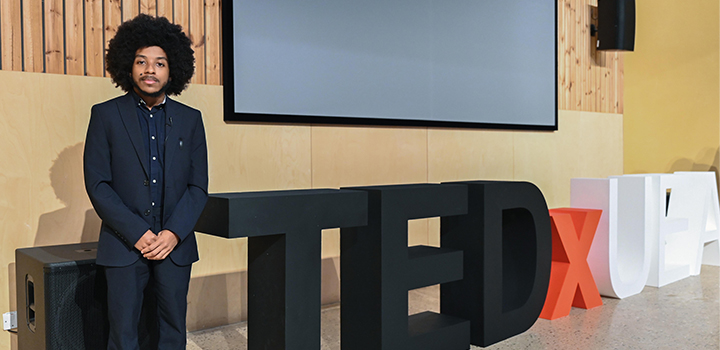
Student entrepreneur takes startup story to TEDxUEA
A University of East Anglia (UEA) student challenged audiences to consider who gets left behind by technology, drawing on his experience supporting Black and textured hair stylists.
Read more
Dr Abby Onencan guest speaker at Norfolk school STEM evening
Dr Abby Onencan from the School of Environmental Sciences was invited to speak at a Norfolk secondary school's STEM Celebration Evening, where pupils were recognised for weather and soil investigations carried out through her Royal Society-funded project.
Read more