Dr Abby Onencan guest speaker at Norfolk school STEM evening
By: Communications
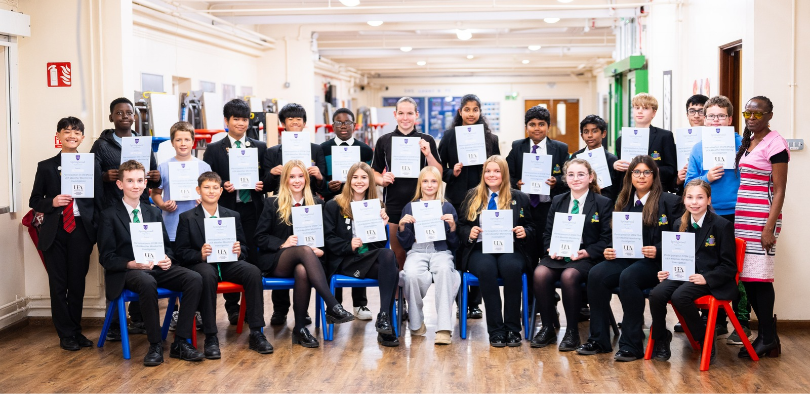
Associate Professor Abby Onencan from the School of Environmental Sciences was guest speaker at a rural Norfolk secondary school's science, technology, engineering and mathematics (STEM) Celebration Evening on Thursday 15 October.
There, she joined 36 Year 7 and 8 pupils as they received certificates for the investigations they carried out through Environmental Sciences in Action (ESA), an outreach project led by Dr Onencan. Their certificates were among more than 200 awarded across 17 STEM projects and competitions, including Race to the Line, FIRST LEGO League, CanSat, a national scientific thinking challenge, and Bronze and Silver CREST Awards.
It was the second time Dr Onencan had celebrated these pupils' work. In May, she welcomed them to UEA, where they presented their findings to university scientists at the ESA showcase.
Bringing environmental science into the classroom
ESA is funded by a Royal Society Partnership Seed Grant. Over two years, Dr Onencan and colleagues are working with ten schools across Norfolk and Suffolk to bring hands-on fieldwork into the classroom.
Pupils learn science through hands-on investigation, asking questions, collecting real data and making sense of what they find, supported by UEA researchers. The project has developed and implemented four workbooks, written by Dr Onencan with contributions from UEA colleagues: Earthworm Detectives (soil health), Microclimate Detectives (weather), Energy Detectives (heat loss from buildings) and Microplastic Detectives (beach plastic pollution).
The project forms part of UEA's commitment to widening participation and strengthening partnerships with schools across the region. By giving young people the opportunity to take part in genuine research and engage with university life from an early age, ESA helps raise aspirations inspire the next generation of scientists and researchers.
Investigating local environmental challenges
The 36 pupils ran their own weather station for more than three months and found that March and April had been unusually dry. Because their school is surrounded by farmland, they warned that a dry spring could mean summer drought.
They then investigated their soil. Earthworms keep soil healthy by letting in air and water and releasing nutrients for crops, so healthy soil is usually full of them. Following the National Earthworm Recording Scheme's five-pit method, the pupils dug five soil pits and sorted the soil by hand. The soil was fertile, but across all five pits they found just one earthworm. Using their own weather records, they suggested the dry spring had driven the earthworms away.
"These pupils took their own weather data, turned it into a warning about drought, then used it to explain what they found in the soil," said Dr Onencan. "Nobody gave them the answers. That is what doing science really looks like."
Celebrating achievement and inspiring future scientists
In her talk, Dr Onencan shared her own route into science, from training as a lawyer in Kenya and working for the United Nations to a PhD in systems engineering. She closed by challenging the school to apply for its own Royal Society grant and keep investigating.
The science teacher who led the school's involvement said: "The kids really enjoyed all of it, and they also really enjoyed the showcase event at UEA." Days later, pupils were still talking about Dr Onencan's visit.
The project is part of UEA's commitment to widening participation, giving young people hands-on experience of real research and a first taste of university life.
Related Articles

UEA’s award for global recruitment growth celebrated at International Forum
The University of East Anglia’s success in growing international student recruitment has been celebrated at its International Forum.
Read more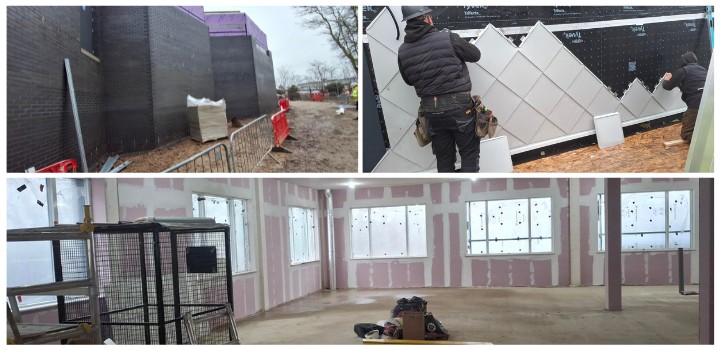
UEA’s new high‑tech anatomy suite on schedule to open to students in September 2026
The University of East Anglia’s new high‑tech anatomy suite is on track to open to students in September 2026.
Read more
Groundbreaking new partnership to deliver digital creativity degrees in China
A new partnership between UEA and Communication University of China, Nanjing (CUCN) has been approved by China’s Ministry of Education, aiming to empower a new generation of globally-minded storytellers and digital creatives.
Read more