Cultural leaders from Peru and Brazil bring climate justice and Indigenous rights campaign to Westminster
By: Communications
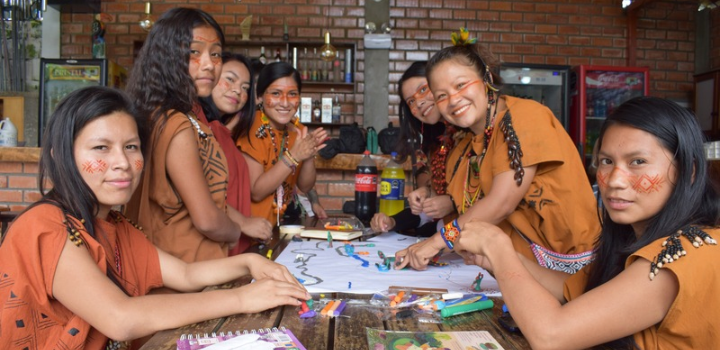
Indigenous women leaders and LGBTQIA+ campaigners from Peru and Brazil are in London this week as part of a University of East Anglia project using creative storytelling to drive climate justice and Indigenous rights advocacy.
The visitors are taking part in a House of Lords policy briefing and campaign launch today, bringing Indigenous leaders face-to-face with politicians and policymakers to discuss climate justice, gender, security and international development ahead of COP31 and ongoing debates about overseas aid.
The Arts and Humanities Research Council (AHRC)-funded project, Indigenous Knowledge Mobilisation: Creative Advocacy Across Latin America, brings together two established UEA initiatives: Women of Influence in Peru, led by Prof Sarah Barrow, and Origem in Brazil, led by Dr Paulo Pepe.
While working with different Indigenous communities, this project uses storytelling as a way of sharing their experiences and perspectives. Together, they create opportunities for Indigenous women and LGBTQIA+ communities to engage with policymakers and public audiences.
As part of the project, Indigenous leaders, artists and activists from Peru and Brazil will take part in a series of events in London designed to raise awareness of Indigenous perspectives on climate justice, cultural identity and social change.
Prof Sarah Barrow from UEA’s School of Media, Language and Communication Studies, said: "Indigenous women and LGBTQIA+ communities are often on the frontline of environmental and social change, but their voices are rarely heard in policy discussions.
"This project and the activities in London create opportunities for people to share their experiences directly with UK audiences and decision-makers. Through film, storytelling and creative engagement, we hope to raise awareness of Indigenous perspectives and the challenges facing communities in Peru and Brazil."
Dr Paulo Pepe from UEA’s Interdisciplinary Institute of the Humanities, said: “For Indigenous LGBTQIA+ communities in Brazil, visibility is not simply about being seen. It is about challenging discrimination, asserting their identities and claiming their place within their communities and wider society.
“Through this project, we have seen how film and storytelling can create opportunities for people to reclaim their narratives, challenge stereotypes and make their voices heard. Bringing these experiences into Westminster is an important opportunity to connect community-led advocacy with those involved in shaping policy.”
Documentary screenings will also take place on Thursday 15 October at The Garden Cinema, London, showcasing stories from Indigenous communities in Peru and Brazil and exploring how creative storytelling can support cultural advocacy and social change.
The events come as climate justice, Indigenous rights and international development continue to feature prominently in political debate ahead of COP31 and ongoing discussions about the future of overseas aid.
UEA researchers hope the project will amplify Indigenous voices and help bring their perspectives into public debate and policymaking.
Thinking about studying at UEA?
Discover our award-winning campus, meet current students and staff, and find out what life at UEA is really like at one of our upcoming Undergraduate Open Days:
Saturday 24 October 2026
Saturday 28 November 2026
Related Articles
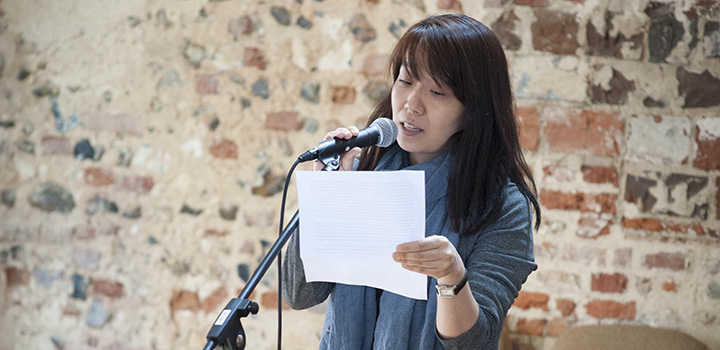
Han Kang, UEA-published author, wins 2024 Nobel Prize in Literature
The University of East Anglia (UEA) is once again celebrating the award of a Nobel Prize, after writer Han Kang, whose story, Europa, was published by UEA Publishing Project, won the 2024 Nobel Prize in Literature.
Read more
Innovation and Impact Awards now open for entries and nominations
The Innovation and Impact Awards are back for 2025 and looking to recognise and reward UEA’s most game changing staff, students, and graduates, and their collaborative work with partners outside the University.
Read more
UEA’s research confirmed as ‘world-leading’ by national assessment
The global significance and real-world impact of the University of East Anglias (UEAs) research has been confirmed with the Research Excellence Framework 2021 classifying 91 per cent of it as world-leading or internationally excellent.
Read more