Climate policies are cutting carbon, new study shows
By: Communications
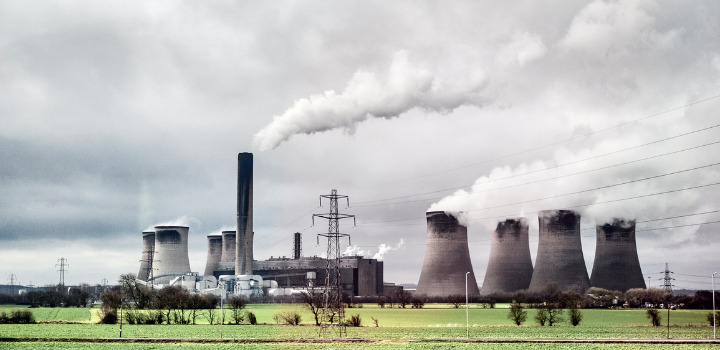
Countries with stricter and better-targeted climate policies cut carbon emissions faster, according to a major new study.
Involving researchers in the UK and EU, including academics from the University of East Anglia, the study draws on the most comprehensive climate policy dataset ever assembled.
It uses over 3900 policies adopted since 2000 in 43 leading economies responsible for over three quarters of global emissions.
The findings, published in the journal Nature Communications, show:
- Climate policy works: countries with more stringent climate policies decarbonise their economies faster.
- Targeting policies matters: policies aimed at the most polluting sectors — like energy, industry and transport — deliver the biggest impact.
- Climate targets strengthen policy impact: countries with long-term, legally anchored climate goals and dedicated ministries to help stay on course get more out of every policy they adopt.
- International cooperation helps: membership in bodies such as the International Energy Agency or Clean Energy Ministerial boosts policy effectiveness.
By comparing the world today with a scenario in which no climate policies existed, the authors found that more than three billion tonnes of CO₂ were avoided in 2022 alone - roughly equal to the EU’s annual emissions.
The study was co-led by academics at the Environmental Change Institute (ECI) at the University of Oxford, Cardiff University and London School of Economics (LSE), and Heidelberg University. Researchers from the Tyndall Centre for Climate Change Research and Norwich Business School at UEA were co-authors.
Prof Nicholas Vasilakos, Professor of Sustainable Business Economics and Public Policy at Norwich Business School, said: “This research shows that climate policy effectiveness is not just about ambition, but about design.
“Well-targeted and sustained policy portfolios, supported by credible long-term targets and strong institutions, can materially accelerate emissions reductions. This is a crucial message for governments that are now focused on delivery rather than pledges.”
Prof Andrew Jordan, Director of the Tyndall Centre, added: “Effective climate action is not just about political ambition, but smart policy design, adequate institutional capacity, and maintaining strategic focus. Governments now know what works: the challenge is scaling it fast enough.”
The study provides clear lessons for policymakers: the quantity and focus of policies both matter, and both supportive national organisations and international cooperation makes them more effective.
It shows that economic instruments were most effective in reducing emission intensity, compared to regulatory or voluntary approaches
Prof Charlie Wilson, Professor of Energy and Climate Change and Senior Research Fellow at ECI co-lead the study. He said: “Climate policies are not just symbolic gestures; they are working. The countries that focus policies where emissions are highest are reaping the biggest benefits. This shows that careful design and strategic focus really matter.”
Dr Theo Arvanitopoulos, of Cardiff University and LSE, and co-lead author, added that their analysis of large policy portfolios shows they strengthen what governments can achieve, despite growing political debate about their effectiveness.
However, economic instruments are not necessarily a one-size-fits-all solution, said Dr Simon Bulian, from Heidelberg University, the third co-lead author. He added that the findings also suggest a positive impact of policy traditions: countries that specialised in a particular type of instrument (economic or regulatory) were the most successful in reducing emission intensity.
The study also involved researchers from the International Institute for Applied Systems Analysis.
‘Climate policy portfolios that accelerate emission reductions’ was published in Nature Communications on February 24.
Related Articles

Blind spot in ocean carbon research could undermine global climate predictions
A major new report co-led by an academic at the University of East Anglia (UEA) reveals a critical lack of understanding about how the ocean absorbs and stores carbon.
Read more
Hydropower dams induce widespread species extinctions across Amazonian forest islands
Hydropower should avoid flooding forests to minimise biodiversity loss and disturbance in the Amazonian rainforest, new research from UEA finds.
Read more
UEA among global elite for research collaboration
The University of East Anglia has been recognised as one of the best in the world for research collaboration in a major new ranking.
Read more