UK’s first megafire unleashed nearly a year of fire emissions in four days
By: Communications
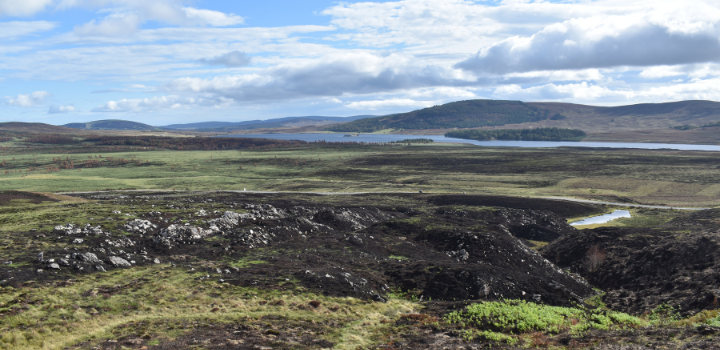
A new analysis of carbon emissions from the UK’s first megafire - the 2025 Dava Moor Fire in Scotland - suggests a shift in the risk of big, destructive, carbon-intensive wildfires in northern peatlands.
The fire’s exceptional size and intensity were made possible by climate conditions hot and dry enough that normally soggy soils can burn, releasing carbon trapped over millennia.
Over just four days, the Dava Moor Fire torched as much acreage as usually burns in an entire year in the UK. It charred roughly twice the area as the nation’s next-largest fire in the past 20 years and released carbon equivalent to 85% of the average annual emissions from fires across the UK from 2001 to 2021.
Publishing their findings in the journal Nature Geoscience, the researchers, including Dr Matthew Jones from the University of East Anglia, found that while an accumulation of flammable vegetation above ground contributed to the fire’s rapid spread, extremely dry conditions primed the system to burn. Nearly 85% of the fire’s total emissions came from combustion of peat, a carbon-dense soil.
Dr Jones, of the Tyndall Centre for Climate Change Research at UEA and co-lead author of the annual State of Wildfires report, said: “This first recorded instance of a megafire on UK soil is a reminder that even regions that were historically considered at low fire risk are under the strain of climate change.
“High temperatures and prolonged drought caused the carbon-rich peat on Dava Moor to dry out and ultimately made it vulnerable to this historic fire event.
“Although this fire has no historical precedent in the UK, its occurrence is unsurprising given the trends we are seeing in high latitude regions around the world. Temperature increases in these regions are outpacing the global average rate of warming, and droughts are become more frequent and intense under climate change.
“Our study shows that the fire emitted over 140 thousand tonnes of CO2 to the atmosphere. To recover that amount of carbon, you would need to plant forest on 425 football pitches and that would cost in the region of £3 million."
The study was led by Johanna Schoenecker, a postdoctoral researcher in the lab of Adam Pellegrini, an assistant professor of Earth system science in the Stanford Doerr School of Sustainability.
“Through our sampling of scorched soils, we were able to document firsthand the extent of the peat loss over much of the burn scar,” said Dr Schoenecker.
The fact that emissions from peat far outweigh those from surface vegetation in this fire matters because it could take centuries for new peat to form and sequester the amount of carbon released to the atmosphere, “making these losses effectively irreversible on any timescale relevant to climate action,” added Dr Schoenecker.
“This study demonstrates why there needs to be more attention paid to preserving peatlands and addressing wildfires in areas where peatlands have served as long-term carbon reservoirs,” said Dr Pellegrini, the study’s senior author.
Special soils
A rare type of wet ecosystem, peatlands form when waterlogged, oxygen-poor conditions cause plant matter to only partially decompose and accumulate. The result is the soft, spongy, usually dark soil dubbed peat.
While not inherently more carbon-rich than wood, peat compacts over time. As a result, although peatlands cover only 3-4% of Earth’s land surface, they are estimated to hold about a third of all land-based carbon – roughly twice that of the world’s forests, according to the United Nations Environment Programme.
With more than 10% of peatlands worldwide already drained or otherwise degraded, climate conservationists have targeted peatland restoration and maintenance as a promising nature-based climate solution. “Peatland preservation is a big issue for climate mitigation,” said Dr Pellegrini.
Toward this end, Pellegrini’s Stanford colleagues Alison Hoyt and study co-author Alexandra Konings are leading a project focused on rewetting peatlands drained for agriculture in Indonesia to potentially slow carbon emissions and reduce wildfire risk. As peat soils dry out, the dead plants they accumulated over thousands of years start to rapidly decompose when they come into contact with oxygen, releasing carbon dioxide.
“Peatlands are found all over Earth, from the tropics to the Arctic Circle, and they each have distinctive characteristics and vulnerabilities when it comes to climate change,” said Pellegrini. “The outbreak of the Dava Moor Fire gave us a unique opportunity to study one of these fire-impacted peatlands up close.”
Into the burn scar
To learn more about wildfire sweeping across an area rich with peat in a temperate climate, Dr Schoenecker travelled 10 hours by car to conduct a site visit of the burnt landscape in September 2025. At the time, she was a PhD student at Cambridge University, where Dr Pellegrini was on the faculty before joining Stanford.
With colleagues, Dr Schoenecker measured how deep the fire burned into the soil at preselected locations on a grid to obtain a statistically meaningful sample size. To determine peat burn depth at each sampling point, the researchers measured the distance between the post-fire soil surface and the root tops of surface-rooting plant species that survived the fire.
Alongside this hand-collected information, the researchers consulted readings of soil moisture taken remotely by NASA’s Soil Moisture Active Passive (SMAP) satellite to assess the state of the land before the megafire broke out. This data indicated a dry winter and spring had created the conditions for the Dava Moor Fire to burn extremely hot and spread fast, although it was ignited by human activity.
“We’re concerned that this fire could indicate a shift in the UK’s fire regime toward these kinds of wildfires happening much more readily now,” said Dr Pellegrini. “That, in turn, could have implications for the extensive peatlands found in other temperate and northern regions.”
Related Articles
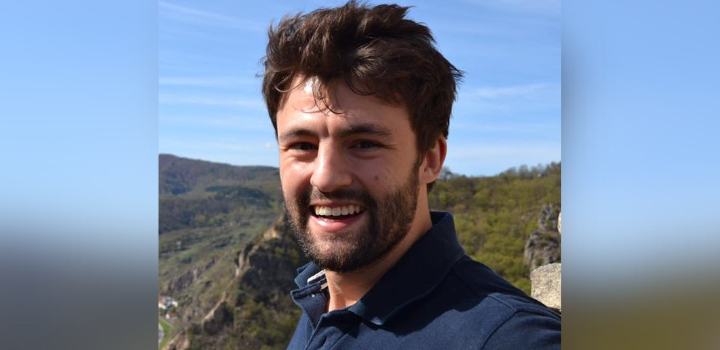
Dr Matthew Jones wins 2025 Philip Leverhulme Prize
An environmental scientist from UEA has been awarded a prestigious research prize for his internationally recognised work on wildfires and climate change.
Read more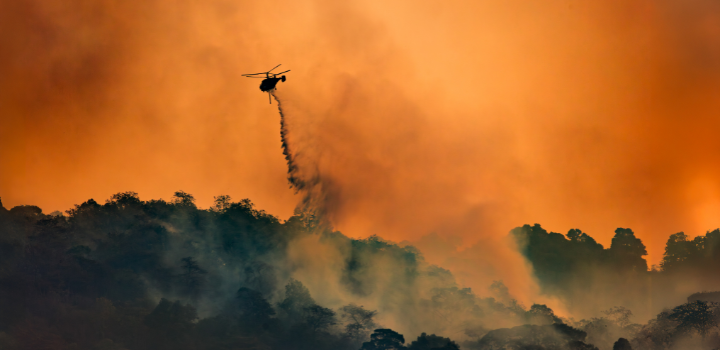
Rising simultaneous wildfire risk compromises international firefighting efforts
The most high-risk conditions for fires are increasingly happening across countries at the same time, making resulting wildfires even more challenging to tackle, new research reveals.
Read more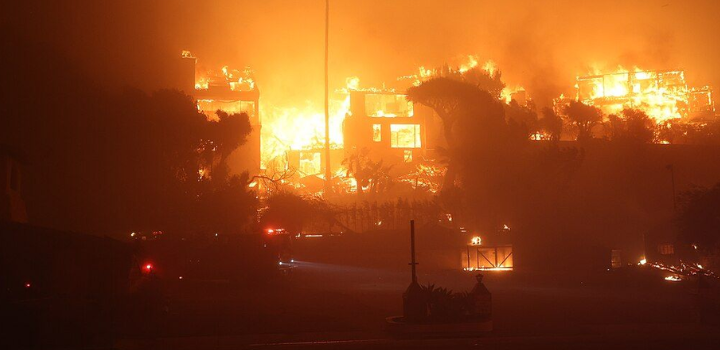
Climate change drove extreme wildfire seasons across the Americas, making burned areas around 30 times larger
Human-driven climate change made wildfires in parts of South America and Southern California many times larger and more destructive, according to an annual assessment by international experts.
Read more