2025 – a year in research
By: Communications

The past twelve months have seen UEA researchers break new ground on everything from Magna Carta to the mating habits of jaguars in the Amazon. Join us as we take a look back at just some of 2025’s incredible stories, discoveries and expert insights.
Harvard Law School’s ‘copy’ of Magna Carta revealed as original
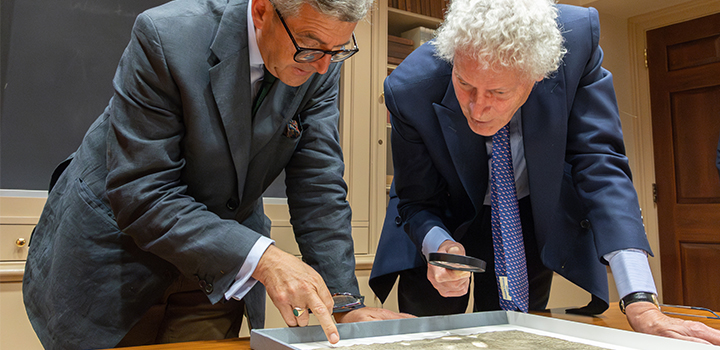
Image: Prof Nicholas Vincent and Prof David Carpenter viewing the Magna Carta at Harvard. Credit: M Stewart, Harvard Law School.
In May it was announced that British researchers had discovered that a ‘copy’ of Magna Carta owned by Harvard Law School is in fact an extraordinarily rare original from 1300.
The discovery by leading Magna Carta experts from UEA and King’s College London means the document, which Harvard Law School acquired in the 1940s, is just one of seven from King Edward I’s 1300 issue of Magna Carta that still survive.
Fossil fuel CO2 emissions hit record high in 2025

Despite the decarbonisation of energy systems progressing in many countries, global carbon emissions from fossil fuels are projected to rise by 1.1% in 2025, according to research by the Global Carbon Project published in November.
Prof Corinne Le Quéré, Royal Society Research Professor at UEA’s School of Environmental Sciences, was a key figure in the announcement and subsequent media coverage.
ChatGPT vs students: study reveals who writes better (and it’s not the AI)
Despite being ‘impressively coherent and grammatically sound’, research published in April found that AI essay writing falls short when measured against students in one particular area – a personal touch.
Prof Ken Hyland, from UEA’s School of Education and Lifelong Learning, sums it up: “When students come to school, college or university, we’re not just teaching them how to write, we’re teaching them how to think - and that’s something no algorithm can replicate.”
Business and Economics
Experts find £90K “sweet spot” for crowdfunding success

A report published in November, which analysed 1,189 successful Seedrs crowdfunding campaigns, found that investors are most attracted to start-ups with a target of around £90,000, teams of about 19 members, and pitches using words like “health” and “organic”.
Generative AI bias poses risk to democratic values
Back in February, a UEA-led study warned that generative AI tools like ChatGPT, while rapidly transforming how information is created and shared, exhibit significant political biases that could undermine public trust and democratic values.
Impacts of workplace bullying on sleep can be “contagious” between partners
Research released in February revealed that workplace bullying not only harms employees’ sleep but also affects their partners, with insomnia symptoms proving “contagious” within couples.
Language, Literature and Communication Studies
Baltic countries lead the way in supporting media freedom internationally
October saw the publication of the new Index on International Media Freedom Support (IMFS). Results showed the Baltic states are leading efforts to promote media freedom worldwide. Whilst many larger nations, including several G7 members, score poorly, revealing a gap between promises and action.
Animal corner
Jaguar love in the wild - first footage of a wild black jaguar mating

In September, it was announced that UEA researchers had captured a world-first from deep in the heart of the Brazilian Amazon - a black-coated jaguar mating in the wild with a spotted jaguar. Recorded in Serra do Pardo National Park, it offered a new window into the private lives of one of the world’s most elusive big cats and proved particularly popular on social media!
Study reveals a plastic ‘death trap’ in birds’ nests
A report in July found that human-derived materials were present in 91% of 568 stork nests monitored in Portugal over four years. During a year of weekly checking, 12% of nestlings (35 out of about 290) became entangled, with many of those dying, often due to injuries such as necrosis and limb loss after becoming entangled in synthetic fibres used to build their nests.
Ancient wolves on remote Baltic Sea island reveal link to prehistoric humans
In November, it was reported that 3,000–5,000-year-old wolf remains had been found on a small, isolated island in the Baltic Sea – a place where the animals could only have been brought by humans.
Genetic rescue can work even under imperfect conditions, study finds
Research published in November highlights that introducing new genes (genetic rescue) into endangered species can improve survival by boosting genetic diversity and reducing harmful inbreeding caused by habitat loss and climate change.
Environmental and Earth Systems Sciences
Climate change drove extreme wildfire seasons across the Americas, making burned areas around 30 times larger

In October, a global report showed that climate change is making wildfires far more severe and frequent, with devastating impacts on lives, property, and the environment. Experts found that January’s Los Angeles fires were twice as likely and burned 25 times more land because of human-driven warming, while fires in South America’s Pantanal region were 35 times larger than they would have been without climate change.
UK food needs radical transformation on scale not seen since Second World War
October saw the launch of a major new report warning that the UK must act fast to fix its food system or face rising costs, health problems, and climate crises. The Roadmap for Resilience: A UK Food Plan for 2050 called for big changes in farming, land use, and diets to make food healthier, more sustainable, and secure.
Psychology
The experts that can outsmart optical illusions
Back in March, it was revealed that medical imaging experts are not only skilled at interpreting scans like MRIs but also excel at solving common optical illusions. This breakthrough challenged the belief that overcoming illusions is impossible and opened the door to using them in training, which could help reduce perceptual diagnostic errors which are currently responsible for up to 80% of mistakes.
UEA tracks baby brainwaves to give deaf infants a head start
In June it was announced that UEA is leading a £1 million project to help deaf children born to hearing parents develop stronger language skills from infancy. With one in every 1,000 children born deaf, most to hearing families, the project seeks to improve support from day one and reduce language delays that often persist into school years.
Medicine and Pharmacy
We are no longer living longer, UEA study shows
A major report published in February in The Lancet Public Health showed that life expectancy gains across Europe have slowed significantly since 2011, with England seeing the sharpest decline. Obesity, poor diets, physical inactivity, and the Covid pandemic were cited as key drivers.
Revolutionary blood test for ME / Chronic Fatigue unveiled
In October it was announced that scientists at UEA and Oxford BioDynamics had developed a groundbreaking blood test that can diagnose Chronic Fatigue Syndrome (ME/CFS) with 96% accuracy, offering hope to over 400,000 sufferers in the UK and millions worldwide who have long faced misdiagnosis and stigma.
Global Development
Landmark report warns food systems breach planetary limits
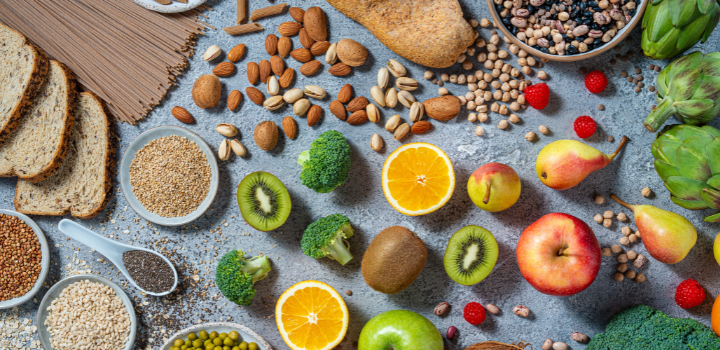
A major new published in The Lancet in October found that transforming global food systems and shifting diets could prevent around 15 million premature deaths annually while cutting food-related greenhouse gas emissions by more than half.
Related Articles

UEA graduate among the big names leading Norwich History Festival
Comedian and author Charlie Higson will return to UEA as the Norwich History Festival brings some of the UK's leading historians, authors and broadcasters to the city.
Read more
UEA-led heritage project to bring Great Yarmouth’s maritime past to life
The University of East Anglia (UEA) has secured £249,776 in funding from The National Lottery Heritage Fund to create digitally augmented heritage walks in Great Yarmouth.
Read more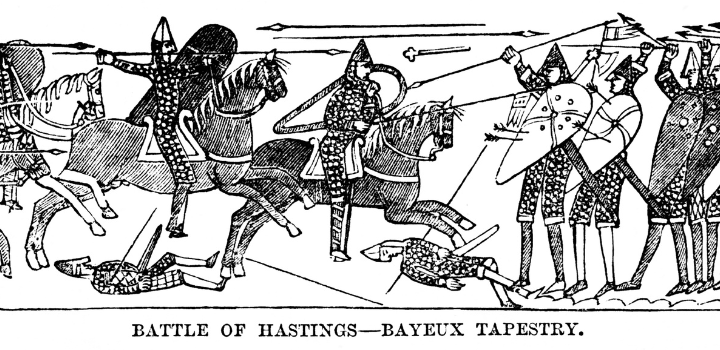
English history’s biggest march is a myth – King Harold sailed to the Battle of Hastings
New research from the University of East Anglia (UEA) reveals that King Harold’s legendary 200 mile march to the Battle of Hastings in 1066 never happened.
Read more