UEA-led heritage project to bring Great Yarmouth’s maritime past to life
By: Communications
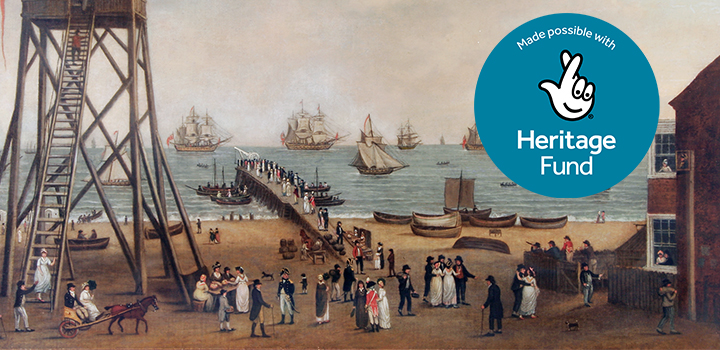
The project will bring to life the 1682 loss of the Gloucester warship off the town’s coast, which carried the future King James II and his royal court.
The programme will develop a series of guided and self-guided walks, alongside the town’s first augmented reality (AR) heritage trails, allowing participants to explore Great Yarmouth’s 17th-century streets, buildings, and waterfront.
Led by UEA’s award-winning historians Prof Claire Jowitt and Dr Benjamin Redding, the project will be delivered in partnership with the Time & Tide Museum of Great Yarmouth Life and Great Yarmouth Borough Council.
Research with regional impact
Although the Gloucester sank off Great Yarmouth at a time when the town was one of England’s richest ports, its role in the events surrounding the shipwreck has remained little known within East Anglia, and beyond.
The project will recover and highlight the town’s involvement, from the Duke of York’s visit shortly before the disaster to the extensive salvage efforts that followed.
The wreck was discovered by Norfolk divers Julian Barnwell, Lincoln Barnwell and James ‘Tiny’ Little in 2007. UEA has been researching its history and significance since 2019, with the discovery publicly announced in 2022.
Prof Claire Jowitt said “We are thrilled to have received this support from The National Lottery Heritage Fund. Thanks to National Lottery players we are able to tell the history of the Gloucester, which we consider to be a Norfolk story, with the people of Great Yarmouth.”
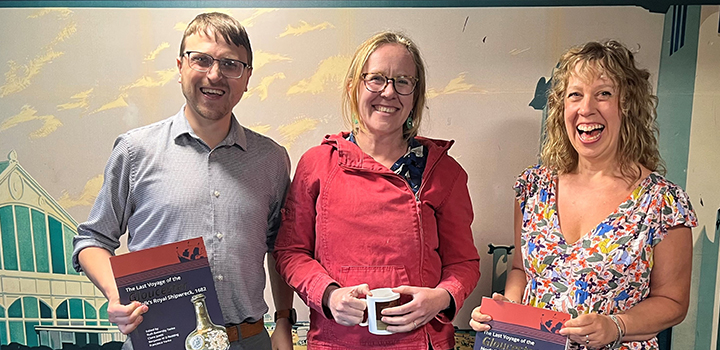
Image: Dr Benjamin Redding (left) and Professor Claire Jowitt (right) with Cultural Heritage Engagement Consultant, Jess Johnston (centre) leading a community consultation and engagement session at Time & Tide Museum of Great Yarmouth Life in May 2025.
From scholarship to street-level history
Central to the initiative will be the creation of a series of guided and self-guided maritime history walks for children and adults, translating UEA research into engaging, accessible experiences rooted in place.
The project will also deliver Great Yarmouth’s first augmented-reality heritage walks, using the technology to reimagine lost buildings, historic waterfronts, and key events from the town’s past - brought vividly to life as people wander the modern streets.
Prof Jowitt said: “Digital storytelling using augmented reality will allow participants on the heritage walks to feel like they are time travelling to the town’s distinguished maritime past.
Dr Benjamin Redding said: “The Gloucester heritage walks will bring life to lost stories and voices, showing the ways the people of Great Yarmouth were key to rescue and recovery efforts, and the town’s enduring relationship with the sea.”
Civic leadership and community collaboration
The walks will highlight figures from Great Yarmouth’s past including Sir Thomas Medowe, the town’s bailiff in 1682, who welcomed the Duke of York and later coordinated salvage operations for The Gloucester.
The project places strong emphasis on collaboration with local communities, schools and cultural partners, reflecting UEA’s commitment to civic engagement and regional cultural leadership.
Sheila Oxtoby, Chief Executive of Great Yarmouth Borough Council, said: “Great Yarmouth Borough Council is delighted to be supporting this exciting new initiative which will provide an excellent addition to our town’s many attractions – both for residents and visitors.
“It will strengthen our important cultural tourism offer and inspire people across the borough of all ages to learn more about a fascinating chapter in Great Yarmouth’s rich maritime history.
“We are pleased to be working with partners at the UEA and Time and Tide Museum so we can all share more about the Gloucester 1682 story – one that provides a unique opportunity to inspire people for years to come via this project.”
Steve Miller, Director of Culture & Heritage and Head of Norfolk Museums Service, added: “We are delighted that this support from The National Lottery Heritage Fund will bring more of Great Yarmouth’s history to life for everyone to enjoy.
“We look forward to working with UEA on this ambitious project, using the collections at Time and Tide to create new opportunities for learning, engagement and tourism.”
General Lord Richard Dannatt, Chairman of The Gloucester 1682 Trust, said: “The Gloucester 1682 Trust is delighted to support this very imaginative initiative by the UEA.
“The discovery of the wreck of the Gloucester, with her close links to Great Yarmouth, provides a wonderful opportunity to learn more about late seventeenth century England and a great boost to Great Yarmouth in this century.
“The Trust looks forward to working closely with the UEA and Great Yarmouth Borough Council as this very exciting project develops.”
Strengthening UEA’s role as a regional cultural leader
The initiative reinforces UEA’s position as a university deeply connected to Norfolk’s history and communities where world-class research informs public understanding, inspires pride of place, and contributes meaningfully to cultural life across the region.
Reflecting on the significance of the award, UEA’s Strategic Cultural Funding Manager Justine Mann, said: “Awards and collaborations of this kind are transformative because they enable universities to build closer, more meaningful partnerships with communities through co-creation and placemaking, strengthening their role as cultural anchors and civic institutions.”
To read more about UEA’s work on the Gloucester so far, visit The Gloucester.
Related Articles

Tragedy and chaos aboard the warship Gloucester
The Gloucesters troubled early history, intertwining maritime heritage with national and global narratives, has been revealed by research from the University of East Anglia.
Read more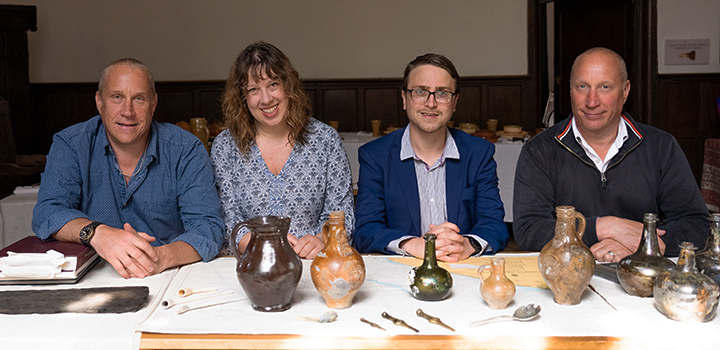
Spotlight on the Gloucester
This week, weve gone behind the scenes on the discovery of the Gloucester with maritime expert and Professor in English and History, Prof Claire Jowitt, and Senior Research Associate in Maritime History, Dr. Benjamin Redding.
Read more
Gloucester Shipwreck project gains recognition at national award ceremony
The Gloucester Shipwreck project, led by Professor Claire Jowitt, was recognised against some of the very best in higher education at the Times Higher Education award for Research Project of the Year: Arts, Humanities and Social Sciences.
Read more