Genetic rescue can work even under imperfect conditions, study finds
By: Communications
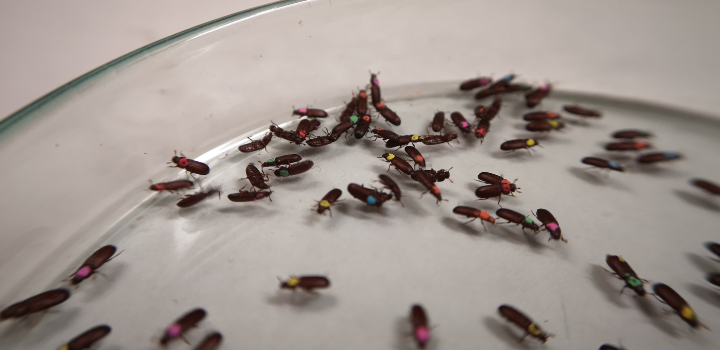
New research by scientists at the University of East Anglia (UEA) suggests that matching environmental adaptations during genetic rescue of endangered species offers the best outcomes, but it is not always required for successful conservation.
Climate change and habitat loss are fragmenting species into increasingly small and isolated populations, leading to inbreeding. This increases the chances of harmful gene variants being expressed, weakening individuals and entire groups.
Inbreeding also reduces genetic diversity, which is vital for adapting to environmental changes. Together, these factors raise the risk of extinction.
Genetic rescue
One way to help is through genetic rescue - bringing in individuals from other closely related populations to boost genetic diversity. However, this can sometimes interfere with traits, or adaptations, that help a population survive in its local environment, and it remains a controversial process.
In a laboratory experiment with red flour beetles adapted to high temperatures, researchers from UEA’s School of Biological Sciences tested whether genetic rescue would harm their heat tolerance adaptation and, subsequently, reproduction.
They found that while using any introduced ‘rescue’ beetles improved the population’s health, those already adapted to the same hot conditions had the biggest positive impact. The findings are published today in the journal Proceedings of the Royal Society B: Biological Sciences.
Lead author and postgraduate researcher George West said: “The highly controlled and repeated nature of experiments we have undertaken offers a unique opportunity to test something that couldn’t be done in the wild.
“Our study highlights that having shared adaptations between the rescuer and rescued population provides the most benefits. However, even using a rescuer who is not adapted to the same environment can still be beneficial, improving the health and reproductive success of endangered groups.”
He added: “In this case, the benefits of adding genetic variation are greater than the damage done to the population's adaptation to temperature stress. This is important for conservation; by demonstrating that genetic rescue can succeed under imperfect conditions, we hope this result will encourage people to use genetic rescue - albeit carefully - even if they are not sure if the rescuer has the same adaptation or when ideal donor populations are unavailable.”
Genetic variation
A novel element of the study was using artificially inbred, dwindling beetle populations that were adapted to temperature stress – this allowed the team to test if adding genetic variation can have a positive effect on an inbred population even if the rescuer doesn’t have the same adaptations as those that need rescue.
The study was conducted using many populations of red flour beetles - which are only five millimetres long - that have adapted to live at a higher temperature of 38°C.
The team created several replicated populations and changed the environments they lived in, using beetles that had been adapting to different temperatures for 150 generations – with a life cycle taking around one to two months. For comparison, if the study species were humans, this would take approximately 4,000 years.
Inbred populations were created by mating brothers with sisters and keeping them at a small population size. The researchers could then use these ‘at risk of extinction’ populations to test genetic rescue.
Rescuers, drawn from populations adapted to either 30°C or 38°C, were introduced into the populations adapted to 38°C, which had been inbred for two generations.
They were experimentally rescued by swapping in a male from another, non-inbred, population - half the time with a male who was also adapted to high temperature and half the time with one who was not. The team then recorded population productivity for three generations post-rescue, in the adapted 38°C environment, to see how well they did.
Project lead Prof David S Richardson said: “We found increased breeding success of the recipient population even when the male rescuer was not adapted to the higher temperature of the rescued population. So genetic rescue still worked.
“However, the biggest benefits were seen when the rescuer was also adapted to the local environment, highlighting the value of strategic matching when possible. Enabling immigration from locally-adapted populations could therefore be important in a conservation context as they may improve population resilience to a changing climate.”
The work was supported by the Natural Environment Research Council and the Biotechnology and Biological Sciences Research Council.
‘Does genetic rescue disrupt local adaptation? An experimental test using thermally adapted Tribolium castaneum lines’, George West, Michael Pointer, Will Nash, Rebecca Lewis and David S Richardson, is published in Proceedings of the Royal Society B: Biological Sciences on November 12.
Related Articles

‘Bi-sexual’ beetles are simply inept, new study finds
Same-sex mating behaviour amongst male insects is much more likely to be due to incompetence, than sexual preference, male-male competition or evolutionary motivation - according to new UEA research.
Read more
Computer game exploring wonders of a hidden world ensures lasting legacy for the late Prof Harriet Jones
A new video game crafted from the imagination of a UEA scientist and her child, and completed in her memory, brings the hidden universe of microscopic life to players.
Read more
Anti-aging drug Rapamycin extends lifespan as effectively as eating less
The anti-aging drug Rapamycin has the same life-extending effect as eating less, according to new research from UEA.
Read more