Understanding wildfires: An interview with Dr Matt Jones
By: Communications
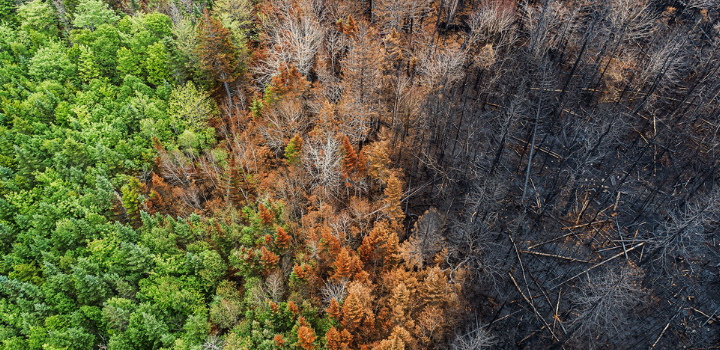
Dr Matt Jones (NERC Investigator, School of Environmental Sciences) discusses the causes and effects of wildfires, and what we might do to combat them, in a new ClimateUEA interview.
Dr Jones became fascinated by the complexity of wildfires during his studies and in 2024 co-led the publication of the first ever State of Wildfires report.
Alongside the report, Dr Jones worked with colleagues to produce an interactive map and chart, recording wildfire activity for the benefit of the research community and wider public.
In this new interview, Dr Jones discusses how wildfire activity is changing and its effects on different environments. He explains how communities which might even seem distant from wildfire activity themselves are adversely affected by fires:
“In 2023, you could see the effects of the Canadian wildfires in Seattle and New York, partly because of southerly winds. This resulted in lots of hospital admissions and, for some people with respiratory conditions, severe complications.”
He also explores the ways in which international commitments, like the Paris Agreement, and local strategies are working to combat the impact of wildfires.
There are “warning signs that the UK may face a more fiery future” says Dr Jones. “But we can learn a lot from how other countries have dealt with the problem of wildfires for a very long time.”
Related Articles

Scientists reaffirm ‘incontrovertible’ evidence of human influence on climate
The scientific evidence for human-caused global warming is stronger than ever, according to a major new review – despite a United States government report questioning the science.
Read more
UEA among global elite for research collaboration
The University of East Anglia has been recognised as one of the best in the world for research collaboration in a major new ranking.
Read more
Rapid growth in climate extremes hitting critical region of Amazon hardest
Rapid growth in climate extremes is hitting a critical region of the Amazon hardest, according to new research involving the University of East Anglia.
Read more