UEA Professor George Lau elected Fellow of the British Academy
By: Communications
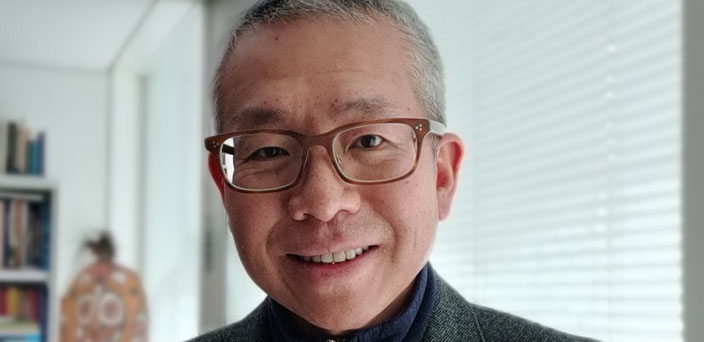
Prof George Lau, Professor of Art and Archaeology of the Americas at the Sainsbury Research Unit (SRU), University of East Anglia, has been elected a Fellow of the British Academy – one of the highest honours in the humanities and social sciences.
Prof Lau is internationally recognised for his research into the ancient cultures of the high Andes, with a particular focus on the arts, social complexity, and indigenous institutions and belief systems. His archaeological fieldwork and community outreach in Peru’s north highlands have shed new light on a mountainous region where many distinctive Andean cultural developments flourished long before the rise of the Inca Empire.
In addition to his fieldwork, Prof Lau is a leading voice in the academic study of global art histories. He co-founded the journal World Art in 2011 and has served as its Editor since 2017, helping to shape critical conversations in the field.
Reflecting on his election to the British Academy, Prof Lau said:
“It’s hard not to be elated by the Academy’s recognition, and it means a lot to me, since it attests to peer appreciation of past work, accomplished individually and collaboratively here at SRU, UEA and beyond that continues to resonate – I am delighted.”
Prof Lau joins a distinguished cohort of 92 new Fellows elected in 2025, recognised for their outstanding contributions to the humanities and social sciences.
A total of 58 new Fellows have been elected from 25 universities across the United Kingdom, alongside 30 International Fellows from universities in the United States, Ireland, South Africa, Singapore, China, Australia, France, Germany, the Netherlands, Finland, and Cyprus. Four Honorary Fellows have also been elected in recognition of their exceptional achievements in music, art, journalism and librarianship.
Prof Susan J Smith PBA, new President of the British Academy, said: “One of my first acts as the incoming President of the British Academy is to welcome this year’s newly elected Fellows. What a line-up!
“With specialisms ranging from the neuroscience of memory to the power of music and the structural causes of poverty, they represent the very best of the humanities and social sciences. They bring years of experience, evidence-based arguments and innovative thinking to the profound challenges of our age: managing the economy, enabling democracy, and securing the quality of human life.
“This year, we have increased the number of new Fellows by nearly ten percent to cover some spaces between disciplines. Champions of research excellence, every new Fellow enlarges our capacity to interpret the past, understand the present, and shape resilient, sustainable futures. It is a privilege to extend my warmest congratulations to them all.”
If you are looking to start university in September 2025 and still thinking about your options, consider joining a UK Top 25 university this September through Clearing.
Related Articles
UEA academic serves as historical consultant for new BBC Radio 4 series
A leading University of East Anglia (UEA) historian has contributed expert analysis to a major new BBC Radio 4 series presented by broadcaster David Dimbleby.
Read more
Lost letter from the Pope casts 1066 as a holy war against ‘followers of Satan’
A lost letter from the Pope could rewrite the story of 1066 – according to research from the University of East Anglia.
Read more
Graduation 2026: The mature students proving it’s never too late to learn
Mike Marshall and Tony Pearse have proved that determination and perseverance can turn even the longest-held dreams of higher education into reality.
Read more