UEA maritime historians look back on 100 years of the Shipping Forecast
By: Communications
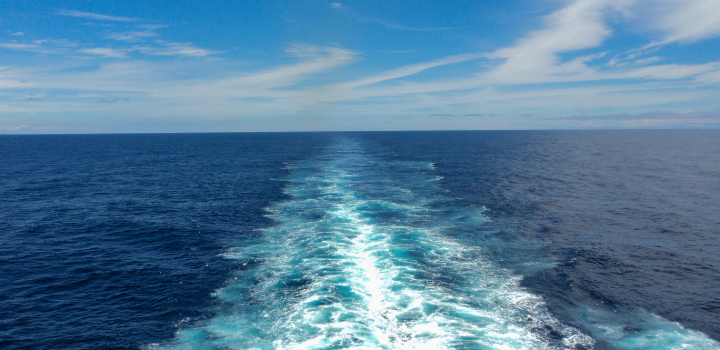
The Shipping Forecast has inspired art, poetry and music, saved lives, and soothed the nation to sleep – according to UEA maritime historians Prof Claire Jowitt and Dr Benjamin Redding.
The dedicated ‘Weather Shipping’ forecast was first broadcast by the BBC in October 1925.
It is now one of the longest-running radio programmes in the world.
"Distinctively British"
Prof Jowitt, from UEA’s School of History, said: “Like afternoon tea, or bracing autumn walks in soft drizzle, there is something distinctively British about the fixed-pattern broadcast currently on Radio 4 twice every day, and three times at weekends.
“The forecast is produced by the Met Office on behalf of the Maritime and Coastguard Agency, and it covers sea conditions around the British Isles for the next 24 hours. The waters around the UK and Ireland are divided into 31 weather areas, each with a quixotic-sounding name.
Dr Benjamin Redding, also from UEA’s School of History, said: “Each forecast takes precisely nine minutes to read by practiced BBC announcers – with distinctive, poetic rhythm and formulaic repeated phrases and structure.
“Its calming qualities have a hypnotic ability to lull the nation to sleep. But it has also inspired countless songs, novels, films, TV shows and works of art.
“One of the most memorable is the sonnet ‘The Shipping Forecast’ by Nobel Laureate Seamus Heaney in his 1979 collection Field Work, which was read out on BBC Radio 4’s Today Programme by King Charles, then the Prince of Wales.
Historical significance
“But despite the Shipping Forecast’s comforting properties and importance as a national cultural icon,” said Prof Jowitt, “it should be remembered that - first and foremost - it is intended to help save lives at sea.
“The first public weather forecast - published in The Times in 1861 - was inspired by the tragedy of the steam-clipper Royal Charter which sunk in a storm in 1859 with the loss of more than 400 lives.
“The storm-warning service was the brainwave of the meteorologist Vice-Admiral Robert FitzRoy, who established fifteen land weather stations using the recently-invented telegraph to transmit daily reports of conditions at set times.
“There are more than 37,000 known shipwrecks and recorded losses in England’s territorial sea but without Fitzroy’s innovation, the number would be far higher and more people would have lost their lives.
Continued importance
“Today, the Shipping Forecast is still listened to by many mariners around Britain, providing a safety net of good weather information to supplement online services now relied upon as standard.
“As navigating the sea becomes increasingly challenging due to extreme weather caused by climate change, I hope the Shipping Forecast will continue to improve safety at sea for the next 100 years.”
Related Articles
Spotlight on the Gloucester
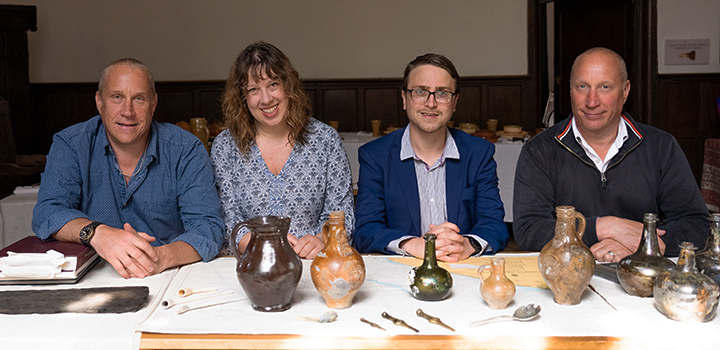
This week, weve gone behind the scenes on the discovery of the Gloucester with maritime expert and Professor in English and History, Prof Claire Jowitt, and Senior Research Associate in Maritime History, Dr. Benjamin Redding.
Read more
Wreck of historic royal ship discovered off the English coast
The wreck of one of the most famous ships of the 17th century, the Gloucester - which sank 340 years ago while carrying the future King James II and VII - has been discovered off the coast of Norfolk in the UK.
Read more
Underwater footage offers new glimpse of royal shipwreck
Underwater footage of a 17th century royal shipwreck has been released ahead of a major exhibition opening this weekend exploring its last voyage.
Read more