UEA part of multi-million pound drive to revolutionise healthcare in the East
By: Communications
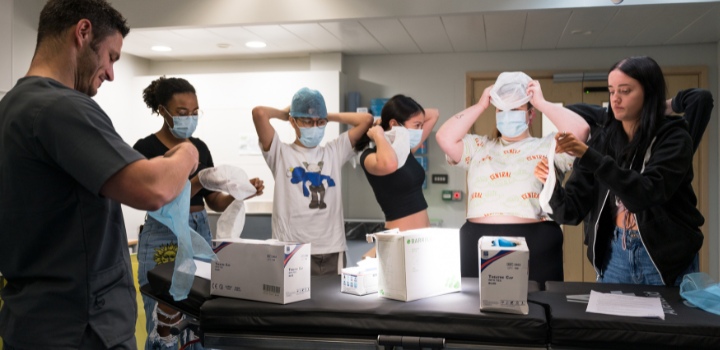
Researchers at the University of East Anglia will help transform the region’s health thanks to a multi-million pound investment from the Medical Research Council (MRC).
In a major new drive, nearly £10 million is being invested in clinical research careers across the UK – with a significant share (1.4 million) flowing directly into the Eastern region.
The initiative will bring together top universities, NHS trusts and cutting edge science institutes in a push to bring faster, better treatments to patients.
It will see a powerful new regional partnership uniting UEA with the University of Cambridge, Anglia Ruskin University, the Quadram Institute and the Wellcome Sanger Institute, alongside NHS and care organisations including the Norfolk and Norwich University Hospital.
Crucially, the scheme is designed to reflect the unique needs of each region – and the East of England will benefit from a tailored approach.
From rural healthcare challenges to areas of deprivation, local research leads will be able to channel funding where it is needed most – ensuring no community is left behind.
Project co-lead Prof Vassilios Vassiliou, from Norwich Medical School, said: “This investment will enable researchers across the region to dedicate protected time to developing innovative, high-impact research and securing future competitive funding.
“This would include medical practitioners, but also nurses, midwives and allied health professionals.
“By prioritising work focused on health inequalities in under-served communities, including areas of rural and urban deprivation such as North Norfolk and Great Yarmouth, the programme aims to deliver research that improves health outcomes and access to care for people across the region.”
A health revolution on your doorstep
The Eastern programme is part of a wider UK scheme supporting almost 200 frontline clinicians – including doctors, nurses and therapists – to carry out vital research alongside their day jobs.
The initiative will establish 10 Regional Accounts for Clinical Researchers (RACR), bringing together more than 50 research organisations and over 60 NHS organisations across England, Scotland, Wales and Northern Ireland.
It will support clinicians at critical stages in their research careers to stay involved in research alongside clinical practice.
Prof Vassiliou said: “This collaboration between world leading research institutions and frontline NHS services will put the region in a prime position to drive innovation, with discoveries moving more quickly from lab bench to hospital bedside.
“We know that hospitals involved in research consistently deliver better patient outcomes, adopt new treatments faster and attract the best staff.
“For patients in the region, that could translate into quicker access to cutting edge therapies, earlier diagnoses for serious conditions, more personalised treatments and improved survival rates and recovery times.
“In essence, it means local hospitals will become leaders in medical innovation – not just places of treatment, but places where breakthroughs happen.”
Why clinical researchers matter
Clinicians, including doctors, nurses, dentists, midwives, therapists and pharmacists play a central role in caring for patients and identifying key challenges faced by health services.
Clinical researchers bridge the gap between scientific discovery and better patient care.
Their research prevents illness and develops new treatments connecting academia, the NHS and industry.
The four year pilot will test new ways of supporting clinicians – with the goal of building a stronger, more resilient research workforce.
The funding will help protect research time and nurture the next generation of experts with mentoring and training. It will also support clinicians returning to research after time away.
By keeping skilled professionals in research, it is hoped that the region can continue to develop the treatments of tomorrow - while improving care today.
“Investing in research also helps attract funding, talent and industry partnerships – strengthening the local economy and reinforcing the East as a hub for life sciences and medical innovation,” added Prof Vassiliou.
Prof Alasdair Coles, Director of Clinical Academic Training at the University of Cambridge, said: “Increasingly, the University of Cambridge, UEA and ARU are working together to provide clinical academic training across the East of England.
“Each university gains from the others’ strengths. This new funding will bring us closer still, as we offer fantastic research opportunities for clinical researchers across the region.”
Better patient outcomes
Dr Jo-Anne Johnson, from Anglia Ruskin University’s School of Medicine, said: “Anglia Ruskin University is delighted to be a partner in this initiative, which prioritises researchers working in areas that have historically received less research investment across the East of England.
“By strengthening research capacity in under-served communities, we aim to improve access to high-quality clinical research, recognising that research-active healthcare organisations consistently achieve better patient outcomes. Through advancing research equity, this programme has the potential to reduce health inequalities and improve the health of populations across the region.”
Prof Patrick Chinnery, Executive Chair of the Medical Research Council, said: “Clinicians play a vital role in turning discovery research into better treatments for patients, but too many face barriers to sustaining research alongside demanding clinical roles.
“These challenges vary across the UK, which is why a regional approach is so important to building strong partnerships between universities and NHS trusts.
“Through Regional Accounts for Clinical Researchers, we are investing in locally led solutions that support clinicians at critical points in their careers, strengthen research environments, and help improve patient outcomes while accelerating life sciences innovation to support economic growth and a stronger NHS.”
Related Articles
UEA subjects among UK best in student-focused league tables
The University of East Anglia has climbed to the top of a new league table for a variety of subjects – with Norwich named the nation's leading university city.
Read more
UEA secures share of £90 million to train next generation of medical researchers
The University of East Anglia will help train a new generation of researchers to tackle some of the biggest challenges facing human health – thanks to funding from the Medical Research Council (MRC).
Read more
ADHD diagnosis gap for girls from immigrant backgrounds
Girls from multilingual and immigrant families could be missing out on ADHD support - according to new research from the University of East Anglia.
Read more