Parliament draws national attention to UEA’s work on Jewish heritage in Norwich
By: Communications
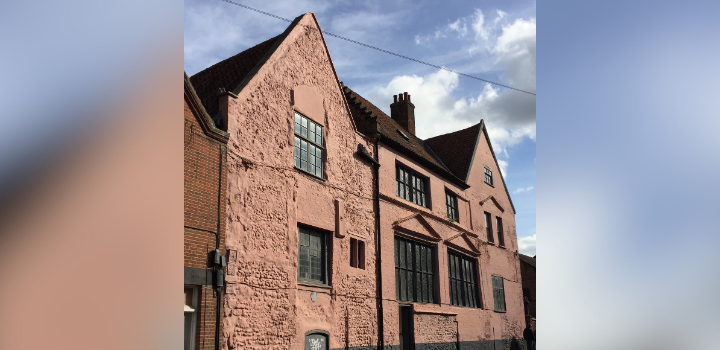
The University of East Anglia’s bid to create a Centre for Jewish History and Heritage has gained national attention after being raised in the House of Commons.
Dr Peter Prinsley, MP for Bury St Edmunds and Stowmarket, said that plans to set up this new site of Jewish learning and culture have “never been more essential” during a powerful speech for Holocaust Memorial Day.
It is hoped that the centre will ultimately have a base for its programmes at Jurnet’s House in Norwich - the oldest surviving Jewish dwelling in England.
Dr Prinsley’s speech on Thursday underscored both the national need to deepen understanding of Jewish history and the urgency of tackling rising antisemitism across the UK.
Dr Oren Margolis, from UEA’s Faculty of Arts and Humanities, who has been leading the campaign, said the recognition in Parliament marks a significant moment for the project.
“Our campaign has now been recognised in the House of Commons, which is both deeply encouraging and a testament to the importance of this work,” he said.
“While historic antisemitism is only one part of our research case, the issues raised in the debate resonate strongly with the need for a centre dedicated to Jewish history, heritage and understanding. This endorsement is valuable for the University and for our community and civic partners in Norwich.”
Why Norwich?
Norwich holds a unique and significant place in Jewish history. In the medieval period, it was home to one of England’s most important Jewish communities, a centre of poetry and scholarship that contributed to the city’s economic life.
It was also the site of one of the darkest chapters in the history of anti-Jewish hatred with the first recorded instance of the “blood libel” in 1144 - a false allegation that sparked centuries of antisemitic violence and continues to echo in modern conspiracy theories.
The city’s importance to the wider Jewish story was further underscored in 2004, when the remains of 12th century individuals were discovered and later linked through DNA to modern Ashkenazi Jewish populations.
A remarkable surviving landmark from this era is Jurnet’s House, a 12th century building on King Street named after a prominent Jewish family of the early 13th century. Also known as the Music House, it is the oldest surviving Jewish dwelling in England and a powerful physical reminder of Norwich’s medieval Jewish past.
UEA’s civic ambitions
The project forms a central part of UEA’s growing civic mission, reflecting the University’s commitment to working closely with partners across the region to enrich cultural life, expand access to learning and preserve significant local heritage.
By supporting the restoration of Jurnet’s House and the establishment of a Centre for Jewish History and Heritage, UEA is helping to safeguard a nationally important site while creating new opportunities for research, education and public engagement across Norfolk.
Further updates on the development of the Centre for Jewish History and Heritage will be shared as the project progresses.
Related Articles

Chris Packham visits UEA for Norfolk Wildlife Trust event
Broadcaster and naturalist Chris Packham visited UEA this week for an event held to celebrate 100 years of Norfolk Wildlife Trust.
Read more
UEA welcomes Government's new dentistry training places aimed at tackling ‘dental deserts’
The University of East Anglia (UEA) has welcomed today’s Government announcement of 50 additional dentistry training places.
Read more
City College Norwich signs UEA Civic Charter
City College Norwich has signed the UEA Civic Charter, reaffirming a strong partnership focused on inclusive education, skills and community support across Norfolk.
Read more