New study reveals phone-free holiday can provide wellbeing reset
By: Communications

Research from the University of East Anglia has revealed that digital-detox trips can help people slow down, reconnect with their surroundings and reassess their relationship with technology.
The study has found that temporarily disconnecting from smartphones and internet access can support wellbeing by helping people realign with natural rhythms, deepen interpersonal connections, and create space for reflection and mental restoration.
The research, led by researchers from UEA and the University of Greenwich, involved participants who spent three nights in digital-free holiday cabins in the UK, examined how well-being develops during digital disconnection, rather than measuring outcomes before and after a trip.
Researchers from the University of Greenwich, part of the London and South East University Group and University of East Anglia (UEA) found that participants often experienced a transition away from the constant demands of digitally connected life toward slower experiences centred on nature, creativity and meaningful social interaction.
The researchers found that participants often experienced a transition away from the constant demands of digitally connected life towards slower experiences centred on nature, creativity and meaningful social interaction.
Many described richer conversations, greater attentiveness and more meaningful shared experiences without the interruptions of phones, notifications and scrolling.
Prof Brad McKenna, from UEA's Norwich Business School, said: "The study highlights opportunities for tourism providers to design digital-free experiences that support wellbeing throughout the entire visitor journey, including preparation before arrival, immersive low-tech experiences during the stay, and post-trip reflection and follow-up."
Dr Wenjie Cai, from the University of Greenwich, said: "Our findings suggest digital-free tourism can serve as more than a temporary escape from technology, acting instead as an opportunity for individuals to reassess their everyday routines and cultivate healthier relationships with digital devices.
"Many participants reported intentions to reduce phone use, establish slower daily routines and prioritise time for rest and reflection after returning home."
The study identified four interconnected dimensions through which wellbeing emerged during digital-free tourism experiences:
- Attunement: Participants reported becoming more aware of their surroundings, bodily sensations and natural environmental rhythms, leading to a greater sense of grounding and presence.
- Stillness: Many described reduced mental clutter, increased calmness and opportunities for uninterrupted focus and reflection.
- Plenitude: Participants experienced moments of deep immersion and contentment, characterised by a sense of harmony between themselves, others and their environment.
- Reflexivity: The experience prompted participants to reflect on their everyday digital habits and consider changes to their work-life balance and technology use after returning home.
- Physiological data collected through wearable sensors provided additional evidence that participants experienced measurable changes in emotional stimulation during key moments of disconnection and reconnection. Researchers recorded fewer physical signs of stress.
This is the first study of digital-free tourism to combine wearable electrodermal monitoring with interviews and participant diaries to examine how wellbeing unfolds throughout the experience.
The study followed 23 Millennial participants during three-night stays at digital-free cabins operated by Unplugged in rural southern England.
Participants voluntarily disconnected from their phones and internet access while engaging in traditionally tech-free activities such as walking, reading, cooking, board games and nature-based experiences.
Researchers employed a mixed-methods approach, combining pre- and post-trip interviews, participant diaries recorded during the stay and physiological monitoring using Empatica E4 wearable devices measuring electrodermal activity and other biometric indicators.
This combination enabled the team to examine both subjective experiences and physiological responses, creating a more comprehensive understanding of how wellbeing unfolds during digital-free tourism.
Thinking about studying at UEA?
Discover our award-winning campus, meet current students and staff, and find out what life at UEA is really like at one of our upcoming Undergraduate Open Days:
Saturday 24 October 2026
Saturday 28 November 2026
Related Articles
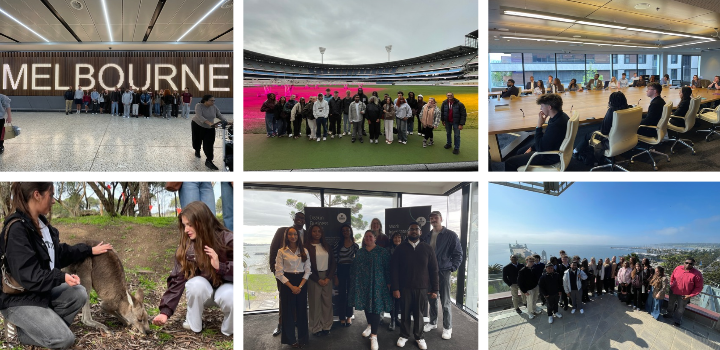
UEA students experience real-world business challenges in Australia
Students at the University of East Anglia have been given the chance to gain valuable international experience in real-world business challenges through a skills boosting programme in Australia.
Read more
Social media ban needs serious investment and support, UEA expert says
A social media ban for young people needs serious investment in support systems, not just a start date – according to a social media and education expert at the University of East Anglia.
Read more
UEA subjects among UK best in student-focused league tables
The University of East Anglia has climbed to the top of a new league table for a variety of subjects – with Norwich named the nation's leading university city.
Read more