Women’s food heritage could hold key to climate resilience and food security
By: Communications
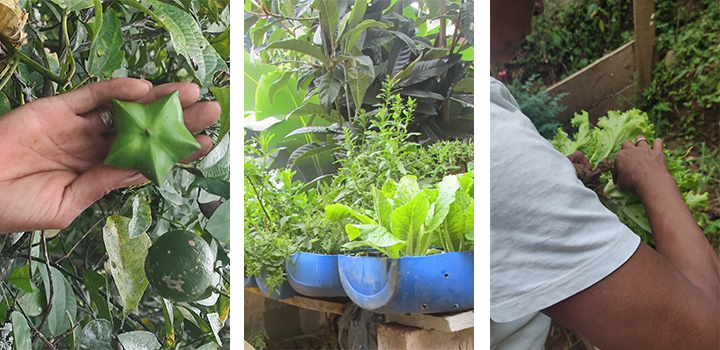
Food knowledge passed down between women in the South Atlantic could help tackle climate change and food insecurity - according to researchers embarking on a new £1.3 million project at the University of East Anglia.
They will investigate how women’s food heritage, including recipes and customs passed down across generations and continents since the transatlantic slave trade, can help address contemporary challenges of food security and climate resilience.
The five-year project, funded by a European Research Council (ERC) Starting Grant, will trace food practices shared by communities in The Gambia and Afro-Colombia whose populations were separated by the slave trade during the 16th Century.
Women in both regions continue to cultivate medicinal and seasoning gardens, prepare rice-based dishes and wrap foods in banana leaves, maintaining striking parallels despite centuries of geographical separation.
The team will produce the first freely available dataset of heritage dishes, combining laboratory nutritional analysis with detailed recording of taste, preparation methods, and the ecological knowledge behind them.
The project is led by Dr Paola Vargas Arana, from UEA’s School of Global Development, who said: “Across generations, women have developed deep knowledge about food, agriculture, nutrition and ecological adaptation.
“Yet that knowledge is rarely treated as evidence when decisions are made about food security and climate resilience. This project asks why, and what it can contribute.”
The project builds on Dr Vargas Arana’s book - African Memories, Foodways, and Freedom in Colonial Colombia’s Gold Mines: Gender, Identities, and Intercultural Worlds in Antioquia (British Academy and Liverpool University Press, November 2026), which found that 71 per cent of enslaved people brought to Antioquia’s gold mines in the 16th Century came from the Upper Guinea Coast.
The book shows how Upper Guinea women created farming and food practices that helped keep the colonial mining economy running. With records of their escapes revealing their main goal - using this expertise to sustain self-liberated communities.
Notably, the marginalised diet of enslaved African women remains the basis of Colombia’s staple diet today.
From historical roots to food security
The project examines how women’s food heritage persists today in the face of climate change, the spread of industrial food, and deep-rooted gender inequality.
A key innovation is its approach to research. Nutritional science and Indigenous women’s knowledge will work side by side - each treated as equally valid.
Dr Vargas Arana added: “The premise is that food heritage is not merely a cultural artefact but the infrastructure of food security in vulnerable communities. If food policy is to be effective, it must account for the knowledge these communities already hold.”
The ambition is a research approach for building food security policy from the ground up, one that could be applied well beyond the project’s two field sites.
Creating opportunities
The project will be based within UEA’s Norwich Institute for Sustainable Development.
Alongside its research programme, the project will support early-career researchers, including a fully funded PhD studentship, a postdoctoral research position and research assistant roles in Colombia and The Gambia.
The project will produce academic publications, community resources, podcasts, and a project website, culminating in an international symposium at UEA.
Thinking about studying at UEA?
Discover our award-winning campus, meet current students and staff, and find out what life at UEA is really like at our upcoming Undergraduate Open Day:
Saturday 28 November 2026
Related Articles
UEA student offers advice after securing job a year before graduation
A UEA student has secured a role with one of the largest accounting firms in the world a year before graduating – and is sharing her advice for fellow job-hunting students.
Read more
New guide puts Indigenous Peoples, local communities and rights at the heart of ecosystem restoration
A major new report outlines how experts can better place Indigenous Peoples and local communities at the heart of decision-making in ecosystem restoration efforts.
Read more
Inequalities grow in cities as heat and daylight patterns transform urban life
Changing patterns of heat and daylight in urban environments are creating growing inequalities, with climate-related shifts reshaping daily life and disproportionately affecting vulnerable communities.
Read more