How going digital offers families more than annual adoption letters
By: Communications

Digital technology could transform the way adopted children stay connected with their birth families – according to new research from the University of East Anglia.
A study published today reveals how a bespoke online platform called ‘Letter Swap’ offers more modern ways for families to connect by swapping messages, videos, voice notes and photos rather than relying on traditional annual letters.
It comes 100 years after legal adoption was first introduced in England and Wales and as UEA's School of Social Work celebrates half a century of success.
While it is still early days, the research team say that some families using the online platform have been able to explore and build stronger relationships between adopted children and their birth relatives.
Building more meaningful relationships
Lead researcher Dr Julia Rimmer, from UEA’s School of Social Work, said: “Maintaining relationships from before adoption is beneficial to the lifelong identity needs of an adopted child, but it must be safe and meaningful.
“For decades, post-adoption contact in England has largely revolved around letters being checked by and exchanged through adoption agencies once or twice a year.
“But this approach can be slow, impersonal and prone to breaking down over time.
“The Letter Swap online platform allows adoptive families and birth relatives to exchange letters, but also messages, images, voice recordings and videos while maintaining safeguards and confidentiality, with the option of agency checks maintained.
“Our work shows how digital tools have the potential to modernise a system that has not been changed for decades.
“As we mark 100 years of legal adoption, it’s important that we recognise the harm that closed adoption has caused for many people.
“Children need to be safe, but wherever possible they should also be able to maintain meaningful connections with their birth families.
“While face-to-face contact remains incredibly important, managed digital platforms can offer families a range of flexible ways to stay connected and help us move beyond a one-size-fits-all approach to adoption planning.”
How the research happened
Adoption England oversaw a pilot of the Letter Swap platform and asked Prof Elsbeth Neil and her UEA team to help implement it.
The team wanted to see whether the prototype could replicate the traditional system digitally - offering a more meaningful and modern alternative, with added options to exchange other file types more frequently.
Researchers analysed platform activity data and interviewed 32 adoptive parents and 16 birth relatives who used the digital Letter Swap platform through eight regional adoption agencies in England.
Those participants who used the new features said the ability to share videos and voice notes brought adopted children “to life” in a way that traditional letters never could.
Dr Rimmer said: “One grandmother caring for an adopted child's older sisters said watching videos of their younger brother provided reassurance that he was happy and well cared for.
“For another family, multiple video exchanges helped a 12-year-old boy ‘scratch an itch’ and see and hear the birth relatives he missed, for the first time in six years.
“Children often got involved and shared clips about their pets, favourite toys and everyday activities, helping them maintain connection despite the separation.”
The team found that digital communication worked best for children at a stage where they needed more answers and that it often felt more natural and immediate than annual letter exchanges - with families being able to share everyday moments, school achievements and birthday messages.
“It has helped create a sense of connection that more closely resembles how modern families communicate,” said Dr Rimmer.
But the technology was not without challenges, and the team say that going digital needs careful support.
Daughters left devastated
Some birth relatives struggled with digital skills or lacked reliable access to technology, while others worried that going digital meant losing agency support or tangible items they valued, like handwritten letters.
Some also worried that exchanging audio or video might be emotionally overwhelming and participants highlighted the risk of disappointment when messages were read but not immediately answered.
“One adopter described how her daughters were left devastated after sending videos to their birth parents and then waiting months for a response,” said Dr Rimmer.
“The adopter worried that it might have been too much for the birth parents and the children felt like they had been rejected, which really highlights the emotional complexity that can accompany contact arrangements.”
The team say that technology alone is not enough to improve post-adoption contact.
“The future of adoption contact needs to move beyond formulaic annual letters and offer children more flexible ways to maintain important family connections,” said Dr Rimmer.
“But families still need support from experienced professionals to help manage expectations, navigate emotions and ensure arrangements remain focused on children's needs.”
This research was led by UEA. Prof Elsbeth Neil is now at the University of Massachusetts Amherst.
‘New doors are opening up all over’: modernising post adoption contact – findings from adopters and birth relatives in evaluations of the ‘Letter Swap’ digital platform’ is published in the journal Adoption & Fostering.
Thinking about studying at UEA?
Discover our award-winning campus, meet current students and staff, and find out what life at UEA is really like at one of our upcoming Undergraduate Open Days:
Saturday 24 October 2026
Saturday 28 November 2026
Book your Open Day
Related Articles
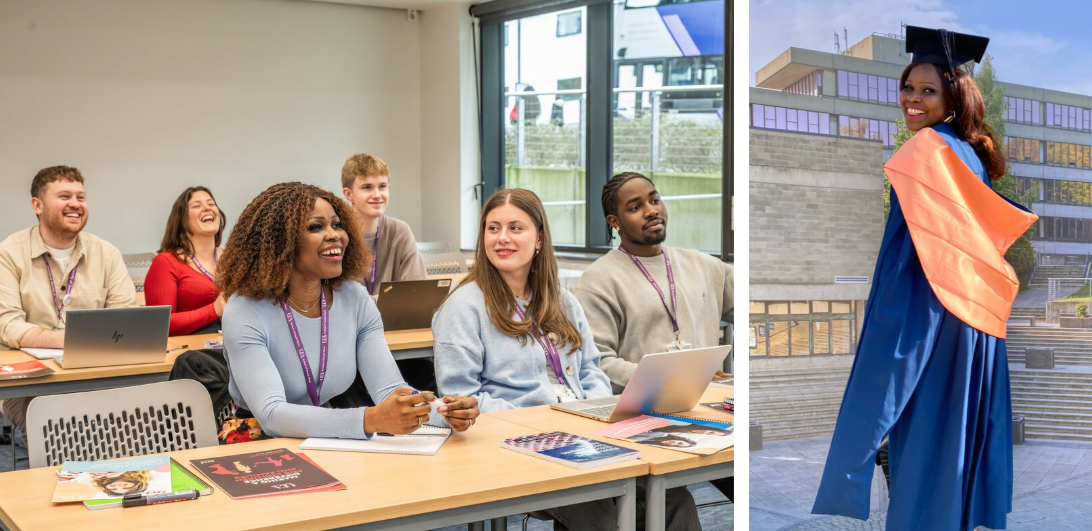
UEA celebrates 50 years of social work success
A mother of four, who overcame personal challenges during her undergraduate studies as a mature student, is now helping families across Norfolk – as the University of East Anglia’s (UEA) School of Social Work celebrates half a century of success.
Read more
New guide puts Indigenous Peoples, local communities and rights at the heart of ecosystem restoration
A major new report outlines how experts can better place Indigenous Peoples and local communities at the heart of decision-making in ecosystem restoration efforts.
Read more
New study reveals phone-free holiday can provide wellbeing reset
Research from the University of East Anglia has revealed that digital-detox trips can help people slow down, reconnect with their surroundings and reassess their relationship with technology.
Read more