Latest News
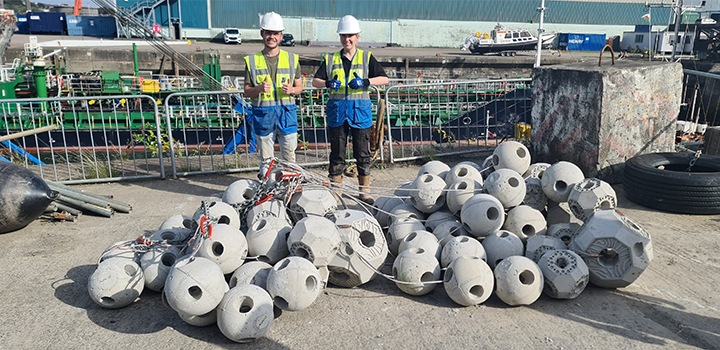
Norfolk company making waves with nature inclusive designs to increase maritime biodiversity
A Norfolk company founded by a University of East Anglia (UEA) graduate has developed innovative, low-carbon, artificial reef units that simultaneously increase biodiversity while protecting crucial marine infrastructures.
Read more
UEA joins newly-accredited Doctoral Training Partnership for Social Sciences
The University of East Anglia is part of a newly-accredited Doctoral Training Partnership for Social Sciences - a major award meaning UEA is among universities whose students are eligible for government-funded PhD studentships in social sciences.
Read more
Legendary legal luminary Lady Hale to visit UEA Law School
The Right Honourable the Baroness Hale of Richmond, former President of the Supreme Court, and one of the country’s most high profile and renowned judges of our time will deliver a talk to UEA Law School and Norfolk and Norwich Law Society
Read more
Why all languages have words for ‘this’ and ‘that’
Languages around the world have words for ‘this’ and ‘that’ according to new research from an international team, led by the University of East Anglia.
Read more
Stunting in infancy linked to differences in cognitive and brain function
Children who are too short for their age can suffer reduced cognitive ability arising from differences in brain function as early as six months of age, according to new research from the University of East Anglia.
Read more
UEA teams up with Age UK Norwich to tackle dangerous dehydration in older people
Experts from the University of East Anglia (UEA) and Age UK Norwich have teamed up to tackle dehydration in later life, producing new resources aimed at older people and professionals.
Read more
Former Minister and Norwich North MP takes up Honorary Fellowship at UEA
Former Cabinet Minister and Member of Parliament for Norwich North, Rt Hon Chloe Smith has agreed to take up a three-year Honorary Fellowship at the University of East Anglia (UEA).
Read more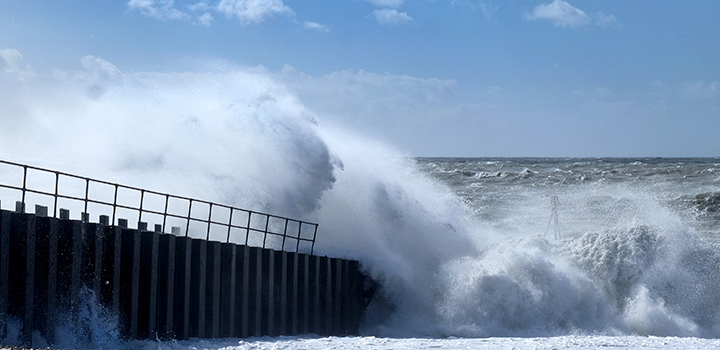
Urgent action needed to address climate change threats to coastal areas
Global coastal adaptations are ‘incremental in scale’, short-sighted and inadequate to address the root causes of vulnerability to climate change, according to an international team of researchers.
Read more
£2 million UEA project to help chronic lung condition
Researchers at the University of East Anglia are undertaking a £2 million study which could help people suffering from a chronic lung condition.
Read more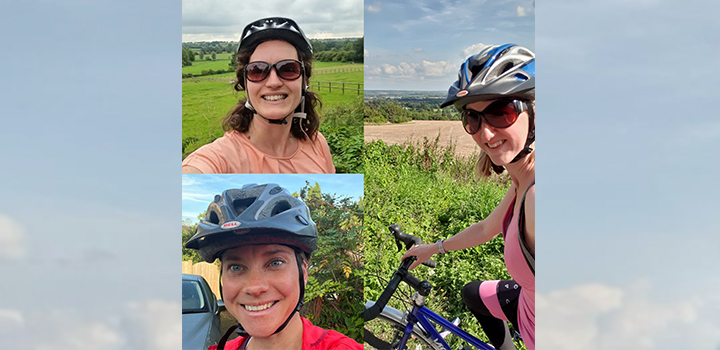
UEA graduates plan cross-county bike ride in support of friend with motor neurone disease
On Saturday (21 October), a group of graduates will embark on a fundraising bike ride from Sudbury in Suffolk to UEA, a journey of around 60 miles, in support of their friend with motor neurone disease - marking their 20-year friendship.
Read more
Climate change coping mechanism discovered in humble algae
One of the building blocks of ocean life can adapt to cope with the effects of climate change, according to new research from the University of East Anglia (UEA).
Read more
Wildfires threaten environmental gains in climate-crucial Amazon
Despite steps toward decreasing deforestation, uncontrolled wildfires are threatening environmental gains in Brazilian Amazonia, one of the world’s most critical carbon sinks and a region of high biological and cultural diversity.
Read more