)
We are part of UEA’s CIVIC Anchor
Working with partners across disciplines and faculties, since 2019, the Institute for Volunteering Research (IVR) is proud to contribute to UEA’s civic role, supporting UEA Strategy 2030’s vision of creating positive impact through collaboration, innovation and engagement with the communities we serve. We lead research on Ethics of Public Involvement, Equality, Diversity and Inclusion in volunteering, and strengthening democratic involvement. Our work reflects the commitments of UEA’s Civic Charter, helping to address social, environmental and economic challenges in partnership with communities locally, nationally and globally, with inclusive research.
Ethical Public Involvement
Across the UK many organisations are working to address issues around the ethics of public involvement. Public Involvement Contributors are volunteers, and we are now jointly leading a collaborative effort to combine existing efforts. Here is our latest Blog - Institute for Volunteering Research
Equity, Diversity and Inclusion
We bring together academics from different faculties, practitioners and people with lived experience to explore issues around Equity, Diversity and Inclusion in volunteering. Here are some statements you might find interesting. Volunteering and Inequality
Strengthening Democracy
Democracies around the globe are under threat. Volunteers can play a role in strengthening democracies. Read the latest IVR presentation at the International Society for Third Sector Research on ‘Active Citizens: the balance between autocracies and democracies’. Active Citizenship: The role of volunteer involvement in strengthening democracies
CIVIC UEA
We are proud to be part of CIVIC UEA. Civic activity is a strategic priority at UEA. CIVIC UEA offer some highlights of the wonderful projects we and UEA colleagues are engaged in. Click here for a taste of all the work CIVIC UEA does, alongside the citizens of our region and beyond, to effect positive change.
We work in Neighbourhoods and with local organisations.
We work with local partners exploring volunteering in neighbourhoods. Have a look at these videos about The Fine City Neighbours Network in Norwich and on local community policy making Researching local community policy making in different European Cities.
We collaborate with key national partners.
We joined the Public Involvement Pledge, upholding the UK Standards of Public Involvement.
“We believe that Patient and Public Involvement and Engagement is volunteer involvement. Signing this pledge reinforces our commitment to strengthening ethical, high‑quality volunteer involvement research and ensuring that the contribution of volunteers is recognised and supported.”
)
We work in international research networks in Europe and beyond, delivering outputs for an international academic and practitioner readership.
This is an open-access Special Journal Edition on Contemporary Volunteering Study and Research in Europe The Voluntaris Special Issue “Contemporary Volunteering Study and Research in Europe". We also contributed to a flagship UN report Volunteerism towards Building Equal and Inclusive Societies.
Inclusive Research
IVR works towards a world in which the power and energy of volunteering is well understood, where no one gets ‘used’, so that individuals can be confident and feel safe about their decisions to volunteer and policy decisions are made on solid evidence and scientifically robustly produced knowledge. We want everybody to be able to be involved confidently, and we want our research to be inclusive.
Here we organised symposia on The Role of Volunteering in Older Adult Volunteers' Lives bsg-session-1.pdf; co-creating solutions to barriers in volunteer involvement of and for older adult volunteers bsg-session-2.pdf; and on the role of volunteering in end-of-life care bsg-session-3-26-06-2023.pdf. Please note that these symposium-linked pages look very similar but are three different sessions.
And we do so much more. Have a look at our free publications and resources, and of course, here you can learn what volunteering is all about Animations: Volunteering for Beginners.
Loading...
Video
IVR has created a series of short animations on volunteering for beginners
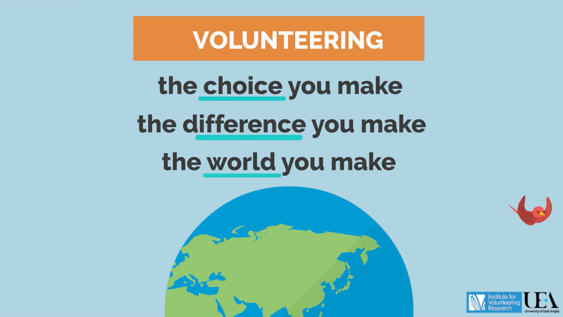
Volunteering for Beginners in seven and a half minutes
And if you haven’t got seven and a half minutes, here are short videos on
Where and how can I volunteer?
What difference does volunteering make?
What are the benefits for the volunteer?