When parasites stop having sex, they may become less picky about their hosts
By: Communications
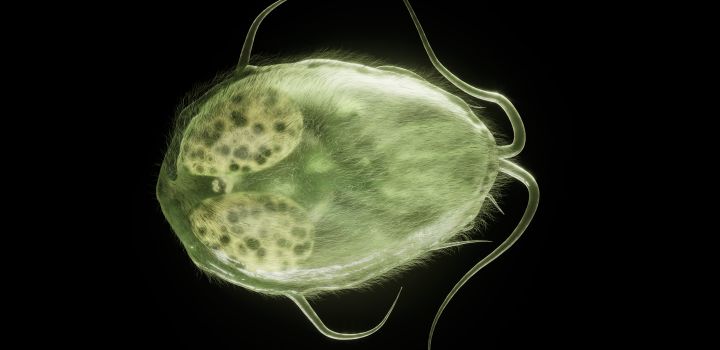
A new evolutionary theory suggests that some asexual parasites may temporarily be able to infect a wider range of hosts as harmful genetic mutations build up.
In a paper published in Trends in Parasitology, Prof Cock van Oosterhout from the University of East Anglia (UEA) suggests that some parasites may become ‘generalists’ not because they adapt successfully to many hosts, but because harmful mutations build up after they stop having sex.
Sexual reproduction helps organisms reshuffle their genes and remove harmful mutations. When parasites reproduce mostly by cloning instead, they lose much of this genetic reshuffling. Over time, harmful mutations can accumulate in a process known as Muller’s ratchet.
Prof van Oosterhout suggests that this could have an unexpected consequence. If mutations damage genes involved in finely tuned interactions with a particular host, the parasite may become less specialised in terms of who it can infect or live on.
It may then become able to infect other hosts, not because it has become better adapted, but because some of the barriers that previously restricted its host range have weakened.
“Host range expansion is usually viewed as an adaptive success story: a parasite evolves to exploit more hosts,” said Prof van Oosterhout, of the School of Environmental Sciences. “This paper proposes a different possibility. In some asexual parasites, broader host range may be a sign that harmful mutations are building up. The parasite becomes less specialised, not necessarily better adapted.”
Builds on recent genomic work
The idea was inspired by recent genomic work on Giardia duodenalis, a common intestinal parasite that infects humans and other animals. In that study, a predominantly asexual lineage showed both broader host range and signs of accumulating harmful mutations.
The new paper calls this process Ratchet-Driven Generalism, or RDG. Under this hypothesis, the loss of recombination allows harmful mutations to accumulate, including mutations that affect genes involved in host interaction. Some of these losses could make the parasite less restricted to one host and allow infection of alternative hosts.
However, Prof van Oosterhout stresses that this process may not be good news for the parasite in the long term.
“Ratchet-driven generalism may be temporary,” he said. “A parasite lineage might expand its host range for a while, but continued mutation build-up can ultimately reduce fitness and increase extinction risk.”
The hypothesis could help scientists interpret genomic patterns in parasites and pathogens, especially those that reproduce clonally or recombine only rarely. It also suggests that host-range expansion should not always be assumed to reflect adaptive improvement.
Prof van Oosterhout said: “If we see a parasite infecting more hosts, we tend to assume it has evolved broader adaptation. But in some cases, the opposite may be true. Broader host range could reflect the loss of specialised functions rather than the gain of new ones.”
Using the theory
The paper outlines ways to test the hypothesis using genome data. For example scientists could look for a combination of broad host range, low recombination, harmful mutation build-up and loss of function in host-interaction genes.
“This is not meant to replace adaptive explanations for host-range evolution,” added Prof van Oosterhout. “Most cases of parasite generalism are probably adaptive or ecological. But RDG adds a neglected possibility: sometimes parasites may broaden their host range because they are losing the genetic functions that made them specialists.”
‘Evolution of generalism under Muller’s ratchet’ was published in Trends in Parasitology on June 26.
Considering your options for September? Clearing is your chance to find the course that fits you.
Be ready for results day with the latest updates. Register for Clearing updates.
Related Articles
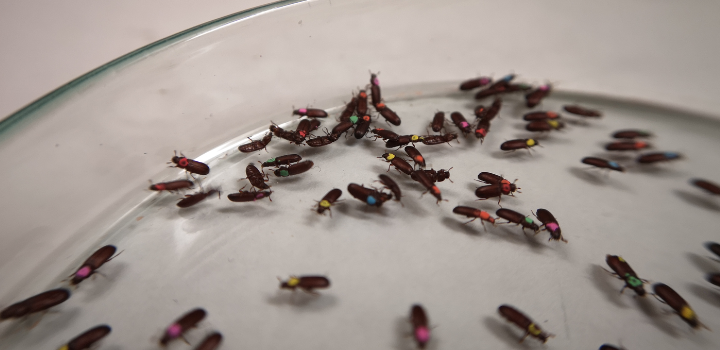
Genetic rescue can work even under imperfect conditions, study finds
New research by scientists at the University of East Anglia (UEA) suggests that matching environmental adaptations during genetic rescue of endangered species offers the best outcomes, but it is not always required for successful conservation.
Read more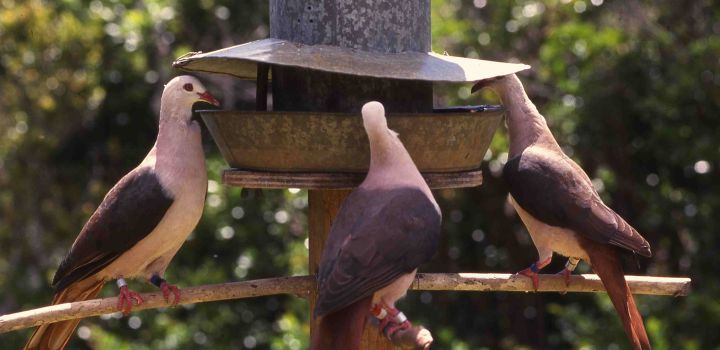
Gene editing offers transformative solution to saving endangered species
Gene editing technologies - such as those used in agriculture and de-extinction projects - can be repurposed to offer a transformative solution for restoring genetic diversity and saving endangered species.
Read more
Deep-sea an untapped ‘evolutionary engine’ says new study
The deep-sea is a unique ‘evolutionary engine’ with one of the richest and most unexplored sources of genetic diversity on Earth, according to a major new study that has assessed its potential to transform biotechnology and DNA sequencing technologies.
Read more