Volunteers protect UEA’s bluebells and historic woodland with ancient preservation techniques
By: Communications
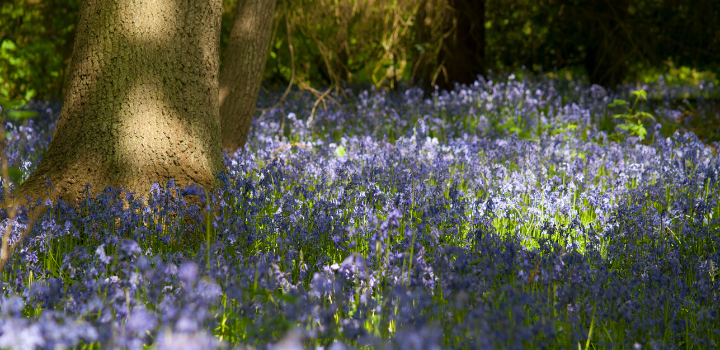
Bluebells on the University of East Anglia (UEA) campus now have a better chance of survival thanks to volunteers using restoration methods to revitalise the local woodland and boost biodiversity.
Volunteer group UEA Biodiversity Heroes, together with the UEA Grounds team, have been carrying out vital habitat management in the Sainsbury Centre woods by reintroducing a traditional coppice rotation.
Coppicing is an ancient practice which involves cutting trees back to a stump (or “stool”) and allowing them to regrow. Though once used to provide wood for fencing, timber and firewood, it is still crucial today for conservation; by allowing more sunlight to reach the woodland floor, coppicing encourages understory plants, natural regeneration, and a greater mix of habitat structures, all of which support a richer variety of wildlife.
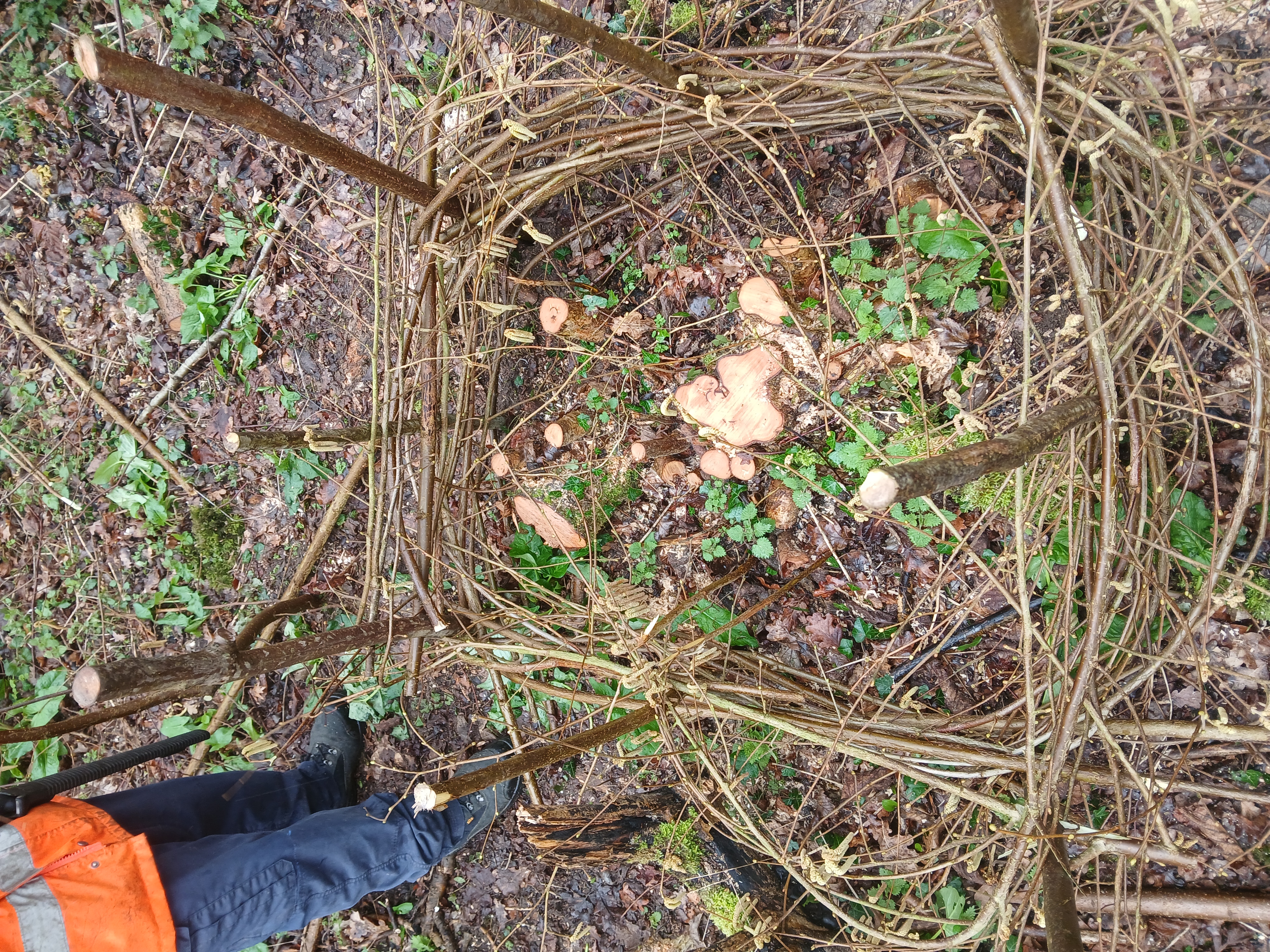
Image: Volunteers layer thin branches around freshly coppiced hazel tree stools to shield new growth from muntjac deer, which frequently browse in the area.
The Sainsbury Centre woodland, also known as The Heronry and Violet Grove, is a designated County Wildlife Site believed to date back to the 18th century, once forming part of the Earlham Hall Estate. Evidence of old coppiced hazel trees suggests the area was historically managed using this technique.
Springtime bluebells are especially beloved by visitors to the Sainsbury Centre woods but have declined by more than 45% across the last 20 years due to heavy footfall. To help protect them, volunteers created natural fencing from the branches cut during coppicing, guiding visitors away from sensitive areas.
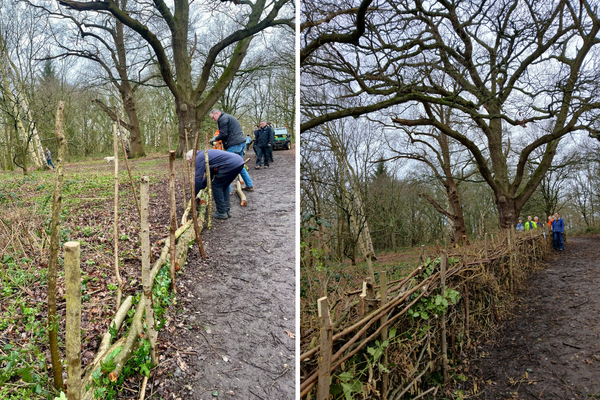
Images: Building of the protective natural fencing.
This project highlights UEA’s commitment to biodiversity, sustainability and hands‑on learning opportunities for students and staff. By restoring traditional management practices, the University is helping to conserve important woodland habitats on campus and ensuring they continue to flourish.
Get involved with UEA Biodiversity Heroes
The UEA Biodiversity Heroes programme welcomes staff, students and local residents to participate in regular conservation work to support the protection and enhancement of the University’s natural environment.
If you would like to get involved with biodiversity efforts at UEA, please contact Nadia El-Fakhri at n.el-fakhri@uea.ac.uk.
Related Articles
Applications open for UEA’s 2027 Creative Writing Summer School
Applications are now open for the 2027 Creative Writing Summer School at UEA, following the success of its inaugural programme this summer.
Read more
UEA and Anglian Water strengthen commitment to innovation, sustainability and regional impact
The University of East Anglia and Anglian Water are reaffirming their shared commitment to tackling some of the region's most pressing environmental challenges.
Read more
Booker Prize winners celebrate new UEA scholarship in honour of Eve Smith
The Booker Prize Foundation and the University of East Anglia announce new creative writing scholarship in the name of former BPF Company Secretary Eve Smith.
Read more