Universities and employers unite to tackle East Anglia’s future skills gap
By: Communications
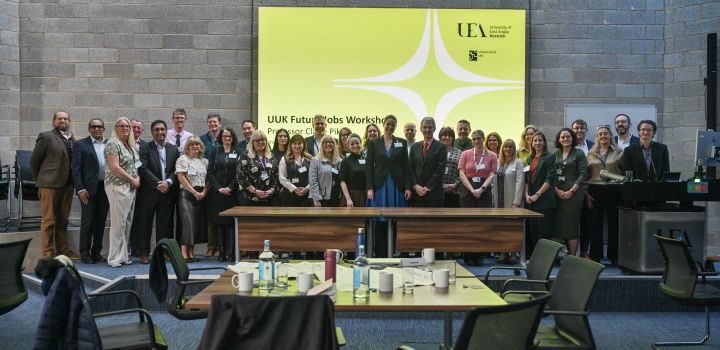
Universities and business leaders from across East Anglia have joined forces to strengthen the region’s skills pipeline and future workforce.
The University of East Anglia (UEA) hosted a Future Jobs roundtable focused on how higher education institutions can better prepare graduates with the skills local employers need to grow and compete.
Discussions centred on strengthening the local talent pipeline, supporting key regional industries and keeping skilled graduates working in East Anglia.
The Future Jobs roundtable is one of a series of events happening across the UK, where university and business leaders are leading a broader national conversation about how universities can better match graduate skills to the future needs of employers.
Evidence gathered from the events will feed into a national roadmap to be released this summer by Universities UK, which will set out practical steps universities and employers can take to ensure graduates’ skills better meet the needs of businesses, both now and in the future.
Why skills, AI and graduate jobs are a growing challenge
It is estimated that more than 11 million additional graduates are needed to fill high-skilled jobs in the UK between 2020 and 2035.
On average, 82% of new priority jobs crucial to economic growth, including in the life sciences, creative, digital and tech and defence sectors, will require workers with HE level qualifications.
The Future Jobs sessions are exploring how universities and businesses can respond to this demand and work together to grow the pipeline of graduates entering and thriving in these industries, create new high-quality jobs for local people in East Anglia and prevent brain drain from the area.
With AI rapidly changing the world of work, and graduates becoming increasingly concerned about the difficulty of finding jobs, universities across the UK are adapting how they support students to prepare them for the jobs of the future.
Strengthening employer-university relationships is a key part of this. Evidence gathered from the Future Jobs roundtable will feed into a national roadmap setting out practical steps universities and employers can take to ensure graduates’ skills better meet the needs of businesses, both now and in the future.
What business and university leaders say needs to change
Local businesses who attended the event included Aviva, Larking Gowen, Marsh and Mills and Reeve. Attendees discussed how they can better match graduate skills to employers’ needs, support regional industries and drive innovation so that businesses can grow employee more people in well paid jobs.
Topics raised included skills delivery and accessibility throughout the workforce, at all levels of experience, access to apprenticeships and AI literacy.
Prof Claire Pike, UEA’s Pro-Vice-Chancellor for Student Experience and Education, said: “Higher-level skills are projected to become ever more essential to the prosperity of our region – this is where universities can help.
“We at the University of East Anglia are aligning our courses and student experience ever more closely with the skills businesses need - locally and nationally - and we are developing transformative short courses to upskill people already in work.
"East Anglia has an enormous pool of potential talent, and universities and employers share a responsibility to turn that potential into well‑paid jobs that drive real economic growth.”
Jodie Hosmer, Head of Legal Operations at law firm Mills and Reeve, said: “Our biggest challenge is a confidence issue with our graduates. They lack confidence and are very different to those who graduated pre-Covid.
“There are also some skills gaps around technology. It’s important for employers to feed back on their changing needs and ask for that to be reflected in the courses that universities provide.”
Professor Malcolm Press CBE, President of Universities UK, the representative body for 142 universities in the UK said: “Universities are critical to creating a better future for the next generation, something everyone wants.
“Given how quickly the world of work is changing, that will only happen if we make sure graduates have the skills that employers are going to need, now and over the long-term.
“Today’s graduates are going to have careers that last into the 2070s. Our Future Jobs roundtables, like this one in Norwich, are about sparking the conversations between business and universities to make sure we’re equipping people with the skills they’re going to need for long, successful careers and that business can access the talent they need to drive the country’s future prosperity.”
Related Articles

UEA expert welcomes measures to prepare for disruption to essential services
A food systems expert at the University of East Anglia has welcomed suggestions by Secretary of State for Defence Wes Streeting that members of the public and businesses should consider how they would cope if there were disruptions to essential services.
Read more
Local residents invited to collaborate on UEA Boardwalk project thanks to National Lottery Community Fund
The University of East Anglia (UEA) Boardwalk project has been given a boost thanks to funding from The National Lottery Community Fund (NLCF).
Read more
How the eyes could unlock personalised pain relief with virtual reality
Combining artificial intelligence (AI) with eye tracking in virtual reality could one day help personalise treatment for millions living with chronic pain, according to world-first research from the University of East Anglia.
Read more