UK's aid policy may be shaped by politician's misperceptions about media influence
By: Matthew Heaton
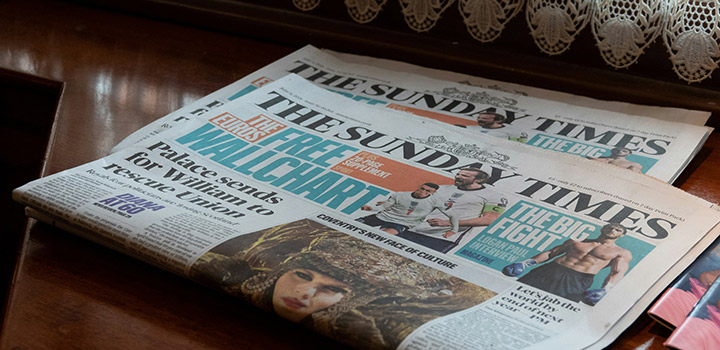
New research shows that UK politicians' assumptions about media influence, rather than the news coverage itself, appears to be shaping the UK’s foreign policy.
The research, from UEA’s School of Global Development, raises questions about how politicians should weigh perceived media influence when making foreign policy decisions and how these beliefs risk making policy less responsive to public opinion.
There are a number of widely held beliefs about the media’s ability to shape public opinion towards foreign policy. The ‘Daily Mail test’, for example, involves MPs imagining how a tabloid newspaper might frame a policy before a policy decision is made. Similarly, the ‘CNN effect’ theorises how the constant coverage of global news can force governments to make unplanned foreign policy to respond to humanitarian interventions. Both theories suggest that MPs might assume the media reflects public opinion and that it acts as a powerful agent to influence change in opinion.
The result of these assumptions about media influence is that politicians might adjust their policies for how the press could cover them to seek voter favour. In other words, the government may not be reacting to the media content itself, but how they perceive this media could influence public opinion on a topic. The research finds that policymakers may be overly weighing this media effect.
The study, published in World Development by Associate Professor Paul Clist and Professor Martin Scott of UEA’s School of Global Development, surveyed 107 MPs and 2,047 members of the UK public on their beliefs about the press, politics and aid. Questions investigated how the media influences opinion, how media reflects public opinion and how media should be used by politicians for political or career advantage.
MPs believe news influences public support
The survey found that MPs believe more strongly than the public that news coverage influences public support for the size and spending of the aid budget. Despite this, neither MPs nor the public feel the media accurately reflects existing public opinion, so the disagreement is not about what the public already thinks but how coverage could change minds. MPs consistently believe that the public are more readily persuadable to media messages about aid.
Associate Professor Paul Clist said: “Politicians are surprisingly comfortable with the media influencing government’s aid policy. They appear to rationalise this as they think the media affects public opinion, and to a lesser degree, reflects it. Both assumptions appear mistaken, potentially meaning MPs cede decisions over aid to media coverage, because of mistaken beliefs about its power. Ironically, this gives the media more power than it would otherwise have.”
Professor Martin Scott said: “What this shows us is that politicians are reacting more to an imagined phantom of public response, rather than what electorates actually want. At a time of changing UK aid, the assumptions UK MPs hold have the potential to distort how aid policy reflects public preference.”
Professor Scott added: “The ramifications of these findings about MPs' beliefs are that policy might be shaped less by actual public opinion and more on what MPs believe the public want to hear. This assumption by MPs could result in aid policy that is less responsive to public opinion and more to imagined reactions from headlines."
Differences between political parties
The study also found differences in opinions in how individuals believe ministers should use aid announcements for career advancements. Of the 55 Conservative MPs surveyed, 42% thought it somewhat acceptable, against just 2% of MPs from other parties and 11% of the public. These findings demonstrate further variation in how MPs and the public accept ‘image building’ of government through media engagement. These findings suggest that future research should investigate the links between politician’s attitudes to the press and their association with political parties.
The paper in World Development can be found here. The research was funded by the International Science Partnership Fund (ISPF232409).
Related Articles
Inequalities grow in cities as heat and daylight patterns transform urban life
Changing patterns of heat and daylight in urban environments are creating growing inequalities, with climate-related shifts reshaping daily life and disproportionately affecting vulnerable communities.
Read more
Indigenous knowledge key to building healthier and more sustainable food systems
Traditional and Indigenous knowledge could play a vital role in addressing some of the world's most pressing challenges, including climate change, biodiversity loss, and poor health and nutrition, according to a new review of current research.
Read more
How beans and lentils could help future‑proof UK farming
A University of East Anglia project will investigate whether re-introducing edible legumes into farming rotations of wheat, oil seed rape and potatoes could help make farming systems more resilient to climate change.
Read more