UEA graduate's app supporting giraffe conservation efforts across Africa
By: Communications
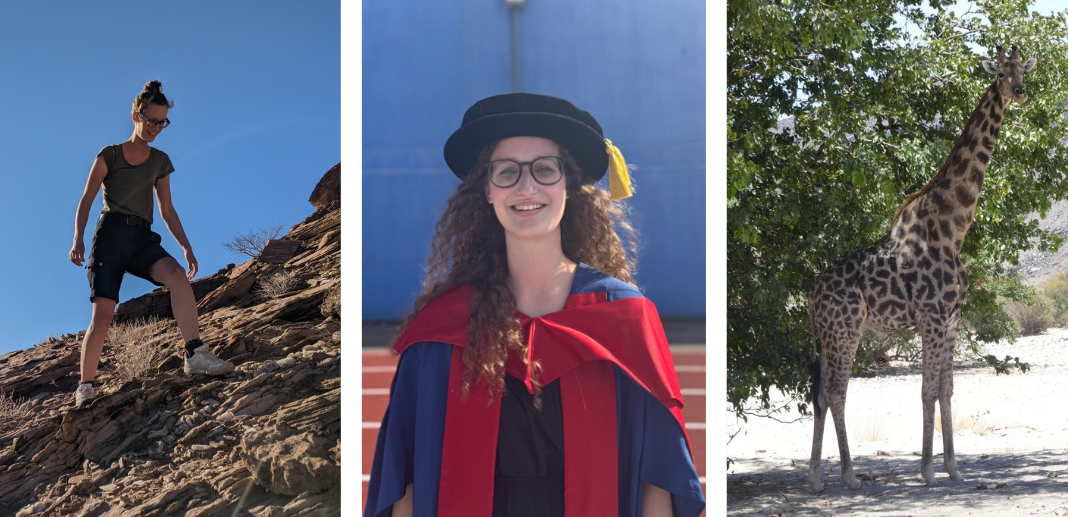
A graduate from the University of East Anglia (UEA) is helping shape the future of giraffes through the development of a digital app designed to support wildlife conservation.
Dr Ellie Harris, who graduated with a PhD in Environmental Sciences this July, has transformed her research into GiraffeClim – an online, interactive tool that explores how climate change could affect giraffe populations across Africa and identifies areas where the animals are most likely to thrive in the future.
Based on the findings of her PhD, ‘Conserving Giraffe in a Climate Changed World’, the app aims to inform present day conservation decisions by bringing together species distribution models and climate data in an interactive format.
Ellie said: “I'm a conservationist, so a prerequisite for my research was to ensure that it had useful, real-world applications. GiraffeClim was my way of achieving this.
“The app allows users to visualise the outputs from my PhD research through interactive maps. It helps identify which areas might remain climatically suitable under multiple climate change scenarios.
“This enables on-the-ground conservationists to identify areas of least regret for giraffe conservation – where there are suitable conditions for them to survive even under the most pessimistic climate change scenarios.
“It was clear that there was the potential for this research to have a tangible, positive impact on the conservation of giraffe, and I couldn’t pass up the opportunity.”
Learn more about Environmental Sciences at UEA
‘An experience that I will never forget’
A key part of Ellie’s research took her to Namibia, Africa in 2023, where she spent a month working alongside the Giraffe Conservation Foundation (GCF) after receiving a Faculty of Science PhD research funding grant.
This funding helps researchers turn their ideas into real-world benefits by supporting activities that increase the reach, influence and practical application of their work.
During her visit to Namibia, she toured the GCF organisation’s city headquarters in Windhoek, their research base in Etosha Heights, and joined staff on a wildlife survey trip.
She said: “The whole experience was a real privilege – witnessing the behind-the-scenes research and contributing to discussions driving GCF’s important conservation work.
“Observing giraffe in the wild, particularly in northern Namibia, was an experience that I will never forget. The landscape was otherworldly, with pockets of green vegetation amongst vast desert landscapes.
“It took several days to spot our first giraffe, but it was worth the wait. They are such wonderful animals to observe – so elegant (until you see them run around) – and seeing young calves was a beautiful sight.”
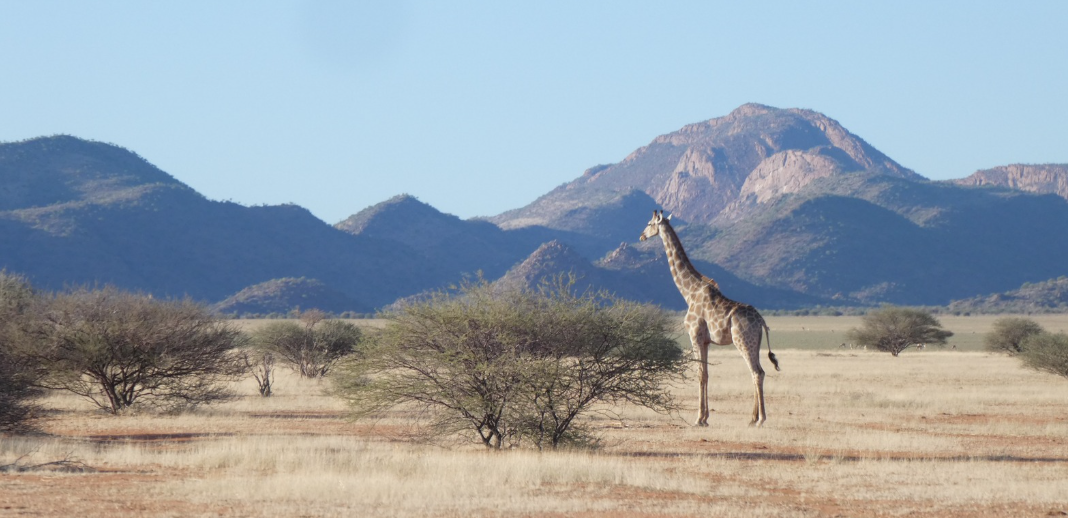
Image: A giraffe spotted in the wild during Ellie's trip to Namibia, Africa
Creating positive real-world impact for nature and people
During her time at UEA, Ellie worked alongside leading researchers based within the School of Environmental Sciences, which currently ranks as first in the UK for research quality (Complete University Guide 2027), and was part of the Tyndall Centre for Climate Change Research.
She highlighted how the University played a significant role in supporting her: “These opportunities have allowed me to network with a wonderful group of researchers and have discussions which no doubt shaped my research.
“My PhD supervisors encouraged me to apply for a UEA research grant, which is the funding that enabled me to go to Namibia; showcase my research to the Giraffe Conservation Foundation; and have constructive discussions around how to make my research as useful as possible for on-the-ground conservation work.”
Since graduating, Ellie has joined the United Nations Environment Programme World Conservation Monitoring Centre (UNEP-WCMC), now working within their Global Wildlife Trade team to support the implementation of species-related conventions and agreements.
She said: “It’s a really wonderful organisation to work for, with an inspiring group of colleagues all passionate about creating positive real-world impact for nature and people.
“The skills and knowledge that I developed throughout my PhD, from R coding to time management, have proven invaluable in my current role.”
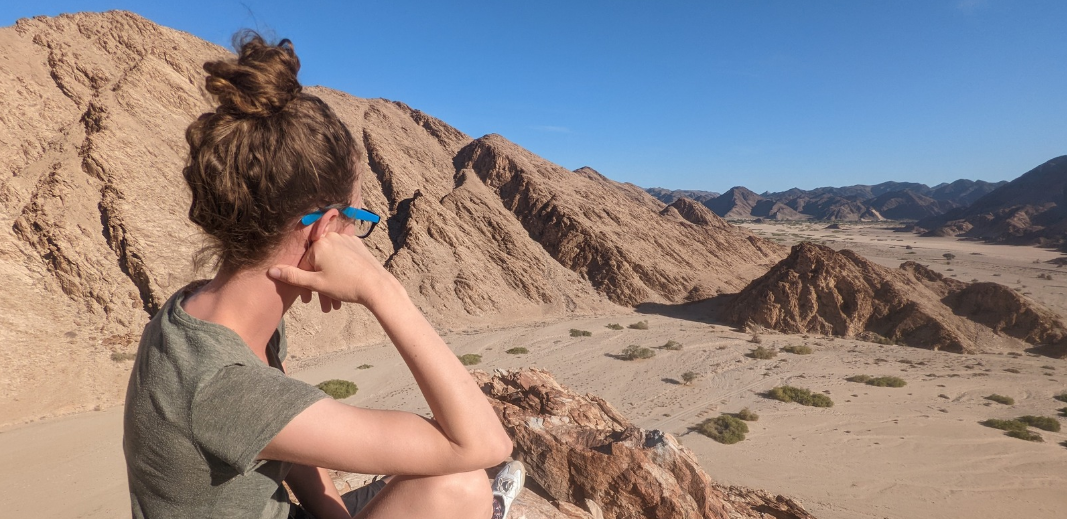
Image: Ellie Harris in Namibia, Africa
Clearing is just around the corner.
Stay one step ahead of results day and see which courses you can apply for. Find Clearing courses.
Related Articles

Scientists reaffirm ‘incontrovertible’ evidence of human influence on climate
The scientific evidence for human-caused global warming is stronger than ever, according to a major new review – despite a United States government report questioning the science.
Read more
UEA among global elite for research collaboration
The University of East Anglia has been recognised as one of the best in the world for research collaboration in a major new ranking.
Read more
Rapid growth in climate extremes hitting critical region of Amazon hardest
Rapid growth in climate extremes is hitting a critical region of the Amazon hardest, according to new research involving the University of East Anglia.
Read more