UEA graduate shares story behind entrepreneurial journey as his business celebrates 10 years
By: Communications
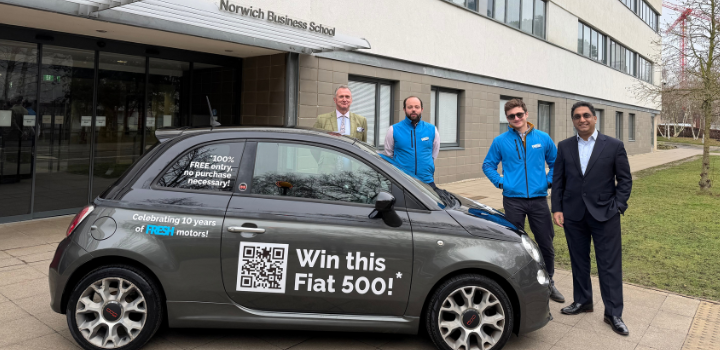
A University of East Anglia (UEA) graduate is celebrating the 10th anniversary of Fresh Motors, his company – which he started while a student – by giving away a car.
It comes as Jacob Freshwater, who graduated from Norwich Business School in 2016 with a first-class degree in Accounting and Management, reflects on how his studies shaped his entrepreneurial path and how the school continues to support his business growth.
Beginning with just one vehicle, the business – Fresh Motors – grew steadily, allowing him to learn, adapt, and make mistakes without the pressure of a full-time job.
“My degree gave me something incredibly important – confidence! Not just in numbers or finance, but in understanding how businesses work as a whole,” Jacob explained. “Even today, those learnings remain relevant, from managing risk to thinking strategically. It proved invaluable early in my career.
“Juggling a degree alongside starting a business was challenging but incredibly rewarding. When you truly care about something, you find the time for it. That experience taught me efficiency, organisation, and discipline.
“I’ve always been entrepreneurial, even at school, I was selling sweets! Working for myself excited me because of the risk and reward. Ultimately, it’s about happiness, doing what you enjoy, on your own terms.”
As he celebrates 10 years in business, Jacob is marking the milestone with a special car giveaway designed to support someone in genuine need, where the winner can take home a car for Christmas.
“The giveaway is something we are really proud of, we can ensure the prize goes to someone who would truly benefit from it,” he said. “It’s a real opportunity to give back.”
Norwich Business School’s support for Jacob extended well beyond graduation. He benefited from initiatives such as the Help to Grow programme and the Santander ‘Do It’ grant, which enabled him to secure a Financial Conduct Authority credit licence, a pivotal step that allowed the business to sell vehicles on finance.
Prof Amir Sharif, Head of Norwich Business School, said:
“Jacob’s entrepreneurial and business success story is an inspiring one. In fact it’s not even a story, it’s a real example of how our students can get inspired during their studies and go on to develop lifelong impact through their business ideas and interventions. It was wonderful to meet with Jake and his team and to hear about plans for the future – and of course to support his recognition of our students and the business school. We look forward to continuing to work with Jacob and Fresh Motors – well done and congratulations to him for running such a successful business!”
He continues to engage with the school through seminars, events, and employability weeks, adding: “It’s very much a two-way relationship, and one I hope to build on further. I’m even considering returning to study for an MBA, which speaks volumes about how positive my experience has been.”
Reflecting on his time at UEA, he highlights the flexibility of his degree and the breadth of modules available, from company law to business strategy, and some of his favourite memories as a student.
Jacob said: “I think the memories that really stand out are spending time with friends at the LCR, sports and running, and making the most of the Sportspark. It wasn’t just about studying; it was about enjoying the full university experience.”
The giveaway draw takes place on 24 December. To find out more, visit the Fresh Motors website.
Related Articles

New guide puts Indigenous Peoples, local communities and rights at the heart of ecosystem restoration
A major new report outlines how experts can better place Indigenous Peoples and local communities at the heart of decision-making in ecosystem restoration efforts.
Read more
New study reveals phone-free holiday can provide wellbeing reset
Research from the University of East Anglia has revealed that digital-detox trips can help people slow down, reconnect with their surroundings and reassess their relationship with technology.
Read more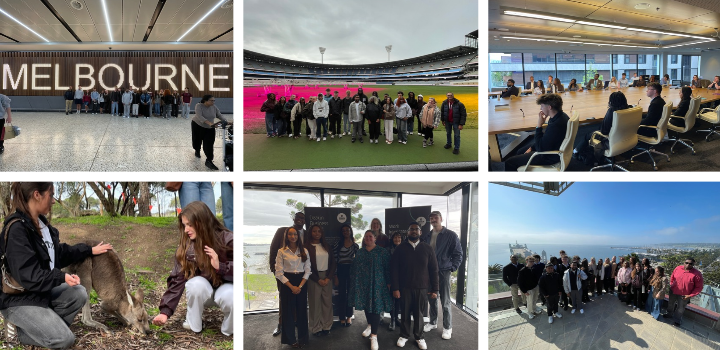
UEA students experience real-world business challenges in Australia
Students at the University of East Anglia have been given the chance to gain valuable international experience in real-world business challenges through a skills boosting programme in Australia.
Read more