UEA further boosts its climate expertise through key appointments and strategic partnership
By: Communications

The University of East Anglia’s reputation for climate science has been further enhanced by a new partnership with the UK Met Office, a key committee appointment and a leading US scientist set to arrive in the Summer.
UEA joins Met Office Partnership
The university has been selected as one of only eight UK universities to join the Met Office Academic Partnership (MOAP) Framework for 2026–2030.
This significant achievement strengthens UEA’s longstanding research reputation in this area, positioning it at the forefront of national efforts to advance weather and climate science.
Through the partnership UEA will play a key part in shaping future prediction systems, environmental modelling, and data analysis for the UK’s national meteorological agency. The initiative will provide services to the Met Office and academic partners, with the total fund being worth £24m across the four-years.
Work by UEA will focus on the ability to capture and extract benefit from observations for a wide range of forecasting uses and applications, as well as supporting the Met Office’s core task to produce models of the current and future environment and Earth system.
It will also provide a route to impact for new science, ensuring prediction data ends up helping all users of weather, seasonal and climate products and services.
Head of the School of Environmental Sciences, Prof Ian Renfrew, said: “The MOAP bid was a true team effort, involving colleagues from both the School Environmental Sciences and School of Engineering, Maths and Physics, together with support from our Research and Innovation Services team.
“We’re delighted that this work has resulted in UEA being invited to join the partnership and the opportunities it will bring, from teaching activities to conducting research of significant interest and importance. It’s a testament to the strength of our expertise in the field of environmental, climate and weather science.”
Prof Andrew Jordan appointed to UK Climate Change Committee
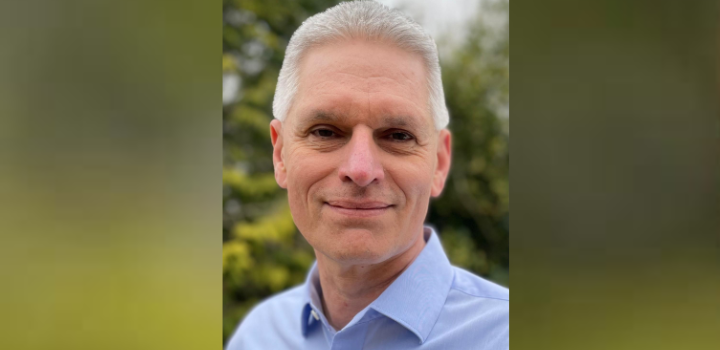
Image: Prof Andrew Jordan
This month also saw the appointment of Prof Andrew Jordan, director of the Tyndall Centre for Climate Change Research, headquartered at UEA, to the UK Climate Change Committee (CCC) for a five-year term, starting in April.
Prof Jordan brings more than 30 years of experience in environmental and climate policy to the CCC. He is internationally recognised for his research on how governments design, coordinate and innovate public policies for sustainability, particularly within the European Union.
The CCC is an independent statutory body that advises the UK and devolved governments on reducing emissions and adapting to the impacts of climate change.
Prof Jordan’s appointment continues UEA and the Tyndall Centre’s long-standing connection to the CCC, following the 10-year tenure of Prof Corinne Le Quéré, who steps down as a member in May.
Prof Jordan said: “I am both honoured and excited to be joining the Committee mid-way through this decisive decade for climate action. As a social scientist with expertise in climate policy and governance, I look forward to working closely with the Committee to provide advice, support, and constructive challenge.”
US scientist joins UEA
In addition to this, the university is pleased to announce that American scientist Prof William Collins will join the School of Environmental Sciences in June, as Professor of AI for Climate Science.
Currently Associate Laboratory Director for the Earth and Environmental Sciences Area at the Lawrence Berkeley National Laboratory, Prof Collins is a world leader in the development and use of AI to assess changes in extreme weather in climate change projections.
At UEA, Prof Collins will pioneer the use of AI to advance climate research across disciplines, driving innovation in research and practice, and establish a foundation for the university’s next decade of world-leading climate science. He will collaborate with the Climatic Research Unit and the Tyndall Centre, as well as foster new thinking across the Norwich Research Park on ways to integrate AI.
Prof Collins is also a Professor in Residence at the University of California, Berkeley, where his research focuses on the interactions between radiation, the Earth’s climate system, and global environmental change.
During his career he has played a major role in international climate research, including serving as a lead author for multiple assessment reports of the Intergovernmental Panel on Climate Change (IPCC). He is a fellow of several major scientific societies and has received awards for advancing climate modelling.
Prof Collins said: “I am deeply honoured and delighted to be joining the distinguished faculty, staff, and students of UEA as the university accelerates its holistic approach to address the greatest challenges posed by climate change.”
Prof Collins’ appointment follows that of fellow IPCC lead author and award-winning climate scientist Prof Benjamin Santer last July, as an Honorary Professor in the School of Environmental Sciences. Prof Santer’s early research contributed to the historic 1995 conclusion of the IPCC that for the first time suggested a “discernible human influence on global climate”.
Since 1995, Prof Santer has identified human fingerprints in many different aspects of the climate system, including atmospheric temperature and water vapor, ocean heat content, and sea surface temperature in hurricane formation regions
UEA is further investing in its climate change expertise with the appointment of the new Sir Anthony Habgood Professor of Climate and the Environment. Funded by a generous endowment, this position is open to applicants with exceptional track records in a broad range of relevant areas.
These appointments and the strategic partnership underscore UEA’s commitment to driving impactful, real-world solutions to climate change in an increasingly complex global landscape.
Related Articles
New guide puts Indigenous Peoples, local communities and rights at the heart of ecosystem restoration
A major new report outlines how experts can better place Indigenous Peoples and local communities at the heart of decision-making in ecosystem restoration efforts.
Read more
Climate change and security threats leave UK food supply at risk, expert warns MPs
The UK must move beyond prioritising efficient and low-cost food supply chains and build resilience for an era of increasing disruption, according to an expert at the University of East Anglia.
Read more
Scientists reaffirm ‘incontrovertible’ evidence of human influence on climate
The scientific evidence for human-caused global warming is stronger than ever, according to a major new review – despite a United States government report questioning the science.
Read more