UEA celebrates global success in inaugural TIME Magazine university rankings
By: Communications
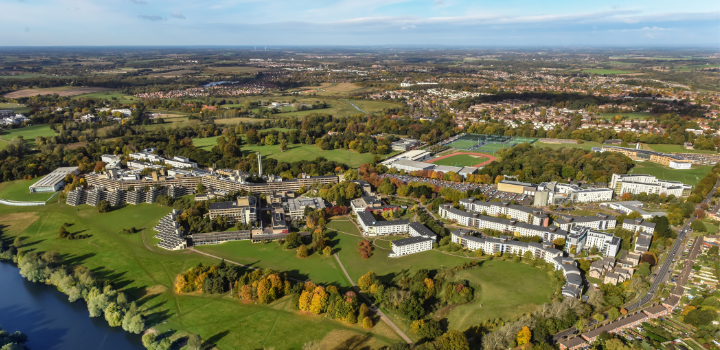
The University of East Anglia (UEA) has been named among the top 200 worldwide in TIME’s The World’s Top Universities of 2026.
Launched by TIME Magazine, this new list recognises universities that combine academic capacity and performance, innovation and economic impact, and global engagement.
UEA’s position, 180th globally and 27th in the UK, reflects the University’s growing national and international profile. In particular, placing as UK top 30 for the ‘academic capacity and performance’ category highlights the University’s commitment to impactful learning, research, and innovation.
Prof David Maguire, UEA Vice-Chancellor and President, says: “UEA’s high ranking in this prestigious international league table confirms our position as a high-quality, internationally renowned comprehensive research and teaching university with excellence in many categories.”
The World’s Top Universities of 2026 focuses on a wide range of indicators, such as UEA’s graduate outcomes in business and industry, university website traffic, student-to-staff ratios, citation counts, and innovation impact on technological advancement.
These rankings also consider the presence of Nobel Prize and Fields Medal laureates, of which UEA has three Nobel Prize-winning alumni – Sir Paul Nurse (Medicine, 2001), Sir Kazuo Ishiguro (Literature, 2017), and Dr Michael Houghton (Medicine, 2020) – and highly cited researchers identified by Clarivate.
Notably, six UEA researchers were named in the top 1% worldwide for Clarivate's 2025 Highly Cited Researchers list: Prof Jonathan Jones, Prof Corinne Le Quéré, Prof David Livermore, Prof Robert Nicholls, Prof Cyril Zipfel and Dr Jun-Hwa Cheah.
Related Articles

UEA and Anglian Water strengthen commitment to innovation, sustainability and regional impact
The University of East Anglia and Anglian Water are reaffirming their shared commitment to tackling some of the region's most pressing environmental challenges.
Read more
Booker Prize winners celebrate new UEA scholarship in honour of Eve Smith
The Booker Prize Foundation and the University of East Anglia announce new creative writing scholarship in the name of former BPF Company Secretary Eve Smith.
Read more
Major BFI Screen Heritage Fund investment secures future of nationally significant film archive in Norwich
£374,697 Resilience award will support relocation of the East Anglian Film Archive to UEA and safeguard more than 130 years of regional screen heritage.
Read more