Professor wins prestigious International Communications Book of the Year award
By: Communications
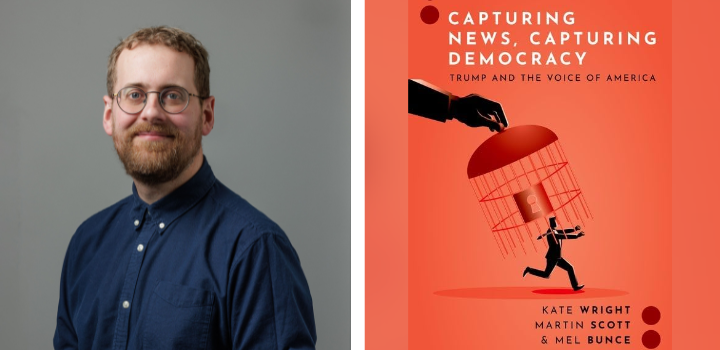
A professor from the University of East Anglia (UEA) has received a major international award for his co-authored book about the political pressures on news and democracy during the Trump administration.
Prof Martin Scott and his colleagues won the 2026 International Communications Book of the Year award from the International Studies Association (ISA), for ‘Capturing News, Capturing Democracy: Trump and Voice of America’.
This award is given in recognition of the book that has made the most substantial impact in the area of International Communications, in the context of international studies.
‘Capturing News, Capturing Democracy: Trump and Voice of America’ (Oxford University Press) examines how the Voice of America’s editorial independence was undermined during the first Trump administration. The book was co-authored by Prof Scott with Prof Kate Wright (University of Edinburgh) and Prof Mel Bunce (City St George’s, University of London).

Prof Scott, Professor of Media and Global Development from the School of Global Development at UEA, said that he hoped this award would “raise the profile of the perilous state of press freedom around the world and of the need to take action to protect news organisations from political interference”.
This award follows his previous 2025 Monograph of the Year award from the Media, Communication and Cultural Studies Association (MeCCSA) for the same text.
Find out more on the ISA website.
Related Articles
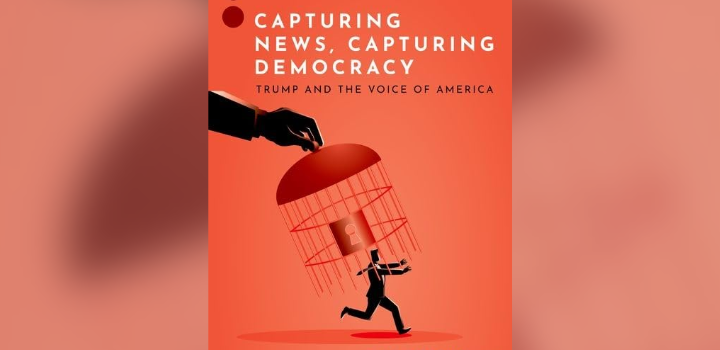
Prof Martin Scott wins Media Studies book of the year award
Professor Martin Scott has won the 2025 'Monograph of the Year' award from the Media, Communication and Cultural Studies Association (MeCCSA), for “Capturing News, Capturing Democracy: Trump and Voice of America” (Oxford University Press).
Read more
Inequalities grow in cities as heat and daylight patterns transform urban life
Changing patterns of heat and daylight in urban environments are creating growing inequalities, with climate-related shifts reshaping daily life and disproportionately affecting vulnerable communities.
Read more
Indigenous knowledge key to building healthier and more sustainable food systems
Traditional and Indigenous knowledge could play a vital role in addressing some of the world's most pressing challenges, including climate change, biodiversity loss, and poor health and nutrition, according to a new review of current research.
Read more