UEA academics receive £3.5m via the ARIA Universal Fabricators Programme
By: Communications
Prof Julea Butt (School of Biological Sciences) and Dr Amit Sachdeva (School of Chemistry, Pharmacy and Pharmacology) are part of a newly formed UK-US consortium awarded £5.3 million through the Advanced Research and Invention Agency's (ARIA) Universal Fabricators Programme.
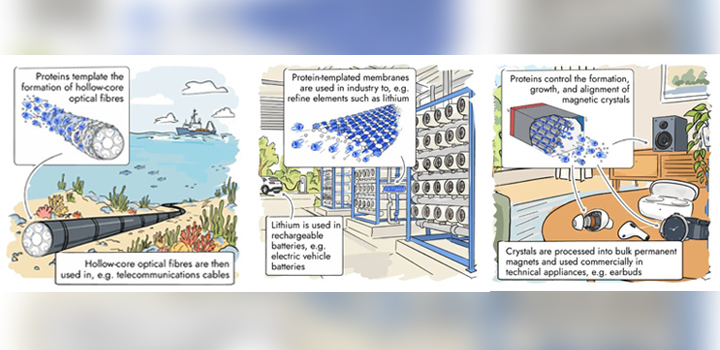
The three-year programme will allow the consortium to build two-dimensional metal-protein frameworks with a range of applications, including filtering and capturing high-value minerals such as lithium.
Lithium is in high demand globally to produce electric vehicle batteries.
The team will assemble frameworks from surface layer (S-layer) proteins, that form the outer coat of most archaea and many bacteria, and naturally assemble into regular, porous sheets. They hope that the S-layer proteins can be combined with metals and scaled up to produce large sheets, free of defects – known as S-Lattices.
Manufacturing with molecular precision is crucial for state-of-the-art material performance, and proteins represent a uniquely powerful toolkit to achieve this. To achieve ultra-precise filtration the team will engineer the S-layer proteins and incorporate chemical functionalities beyond those available in nature. Such precise metal-protein frameworks could also be engineered for purposes beyond filtration. The team could build in catalytic functions, or make materials that interact with light, through the incorporation of ordered metal nanoparticles and quantum dots.
The project, led by Prof Horsfall at the University of Edinburgh, includes an international team of researchers from the University of East Anglia, University of Cambridge, Queen Mary University of London, MRC Laboratory of Molecular Biology, Rice University and Princeton University.
Universal Fabricators Programme
The project is one of 11 that will take on the challenge of developing scalable manufacturing processes. The teams will use proteins as manufacturing tools to assemble advanced materials that can outperform what industry can mass-manufacture today.
Manufacturing today forces a choice between precision and volume. Defects are common at large scales, whilst more precise methods are expensive and energy-hungry.
The programme’s aim is to prove that protein-programmed manufacturing can combine molecular precision with reliable, industrial-scale production.
Find out more: https://aria.org.uk/opportunity-spaces/abundant-manufacturing/universal-fabricators/funded-projects.
Related Articles
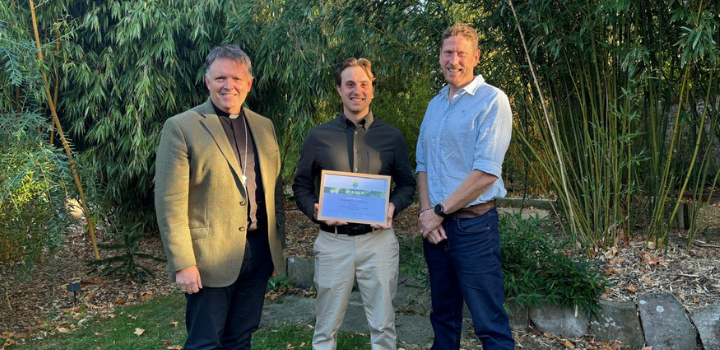
Annual Bishop of Norwich Prize for Ecology awarded to UEA graduate
University of East Anglia (UEA) master’s graduate, Adam Bourton, has won the 2026 prize for his conservation work with beach-nesting birds in North Norfolk.
Read more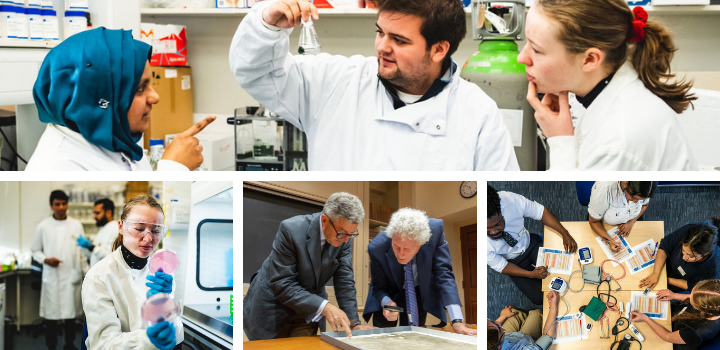
UEA among global elite for research collaboration
The University of East Anglia has been recognised as one of the best in the world for research collaboration in a major new ranking.
Read more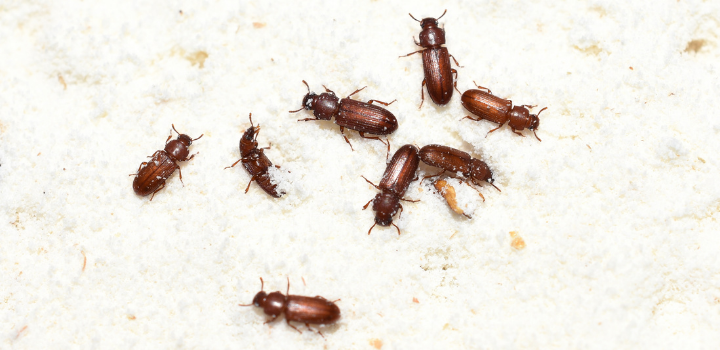
How sex can help save species from extinction
Giving females multiple males to mate with, rather than just one, could help make species more resistant to extinction – University of East Anglia research shows.
Read more