Top 20 places for UEA and its academics in new global rankings of climate science
By: Communications
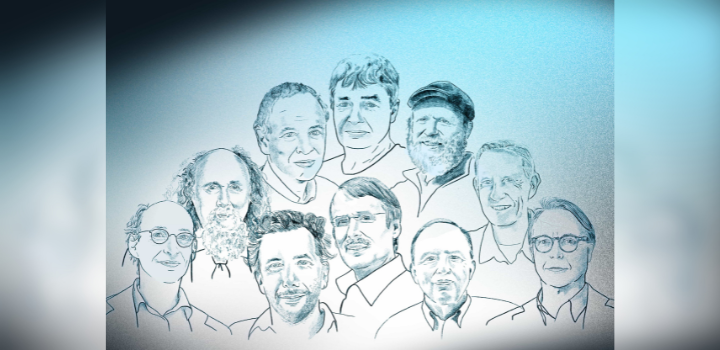
The University of East Anglia (UEA) and its researchers have been ranked among the top 20 in a major new global ranking of the most-cited authors, publications and institutions in climate science.
It coincides with the launch of Project Cosmos, a groundbreaking digital database that maps the "universe" of climate science. The database has been produced by Carbon Brief, an award-winning UK-based news organisation that specialises in climate science, energy and policy.
To mark the launch, Carbon Brief’s journalists have carried out an initial bibliometric analysis of the database to produce the ‘Cosmos 500’. The rankings provide a unique new lens on the people, organisations and research that have had the greatest influence on the development of climate knowledge.
Among the institutions UEA ranks 19th out of 500 worldwide, and third in the UK after the University of Oxford and the Met Office.
Individually, several current and past UEA academics feature. Emeritus Professor and former director of the Climatic Research Unit Phil Jones is the second-most cited author, while Prof William Collins, who joined the University last month, is 15th under his previous affiliation with the United States Department of Energy.
Five more researchers - Prof Corinne Le Quéré (140th), former Director of the Tyndall Centre for Climate Change Research at UEA Prof Robert Nicholls (147th), the late Prof Keith Briffa (238th), Prof Tim Osborn (252nd) and Prof David Thompson (418th) - are also ranked among the most highly cited.
In addition, at least eight papers led by the Climatic Research Unit are in the top 500 (34th, 73rd, 285th, 324th, 346th, 423rd, 454th, 472nd respectively). Other UEA researchers with publications featured in the ranking include Prof Rachel Warren and Prof Benjamin Santer.
Prof Julian Blow, UEA’s Pro-Vice-Chancellor Research and Innovation, said: “This recognition is a testament to the contribution that UEA and its researchers have made to advancing global understanding of climate change over many decades.
“From the pioneering work of the Climatic Research Unit to the world-leading research being carried out across our environmental sciences community today, UEA has helped shape the evidence base that underpins international climate science and policy.
“To see so many colleagues featured among the most-cited researchers and publications in the Cosmos 500 reflects not only the excellence and impact of their research, but also the collaborative spirit that has long been a hallmark of climate science at the University. For UEA to be among the top 20 institutions worldwide is truly an amazing achievement.”
The Cosmos database represents a significant new resource for the global climate community. Described by Carbon Brief as the “largest known database of climate change research", it follows an 18-month research and development effort.
The database contains more than 1.8 million unique publications linked by 40 million citation relationships. It is the most complete and expansive mapping of human knowledge on climate change ever assembled, tracking more than a century of academic research.
Visualised as an interactive ‘cosmos’ – a vast network graph in which each publication appears as a ‘star’ – the database reveals how different fields of climate research relate to, and build upon, one another.
This latest recognition for UEA in the field of climate science follows an award last month for the team behind the Global Surface Air Temperature (GloSAT) project, which has created the longest combined land and ocean temperature record for the Earth, beginning in the 1780s.
The team is led by the National Oceanography Centre in Southampton, and includes scientists from UEA, the Met Office and the Universities Reading, York and Edinburgh.
They won the ‘Award for Innovation in Development of Observations or Instrumentation’ from the Royal Meteorological Society, given to recognise individuals or teams within the amateur community, academia or business who have made significant contributions to the field of observation and instrumentation.
From UEA, the winners were Prof Tim Osborn, his former PhD student Dr Emily Wallis and former research scientist Dr Michael Taylor.
Considering your options for September? Clearing is your chance to find the course that fits you.
Be ready for results day with the latest updates. Register for Clearing updates.
Related Articles

Scientists reaffirm ‘incontrovertible’ evidence of human influence on climate
The scientific evidence for human-caused global warming is stronger than ever, according to a major new review – despite a United States government report questioning the science.
Read more
UEA among global elite for research collaboration
The University of East Anglia has been recognised as one of the best in the world for research collaboration in a major new ranking.
Read more
Rapid growth in climate extremes hitting critical region of Amazon hardest
Rapid growth in climate extremes is hitting a critical region of the Amazon hardest, according to new research involving the University of East Anglia.
Read more