Student-led sessions boost region’s speech and language therapy support
By: Communications
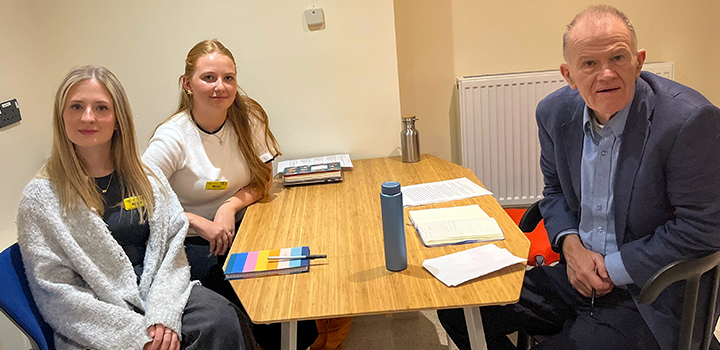
People with conditions like Parkinson’s and stroke are benefitting from dedicated support sessions run by Speech and Language Therapy students at the University of East Anglia (UEA).
The weekly initiative provides affordable and accessible support for people living with neurological disorders, with service users paying just £10 for the full programme.
Delivered at UEA’s Norwich Electronic Assistive Technology Centre (NEAT) – a fully furnished, interactive ‘bungalow’ designed to replicate real-life living environments – the sessions enable participants to practise communication and daily living skills in a supportive setting.
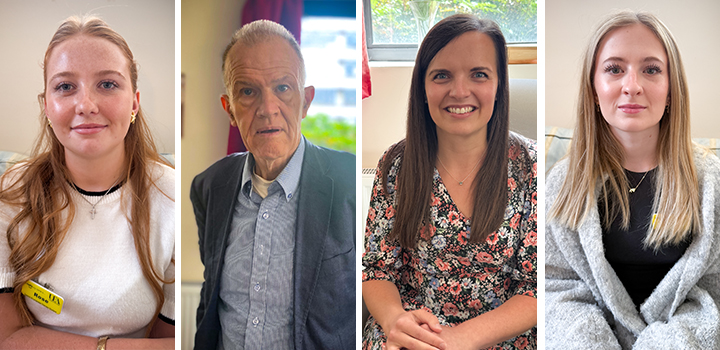
L-R: Rose Faiers, Jonathan Burney, Shannon Dimmon, Alicia Algate
Participants such as Jonathan Burney, 66, from Norwich, who has Parkinsons, have reported clear benefits from the sessions with students.
He said: “They would discuss with me what aspect of my voice I wanted to improve and developed techniques for me to apply this.
“I would identify a concern, for example excess hesitation, and they would come back next week with some suggestions which I could then embed through practice.
“I found the students helpful, committed, and with a sympathetic manner for times when the Parkinsons was compromising my input.”
Asked about his hopes ahead of the sessions, Jonathan said: “I was cautiously hopeful but realistic as previous training has demonstrated to me that while you can learn some tricks to improve the impact of your voice, it is difficult to embed these as a permanent habit.
“Importantly, a number of friends and relatives have said my voice sounds stronger since.”
Elissa Manzi, Lecturer in Speech and Language Therapy at UEA, and one of the leads for the initiative, said: “This programme has been a great success, both for the people who took part and for our students.
“It has provided vital support for members of our community while giving our students invaluable hands-on experience as they prepare to become confident, compassionate clinicians.”
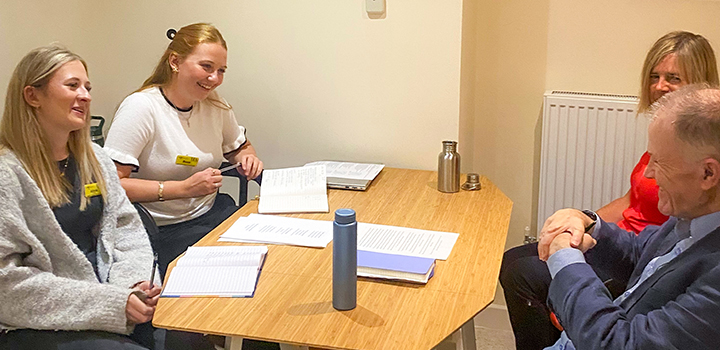
Rose Faiers, a second-year Speech and Language Therapy student, said: “Working directly with patients whose speech and communication have been affected by conditions such as stroke, Parkinson's disease, or dementia has been incredibly rewarding.
“Communication is such a fundamental part of how we connect with others, express our needs, and maintain our independence.”
Alicia Algate, another second-year Speech and Language Therapy student, said: “Being in the clinic helped me connect the dots between what we study and what actually happens in therapy.
“I’ve grown in confidence right alongside the clients I’ve worked with. They’ve taught me just as much as I’ve supported them, and that shared growth has been one of the most meaningful parts of my placement.”
Addressing a national shortage
The programme comes against a backdrop of significant national demand. A 2025 survey by the Royal College of Speech and Language Therapists (RCSLT) found that around one in six roles in England remain unfilled, rising to around one in four in services supporting people with learning disabilities.
For people with Parkinson’s, need is particularly acute, with up to 90 per cent experiencing speech deterioration, around 80 per cent developing swallowing difficulties, and 35 per cent a decline in voice quality.
Yet a major UK-wide survey led by UEA found that 43 per cent of people with Parkinson’s had no contact with speech and language therapy services.
Elissa Manzi said: “There is a clear and urgent need for more speech and language therapy support across the region.
“Programmes like this show how universities can play an important role in helping to bridge that gap, while also preparing the future workforce.”
Building on success
The speech and language therapy offer builds on the success of UEA’s Community Clinic, which launched physiotherapy provision in October 2025. That initiative supported six service users through tailored, student-led sessions.
Together, these programmes demonstrate how UEA is responding to growing demand for community-based healthcare support at a time when services are under pressure.
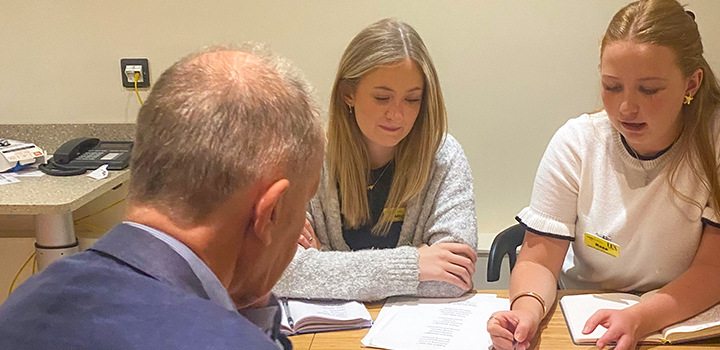
Shannon Dimon, Lecturer in Speech and Language Therapy at UEA, said: “It has been a real pleasure to be involved in the clinic this year, particularly supporting the students to develop key skills and experiences which will prepare them for clinical practice.
“Developing rapports with both the students and service users has been another highlight.
“I look forward to further involvement, with the clinic continuing to run twice yearly, and with the hope to expand in the future to support more individuals.”
Additional support in the community
Alongside the programme, UEA’s Speech and Language Therapy team continues to support local people through partnerships with groups such as the Norwich Parkinson’s Group and Norwich Stroke Survivor’s Club.
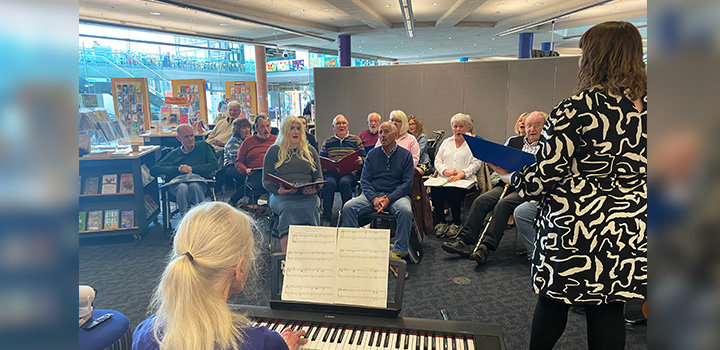
They also run the region’s unique Aphasia Choir, an inclusive singing group for people with communication difficulties following acquired brain injury.
The choir meets at The Millennium Library in The Forum in Norwich from 11am –12.30pm on the second and fourth Friday of each month, welcoming participants to sing, hum, vocalise, or simply listen, and provide an opportunity to connect with others with aphasia.
Related Articles
First choir in region for people with language disorder after brain injury
The East Anglia region’s first choir for people with aphasia, a language disorder often acquired as a result of stroke or acquired brain injury, has been launched by an academic from the University of East Anglia.
Read more
Addressing the gap in community care for neurological patients at UEA’s Community Clinic
Norfolk residents living with neurological disorders have praised the impact of UEA’s student-led physiotherapy sessions as the first cohort nears its completion.
Read more
UEA subjects among UK best in student-focused league tables
The University of East Anglia has climbed to the top of a new league table for a variety of subjects – with Norwich named the nation's leading university city.
Read more