Addressing the gap in community care for neurological patients at UEA’s Community Clinic
By: Communications
Norfolk residents living with neurological disorders have praised the impact of UEA’s student-led physiotherapy sessions as the first cohort nears its completion.
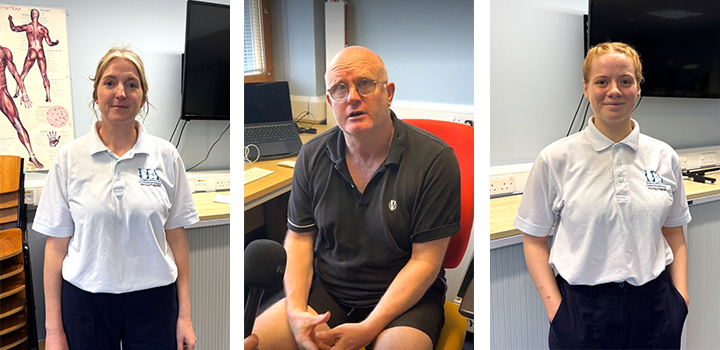
As part of their degree programme, four students have been working in pairs to deliver tailored twice-weekly physiotherapy sessions for members of the local community living with neurological disorders.
The first of these two-hour Community Clinic sessions was held on 6 October in UEA's state-of-the-art MoveX Lab, with the final one of this cohort taking place on 6 November.
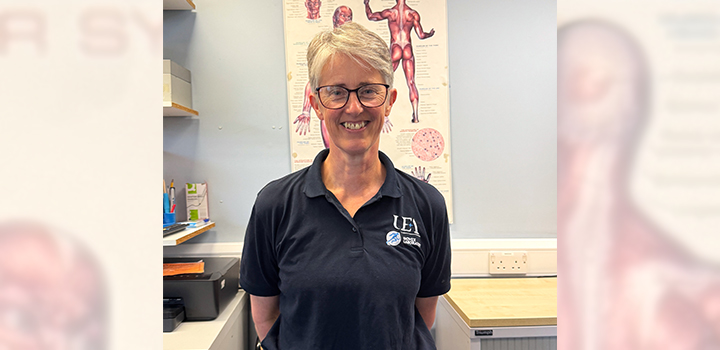
Image: Dr Kathryn Mares
Dr Kathryn Mares, Associate Professor in Physiotherapy and Lead for the MoveX Lab, said: “As a physiotherapist by background, I've been aware that there is scope within the current community services for people living with neurological conditions such as stroke or Parkinson's disease to develop a bespoke student-led service”.
“We wanted to create an innovative placement for our students combining both clinical and research skills, that would also give people living with neurological conditions an opportunity to receive one-to-one physiotherapy from the students, under the supervision of expert physiotherapists working here at UEA.”
Participants’ first sessions involve a general assessment, conducted by the students, which helps to inform personalised patient goals for their physiotherapy.
Sessions are then focused on physiotherapy treatment using exercises and equipment within the MoveX lab to improve function and fitness.
Garth Ravenhill, 54, a grandfather-of-three from Norwich spent two decades working as a nurse, including in the NHS and with Norwich Prison, and received a diagnosis of early onset Parkinson’s when he was just 38.
Garth secured a place after hearing about the programme through his local Parkinson’s support group.
He said: “It's helped me out on a number of levels. Exercise is very important to people with Parkinson's disease, and it makes a massive difference to how you feel, how you move.
“There's also evidence suggesting that exercise can actually slow down the progression, so exercise is important to me.”
On the quality of care he had received, Garth said: “These physiotherapists, the third years, they know what they're doing. They've been really, really good and and a really high standard."
Lucie, a third-year Physiotherapy student working with Garth, said: "I like to hope that we've given them some additional treatment that maybe they weren't able to access outside of this clinic. We've given the opportunity to come in and mix with people that are experiencing the same stuff as them.
“We’ve also learnt so much from them, as much as hopefully that we've helped them. It's been great.”
Anna, a third-year Physiotherapy student originally from Hungary, who worked with Garth, said: “I think they've found a community, especially with this last exercise group that we did. They're now chatting and they're sharing treatments and what they've taken part in. I think it's just building that community and that network, which has been really good.”
Dr Mares hopes that this is just the start of something that can benefit both patients and students: “We have another placement in January and we are looking to put out a job advert for a physiotherapist who will work across the clinic and as a lecturer in the School of Health Sciences so that we can expand this programme.
“Ultimately, it would be great to be able to support year-long clinics and different education, research and clinical placements for the students.”
Related Articles

UEA physiotherapy students begin new placement supporting patients with neurological conditions
Patients living with neurological conditions such as stroke, Parkinson’s disease, or multiple sclerosis are benefiting from a new physiotherapy initiative at the University of East Anglia (UEA).
Read more
How the eyes could unlock personalised pain relief with virtual reality
Combining artificial intelligence (AI) with eye tracking in virtual reality could one day help personalise treatment for millions living with chronic pain, according to world-first research from the University of East Anglia.
Read more
From clinical trials to cancer care – UEA showcases pharmacy innovations transforming the NHS
Researchers, healthcare professionals and sector leaders from across the UK will come together in London later this month to showcase new approaches to improve patient care, strengthen the NHS workforce and accelerate research.
Read more