Remembering Professor Stuart Penkett
By: Communications
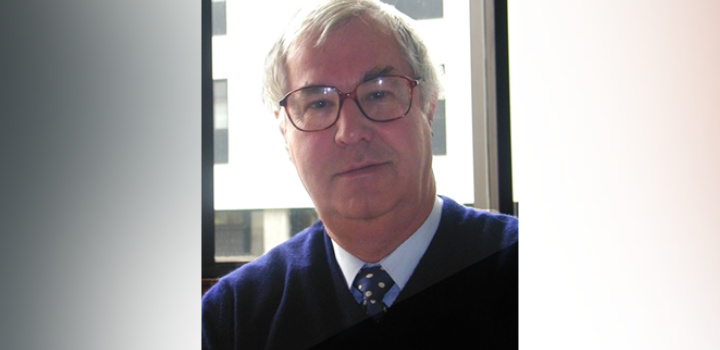
Friends and colleagues at UEA were saddened to learn of the death of Stuart Penkett, Emeritus Professor of Environmental Sciences, who passed away at the start of January.
Prof Penkett started at UEA in 1985 as a Natural Environment Research Council (NERC) Reader, became professor in 1990, and continued contributing to the University as an Emeritus Professor after his retirement in 2004.
Prof Penkett identified the main chemical pathway that forms sulphuric acid in “acid rain”, transforming understanding of atmospheric pollution, and made key discoveries about tropospheric ozone, showing it is controlled largely by chemical processes within the atmosphere itself.
He carried out first of their kind atmospheric measurements of gases including carbonyl sulphide and carbon disulphide, and early stratospheric measurements of ozone depleting chemicals that informed the Montreal Protocol.
At UEA he established the Weybourne Atmospheric Observatory, now part of the National Centre for Atmospheric Sciences’ (NCAS) national capability, as well as being one of the stations in the World Meteorological Organisation’s (WMO) Global Atmosphere Watch network and the primary UK station in the European Integrated Carbon Observation System.
He also led the development of the UK Met Office’s C‑130 aircraft into a major research platform, forming the foundation of today’s Facility for Airborne Atmospheric Measurements.
Prof Penkett played important roles in the UN’s Scientific Assessments of Ozone Depletion, was a member of the Intergovernmental Panel on Climate Change (IPCC), on the US National Academy of Sciences Committee, and advised the UK Government through its Stratospheric Ozone and Photochemical Ozone Review Groups.
He was recognised internationally, receiving the Gaskell Memorial Medal and the Haagen Smit Award for his influential research.
His leadership of the first major NERC atmospheric consortium transformed UK atmospheric science, creating the blueprint for future research projects, helping launch the careers of many of today’s leading national and international scientists.
Prof Penkett leaves an extraordinary scientific legacy and will be remembered with deep respect by colleagues, students, and the global research community.
Related Articles
A new way to study? UEA pilots AI tool to support revision and learning
UEA has launched a pilot with StudyStash, an AI-powered learning platform designed to help students make better use of their existing course materials.
Read more
Electoral integrity under pressure as elections faced persistent threats in 2025
Elections across the world faced a wide range of pressures on electoral integrity in 2025, from violence and mis- and disinformation to electoral management malfunctions, cyber attacks and natural hazards, according to a new report.
Read more
Cultural leaders from Peru and Brazil bring climate justice and Indigenous rights campaign to Westminster
Indigenous women leaders and LGBTQIA+ campaigners from Peru and Brazil are in London this week as part of a University of East Anglia project using creative storytelling to drive climate justice and Indigenous rights advocacy.
Read more