Popular UEA Christmas lecture for children returns with search for Santa's new animal helper
By: Communications

Tickets are expected to be disappear quickly when the ever-popular UEA Christmas lectures for children return this December with a festive animal-themed showdown.
Led by UEA’s Prof Ben Garrod with TV presenter and vet Dr Jess French, this year's UEA Christmas lectures for children: Ultimate Animals event takes place on campus on Saturday 12 December.
The free event tickets, which are open to all, can be booked on Monday 2 November.
This year, Santa is looking beyond reindeer and searching for a brand-new addition to his Christmas Eve team. Young audiences will help decide which creature has what it takes to earn a place on the sleigh, while learning surprising animal facts along the way.
Attendees can expect a lively mix of science, audience participation and festive surprises in a family-friendly lecture designed for children aged six to 10.
There will be two opportunities to take part in the festivities (10am and 12pm), so more people will have an opportunity to engage with the campus and university.
Prof Ben Garrod said: “What better way to celebrate the festive season than with a science-filled, panto-style nature event?”
With free biscuits and complimentary hot drinks for attendees, there will also be a pop-up shop hosted by Norfolk Children’s Book Centre at the event, as well as the chance to interact with Father Christmas himself.
Thinking about studying at UEA?
Discover our award-winning campus, meet current students and staff, and find out what life at UEA is really like at our upcoming Undergraduate Open Day:
Saturday 28 November 2026
Related Articles
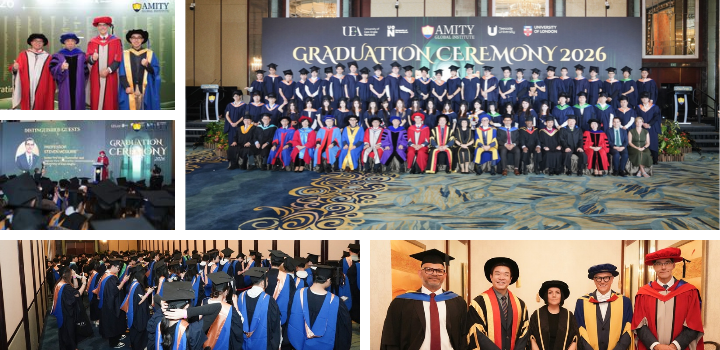
UEA partnership celebrates graduation of first students
The first University of East Anglia students studying in Singapore through its partnership with Amity Global Institute have celebrated their graduation at a special ceremony this month.
Read more
UEA takes over British Film Institute to celebrate half a century of film studies
A major new programme of public lectures and research is being launched to celebrate the 50th anniversary of film studies at the University of East Anglia (UEA).
Read more
How dismissed symptoms can push patients to breaking point
Patients have been left feeling suicidal after feeling like their doctor was saying their symptoms were ‘all in their head’ – according to research from the University of East Anglia and the University of Cambridge.
Read more