Perfect 10: UEA marks decade of Green Flag success
By: Communications
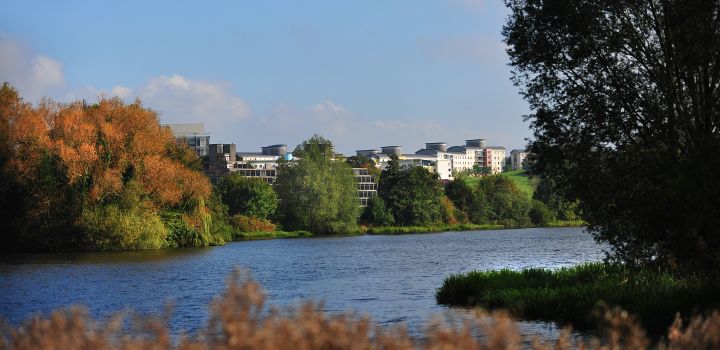
The University of East Anglia (UEA) is celebrating a decade of Green Flag success after securing the prestigious award for the 10th year running.
The milestone reinforces the University's reputation as one of the UK's leading green campuses.
The Green Flag Award is the international quality mark for parks and green spaces, recognising sites that are welcoming, well-maintained, sustainably managed and support nature and the communities that use them.
Awards are renewed annually and judged against a range of criteria, making 10 successive awards a significant achievement.
Why UEA's campus is recognised as one of the UK's leading green campuses
Set across more than 360 acres of parkland, woodland, water and open green space, UEA's campus is renowned for its rich biodiversity and distinctive natural environment. Home to broadleaf woodland, meadows, lakes, a rare chalk stream and extensive landscaped grounds, the campus provides valuable habitats for wildlife while offering students, staff and visitors access to nature on their doorstep.
The award recognises the work undertaken throughout the year by UEA's Estates and Facilities team, whose ongoing efforts help protect and enhance the campus landscape, including its seven County Wildlife Sites.
This includes habitat management, tree planting, conservation projects, sustainable grounds maintenance and initiatives designed to support wildlife and improve the experience of everyone who uses the campus.
What Green Flag status means for students, staff and visitors
The milestone comes during a period of continued investment in biodiversity and sustainability across the University, supporting UEA's wider commitment to environmental responsibility and creating an attractive, healthy and inspiring place to study, work and live.
Stephen Wells, Director of Estates and Facilities, said: “We are incredibly proud to have achieved Green Flag status for a 10th consecutive year.
"Our campus is one of UEA's defining features and plays a hugely important role in the experience of our students, staff and visitors.
“Reaching this milestone is a testament to the dedication and expertise of the teams who care for these spaces throughout the year, as well as our ongoing commitment to protecting and enhancing biodiversity across the campus.
"As we celebrate this achievement, we remain focused on ensuring that future generations can continue to enjoy and benefit from these exceptional green spaces."
How UEA protects biodiversity across its 360-acre campus
Recent biodiversity initiatives have included volunteer-led conservation work by UEA's Biodiversity Heroes, who have helped reintroduce traditional woodland management techniques in the Sainsbury Centre woods to protect bluebells, support wildlife and preserve an important historic landscape.
In the coming months, work is due to start on the restoration of the much-loved UEA boardwalk, which will create a new accessible, sustainable and wildlife-sensitive route through a 400-metre stretch of the River Yare nature trail.
And recently, some beautiful photographs of owls were captured on campus by Gargi, a postgraduate researcher from our School of Biological Sciences, as part of their work studying bird population dynamics.
Paul Todd MBE, Green Flag Award Manager at Keep Britain Tidy, said: “Parks are essential public spaces that support our wellbeing, our communities and our economy.
“Yet for millions of people, particularly in the most deprived areas, local parks simply don’t feel safe or welcoming.
"With public services under pressure, investing in parks is not a luxury, it's a practical, preventative solution and one of the most visible ways to improve people's quality of life.
"UEA has shown what can be achieved when parks are properly supported and managed.
“As we celebrate 30 years of the Green Flag Award, we want every community to have access to green spaces that are safe, welcoming and maintained to a high standard.
"Congratulations to everyone involved."
Managed by environmental charity Keep Britain Tidy, the Green Flag Award is the benchmark international standard for the management of recreational outdoor spaces. This year's award also coincides with the scheme's 30th anniversary.
Considering your options for September? Clearing is your chance to find the course that fits you.
Be ready for results day with the latest updates. Register for Clearing updates.
Related Articles
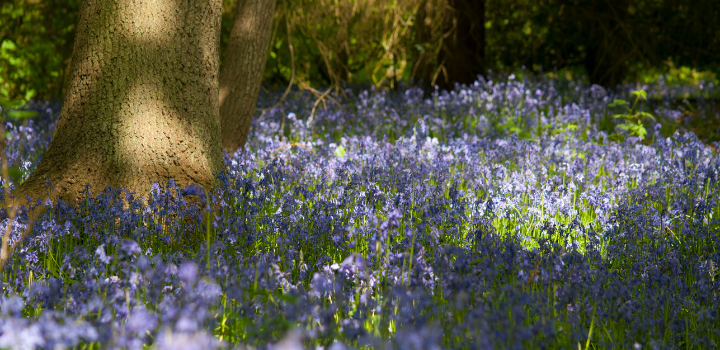
Volunteers protect UEA’s bluebells and historic woodland with ancient preservation techniques
Bluebells on the University of East Anglia (UEA) campus now have a better chance of survival thanks to volunteers using restoration methods to revitalise the local woodland and boost biodiversity.
Read more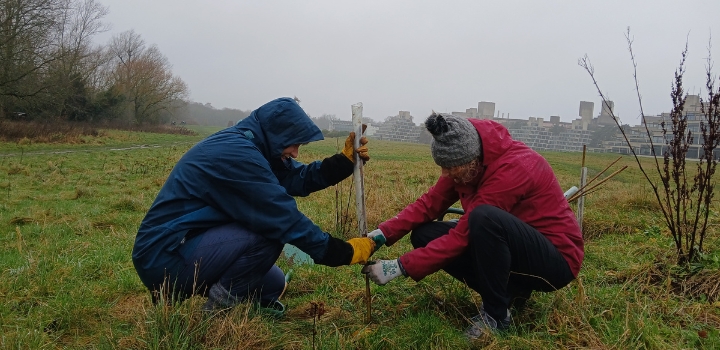
UEA volunteer project boosts biodiversity for campus wildlife
A volunteer project at the University of East Anglia (UEA) has seen more than 100 native trees planted to support wildlife on its campus.
Read more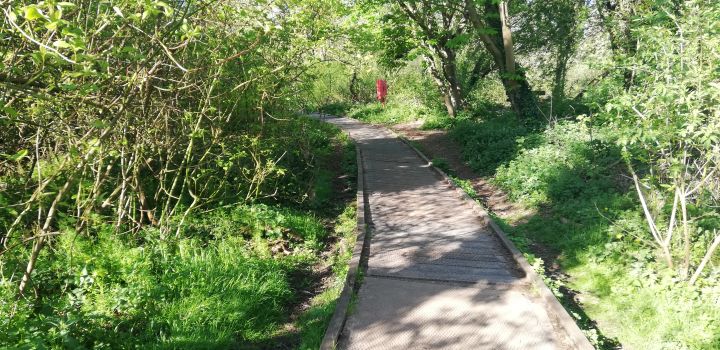
New life for a much-loved nature trail as UEA Boardwalk project gets the go-ahead
The University of East Anglia (UEA) project to restore the boardwalk along the Yare Valley will deliver a new accessible, sustainable, and wildlife‑sensitive walkway along a 400m section of the River Yare.
Read more