Our lockdown experience in photos
By: Communications
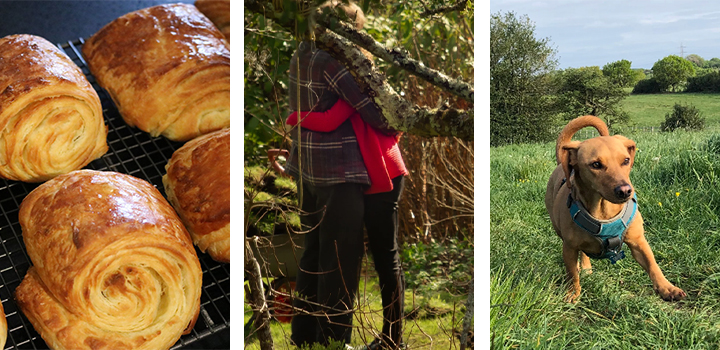
At the start of the UK’s first lockdown, UEA researchers launched a project to track the health of the nation. A year later, under specific instruction to include the good, the bad, and the ugly, the participants of that study were invited to provide photographs chronicling everyday life in lockdown. A new CreativeUEA article looks back at the study and considers what the photographs tell us about our collective COVID-19 experience.
The researchers (Dr Sarah Hanson, Prof Felix Naughton, Dr Pippa Belderson, Dr Emma Ward, and Prof Caitlin Notley) invited participants to send in up to three photos and accompanying captions. “The stories the photos and captions conveyed were sometimes extremely moving, sometimes uplifting and sometimes even funny (lots of pet pics!). But they reflected how varied people’s experiences were, and their resourcefulness under sometimes very challenging circumstances,” explains Prof Naughton.
Many of the photographs fell into two distinct themes: a sense of loss and salutogenesis (what makes us well). “Some people were able to draw on resources that helped their wellbeing, such as gardens, and the ability to work from home; for others, the sense of loss was profound and the photos conveyed this through what was missing – empty swings in the park, empty churches, empty cities, the absence of guests at celebrations," says Dr Hanson.
From pets to parks, via pastries, you can take a look through all the photos and read more about the study via the button below.
Related Articles
Booker Prize winners celebrate new UEA scholarship in honour of Eve Smith
The Booker Prize Foundation and the University of East Anglia announce new creative writing scholarship in the name of former BPF Company Secretary Eve Smith.
Read more
UEA academic serves as historical consultant for new BBC Radio 4 series
A leading University of East Anglia (UEA) historian has contributed expert analysis to a major new BBC Radio 4 series presented by broadcaster David Dimbleby.
Read more
Lost letter from the Pope casts 1066 as a holy war against ‘followers of Satan’
A lost letter from the Pope could rewrite the story of 1066 – according to research from the University of East Anglia.
Read more