New report shows how to increase boys’ engagement in school as a driver for gender equality
By: Matthew Heaton
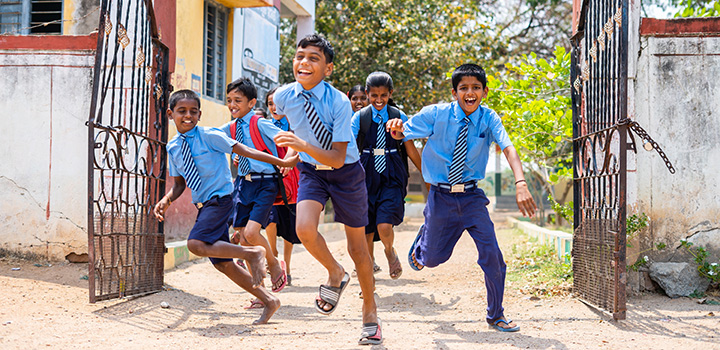
A new report finds that holistic approaches to prevent boys' disengagement from schools could both raise attainment and influence wider societal gender equality.
Based on findings across six countries “Lifting Barriers: Boys’ disengagement from education - a scoping study” provides evidence and recommendations to support boys’ participation in school.
The report was jointly published by UNESCO, the University of East Anglia (UEA) and Equimundo (an organisation focused on masculinities and gender equality). It presents research and analysis conducted by UEA colleagues and partners at the University of Malawi for a wider Global Partnership for Education’s Knowledge and Innovation Exchange (GPE KIX) project. Findings from the report are being incorporated into a global intervention model for adaptation across a range of countries, and is currently being piloted in primary schools in Malawi. This gender transformative model is designed to encourage equal and inclusive classrooms and schools.
What interventions help keep boys engaged in learning?
Education is a key driver for individuals to raise their likelihood of better health and socio-economic outcomes but a concerning trend is that boys in many countries are disengaging from schools. Much attention previously focused on improving education for girls, but it is estimated that over half the number of out-of-school children globally are boys - and this number is rising.
Previous research has shown that societal expectations around masculinity often discourage boys from engaging fully in school, exposing them to negative behaviours and limiting their academic progress. These norms intersect with poverty and economic pressures, further pushing boys out of school.
Programmes are being developed to understand and improve boys’ engagement in schools, primarily in the Global North, but little evidence exists how educational programmes effectively challenge gender norms - including harmful and restrictive masculinities - to improve boys’ engagement in school. Understanding those strategies that have the potential to keep boys in school and learning, while promoting gender-equitable attitudes and behaviour, could be used to inform best practice for inclusive schools and societies.
Dr Matthias Eck, Programme Specialist at UNESCO, said: “This scoping study fills an important gap in our understanding of what works to improve boys' engagement in schooling, drawing on insights from selected programmes, innovations and interventions across diverse countries, including several from the Global South. This new understanding is already feeding into projects to improve boys’ participation in education.”
The study reviewed six education programmes across six countries (Cambodia, India, Malawi, Portugal, United Kingdom and Zambia) and interviewed a wide range of key stakeholders to identify strategies for keeping boys engaged at school. This included examining the role of restrictive gender norms and potentially harmful masculine behaviours driving disengagement.
The scoping study found drivers of disengagement from a combination of socio-economic pressures, restrictive gender norms, school-level factors and peer or individual factors. For instance, socio-economic factors might include family labour needs or low returns to education in weak labour markets while restrictive gender norms include stigmatisation of academic effort as unmanly. Identifying these areas provided the foundation for developing approaches to include boys.
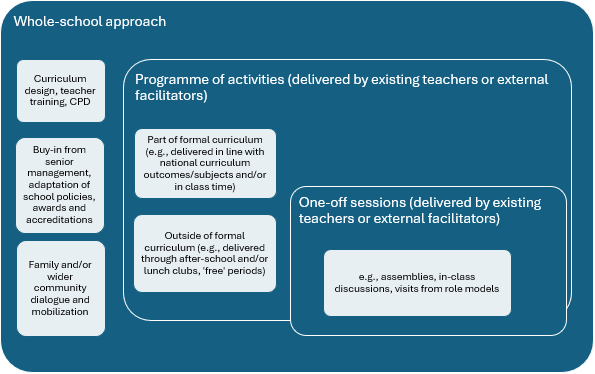
Figure 1: Example of a ‘whole-school approach’, from Jere et al. 2026
Associate Professor Catherine Jere of the School of Global Development at the University of East Anglia, who led the scoping study research, said: “By analysing these six programmes we were able to identify not only similar patterns in drivers, but also clear patterns in approaches to include boys. Where this works, we not only see greater engagement of boys, but a positive shift away from gender stereotypes and norms that restrict both boys’ and girls’ learning and attainment, highlighting the potential of schools to become drivers for more inclusive societies.”
Engaging teachers, families and communities improves outcomes
A consistent finding is that programmes were most successful where interventions were incorporated across whole-school programmes and where gender was embedded across the curriculum and community. This meant training teachers and including parents and community leaders in educational programmes and activities.
Associate Professor Victoria Cann of the Interdisciplinary Institute for the Humanities at the University of East Anglia, one of the report’s authors, said: “What these overlapping pressures show is that holistic approaches are required to make the most difference. For instance, not just thinking about the school but also family members, role models, curriculum content, and considering safe spaces where boys could talk about issues in their life”
The report offers 10 recommendations based on the findings, which have been shared with policymakers and ministries of education and are already being incorporated into research and programming in key countries across the world.
The project was funded through the Global Partnership for Education’s Knowledge and Innovation Exchange (GPE-KIX), in collaboration with the International Development Research Centre (IDRC), Canada. The study was jointly produced by UNESCO, Equimundo (an organisation focused on masculinities and gender equality) and the University of East Anglia (UEA), with UEA’s Centre for Social Research partner in Malawi (University of Malawi)
The review included Life Skills for Equality Project/LSEP (Cambodia, Room to Read), Gender Equity Movement in Schools/GEMS (India, ICRW), Very Young Adolescence 2.0 / VYA 2.0 (Malawi, Equimundo / CAVWOC), Happy Schools (Portugal, Universidade Aberta / Ministry of Education), Lifting Limits (UK), and Connect with Respect/CwR (Zambia, UNESCO).
Considering your options for September? Clearing is your chance to find the course that fits you.
Be ready for results day with the latest updates. Register for Clearing updates.
Related Articles
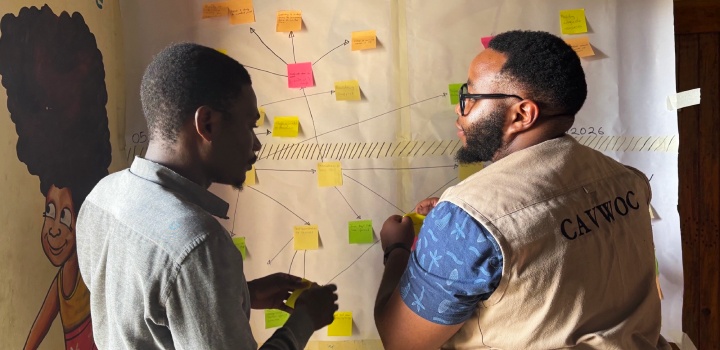
How gender-transformative teaching could help improve boys’ engagement and learning
Research from UEA's School of Global Development is helping understand and address boys’ disengagement from education. Ensuring equal gender engagement in education is expected to improve education outcomes and contribute to more inclusive societies.
Read more
Inequalities grow in cities as heat and daylight patterns transform urban life
Changing patterns of heat and daylight in urban environments are creating growing inequalities, with climate-related shifts reshaping daily life and disproportionately affecting vulnerable communities.
Read more
Indigenous knowledge key to building healthier and more sustainable food systems
Traditional and Indigenous knowledge could play a vital role in addressing some of the world's most pressing challenges, including climate change, biodiversity loss, and poor health and nutrition, according to a new review of current research.
Read more