How gender-transformative teaching could help improve boys’ engagement and learning
By: Matthew Heaton
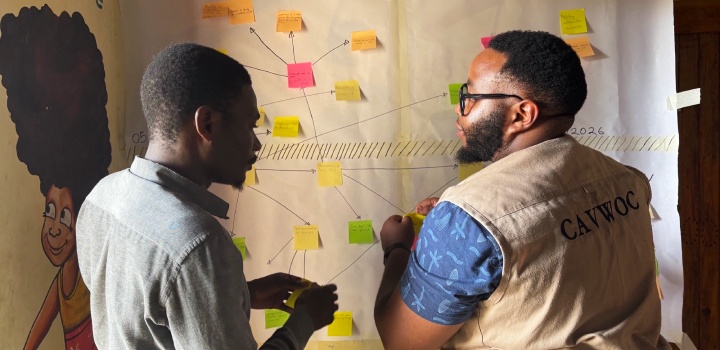
Research from UEA's School of Global Development is helping understand and address boys’ disengagement from education across Cambodia, Malawi and Lesotho, and working with Ministry officials and curriculum developers to support inclusive education.
Findings from this project are being used to create global guides and policy recommendations to train teachers on gender transformative teaching, with a focus on masculinities. Ensuring equal gender engagement in education is expected to improve the outcomes for those involved and contribute to more inclusive societies.
Education is associated with benefits to health, livelihood opportunities and general fulfilment, which is why a major achievement of the previous few decades has been to raise school attendance for girls globally. While girls still face difficulties accessing education in the first place, a new concerning trend is that boys in some Lower and Middle Income Countries (LMICs) appear to be increasingly disengaging from education, struggling in their grades and dropping out. To address this, researchers in DEV have been working with UNESCO and Equimundo to understand how to engage boys in education and how schools can promote gender equality.
Boys showing a lack of interest in school might not sound new, and indeed this has been a phenomenon in Higher and Middle-Income Countries for the last two decades, but until recently this was rarely the case in LMICs. Against a backdrop of limited meaningful educational access for many young people in LMICs, girls have long been disproportionally disadvantaged. Yet, in recent years, whilst girls' enrolment and completion have shown much improvement in many LMICs, boys in contrast, are more likely to repeat grades, struggle with gaining the skills they need, and drop out entirely. Consequently, there is a concern that some boys, particularly those from the poorest households, are being left behind.
There are many factors that are known to hinder school attendance and attainment, especially in contexts of poverty, but a consistent factor can be harmful and restrictive gender norms that influence how schooling is valued and who participates. The new UNESCO-led research “lifting barriers: Educating boys for gender equality” works closely with schools and pupils to understand how expectations around boys and masculinity affect schooling engagement. Drawing on the gender-transformative approaches that successfully identified barriers and encouraged schooling in girls, the new project takes a similar approach to help support boys.
“We’re taking much of the same gender-sensitive approaches that have been so successful in supporting education for girls and using it now to understand gender norms that push boys to disengage and drop out of school early”, said Associate Professor Catherine Jere.
The project works across Cambodia, Lesotho and Malawi to build evidence for how education systems can challenge gender norms and encourage schooling. Despite the geographic distance of these countries, the trend of disengagement of boys from education is a new and consistent trend across all three areas.
The project takes a participatory approach to work with schools and students, to hear directly from students how they view education and their involvement. This moves away from simply observing young individuals, to having them as central in guiding positive change.
“We are working with the schools and their community and the boys themselves to learn firsthand how they feel about schooling”, said Associate Professor Jere. “The benefit of this approach is clear as the boys are keen to get their voices to the forefront to share the identities they feel and the pressures on them.”
There are several pressures boys feel that discourage schooling. One such challenge for boys in these contexts is a feeling of responsibility to be a breadwinner in the household. Such expectations cause a conflict when the long-term household returns from education are less tangible compared with dropping out and obtaining immediate but low-paying work.
These pressures mean that boys don’t see the relevance of studying, when finding immediate work aligns more readily with the gender norms of what it means to be a man. Yet research shows that boys who leave school early are actually at greater risk of long-term unemployment, association with criminal activities and greater likelihood of poor health. Thus, challenging harmful and restrictive gender norms that contribute to boys' disengagement could make schools more inclusive spaces that ultimately lead to safer, productive and healthier lives.
“There is a rich evidence base from gender-based interventions that have successfully raised participation of girls in schools”, said Associate Professor Jere, “and we’re learning from these approaches, and our participatory work with boys, schools and communities, to inform, develop and pilot an intervention model in schools.”
The project is currently completing its third year, with teachers and community-based facilitators in 11 primary schools across four districts in Malawi trained in a gender-transformative intervention to address boys' disengagement from education and build inclusive learning environments. This intervention is currently being piloted with upper primary classes and will run for a full school year.
The intervention acknowledges the needs of boys and girls through a curriculum that opens up dialogue around gender norms and stereotypes, including harmful masculinities, setting up boys clubs, and working with pupils and parents to understand how such norms affect attitudes to education. These activities are expected to change attitudes and contribute to improved participation in education, as well as address gender equality more broadly. The findings will inform similar interventions across Cambodia and Lesotho. Other countries, such as Namibia, have also expressed interest in rolling out such initiatives.
Associate Professor Jere said: “It’s important to note, we don’t see this as a zero-sum game: Supporting boys’ engagement in education does not undermine girls’ advancement. Instead, it’s part of a transformative approach where everyone benefits.”
Ensuring boys stay in school also offers the potential to promote gender equitable and inclusive societies. Research suggests that boys who complete secondary education are more likely to challenge harmful gender norms and practices that constrain women. The project therefore aims to ensure boys complete schooling, but also to take a ‘whole-school’ approach to engaging pupils in conversations about gender norms to promote gender equality in and through education.
“We want to keep boys in school to raise their chances of a healthy and fulfilling life’, said Associate Professor Jere, ’and in doing so, we can help schools become catalysts for gender equality.”
Three national adaptations for Cambodia, Lesotho and Malawi have been developed through a consultative process at the country level. Through building these guides, DEV, UNESCO and EQUIMUNDO plan to share these lessons for schools globally.
This work was supported by the Global Partnership for Education Knowledge and Innovation Exchange (GPE KIX), a joint endeavour with the International Development Research Centre (IDRC), Canada.
For more information on the project, please visit the UNESCO Lifting Barriers pages or contact Catherine Jere.
Related Articles

Inequalities grow in cities as heat and daylight patterns transform urban life
Changing patterns of heat and daylight in urban environments are creating growing inequalities, with climate-related shifts reshaping daily life and disproportionately affecting vulnerable communities.
Read more
Indigenous knowledge key to building healthier and more sustainable food systems
Traditional and Indigenous knowledge could play a vital role in addressing some of the world's most pressing challenges, including climate change, biodiversity loss, and poor health and nutrition, according to a new review of current research.
Read more
How beans and lentils could help future‑proof UK farming
A University of East Anglia project will investigate whether re-introducing edible legumes into farming rotations of wheat, oil seed rape and potatoes could help make farming systems more resilient to climate change.
Read more