How beans and lentils could help future‑proof UK farming
By: Communications
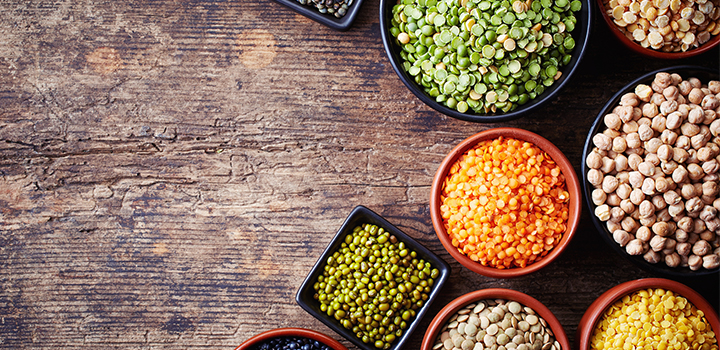
A University of East Anglia project will investigate whether re-introducing edible legumes into farming rotations of wheat, oil seed rape and potatoes could help make farming systems more resilient to climate change.
A researcher from Malawi will use her expertise of farming in Africa to explore the potential of crops such as beans, peas and lentils.
It is hoped the move could reduce reliance on fertilisers, improve soil health and diversify crop rotations in one of England’s most productive farming regions.
Global experience helping local UK farmers

Image: Madalitso Mgunda
Madalitso Mgunda, from UEA’s School of Global Development, brings more than six years’ experience in sustainable agriculture and food systems in Malawi, including work with the World Food Programme supporting legume value chains.
Her project will focus on a central question - what would make edible legumes a more viable and attractive option within Norfolk farming systems?
She said: “The UK's biggest crops - including wheat, barley, and potatoes - are highly vulnerable to climate change. Extreme heat, spring drought unseasonal flooding, together with changing disease and pest risks pose a real threat to the agricultural heartlands of East Anglia, Norfolk and the South East - resulting in major yield fluctuations and lost revenue.
“Legumes were used extensively in the past to fix nitrogen in the soil until the mid-20th Century when synthetic chemical fertilisers became widely available. In many cases, edible legumes have been completely dropped from farm rotations, replacing them with continuous intensive cereal and potato cropping.
“Legumes have enormous potential to contribute to more resilient farming systems, healthier diets and lower environmental impacts, but their production remains limited.
“This research will explore the realities facing Norfolk farmers and the wider supply chain, helping to identify what changes would be needed to make legume production a more viable option in the future.”
Madalitso’s research will combine interviews with farmers, processors and industry stakeholders with climate suitability data to understand both the opportunities and barriers associated with legume production.
The postgraduate student is the recipient of the 2026 Norfolk International Scholarship, announced at the Royal Norfolk Show in late June.
Collaboration across research and industry
As part of the scholarship, Madalitso will work with researchers at UEA’s Norwich Institute for Sustainable Development (NISD), contributing to wider research on climate resilience, food systems and crop diversification, and will undertake a field visit to comparable legume systems in Europe.
Prof Nitya Rao, Director of NISD, said: “Legumes offer significant opportunities to improve environmental sustainability and farm resilience, yet questions remain about how these crops can fit within existing systems.
“This project will provide valuable insights into the practical conditions needed to support wider adoption.”
Research focused on real-world impact
The Norfolk International Scholarship is delivered in partnership with the Royal Norfolk Agricultural Association (RNAA), the Norwich Institute for Sustainable Development, and the JC Mann Charitable Trust.
It supports research that addresses key challenges facing agriculture while delivering practical benefits for Norfolk’s farming community.
Although legumes offer clear environmental and agronomic advantages, they currently make up only a small proportion of UK arable crops. This project will examine the conditions needed to support their wider adoption.
Mark Nicholas, Chief Executive of the RNAA, said: “Understanding how alternative crops such as legumes could contribute to resilient and profitable farming systems is highly relevant to Norfolk’s agricultural sector.
“We are proud to support research that is both academically rigorous and directly connected to the needs of our farming community.”
Considering your options for September? Clearing is your chance to find the course that fits you.
Be ready for results day with the latest updates. Register for Clearing updates.
Related Articles

Responsible innovation key to smart farming
Responsible innovation that considers the wider impacts on society is key to smart farming, according to academics at the University of East Anglia (UEA).
Read more
Doctors use Virtual Reality to tackle mental health crisis in farming communities
A new initiative has been launched that uses Virtual Reality (VR) to raise awareness and understanding of mental health in UK agriculture.
Read more
Inequalities grow in cities as heat and daylight patterns transform urban life
Changing patterns of heat and daylight in urban environments are creating growing inequalities, with climate-related shifts reshaping daily life and disproportionately affecting vulnerable communities.
Read more