How the BFG’s Gobblefunk puts AI translation to the test
By: Communications
What happens when a giant speaks gibberish - and AI tries to make sense of it in another language?
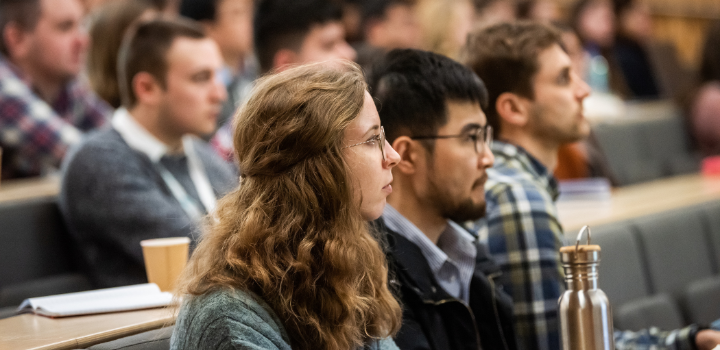
This and many other questions will be explored at an international conference on Creative Translation in the Age of AI at the University of East Anglia, which kicks off today.
More than 50 experts in literary translation will descend on the Norwich campus, which is home to the British Centre for Literary Translation.
Among them is researcher Ilaria Parini from the University of Eastern Piedmont, Italy, whose research focuses on the deliciously tricky world of Roald Dahl’s The BFG - where words don’t just mean things - they wiggle, twist and “squiffsquiddle” their way into being.
Prof Duncan Large, of the British Centre for Literary Translation at UEA, said: “Dahl invented nearly 500 words across his career, and in The BFG he goes further, creating an entire playful language “Gobblefunk” built from sounds, jokes, and linguistic mischief.
“Translating that into another language is no ordinary task. And it’s not something that AI copes well with.”
Parini will look at how Italian translators have risen to that challenge, reshaping Dahl’s nonsense into something equally delightful for young readers – comparing this with AI’s efforts.
“Translation isn’t just about meaning - it’s about humour and imagination,” said Prof Large.
“Can machines handle whimsy? Can they recreate the joy of a word that never existed until Dahl dreamed it up? Or does true creativity still belong to the human mind?”
“This is a story about language at its most playful - and a reminder that sometimes, the hardest words to translate are the ones that mean the most fun.”
The conference has been organised by The Petra-E Network (Plateforme Européenne pour la traduction littéraire, the ‘E’ stands for Education). It will see experts from around the world gather at UEA, hosted by the British Centre for Literary Translation.
Prof Large said: “There is a lot of talk right now about the impact of generative AI on the world of literary translation, and many translators have been understandably circumspect.
“But as the perceived threat of AI intensifies, so too does interest in the uniquely human factors that translators bring to their work.
“This conference focuses on the human creativity that is resistant to the rise of AI - on the extent to which the literary translator can be considered an original author, how creativity and experimentation can be cultivated in the classroom, how a translator’s creativity might need to be constrained and how it thrives on constraints.”
Other conference highlights include Eugenia Loffredo, lecturer in Translation Studies at UEA’s School of Media, Language and Communication Studies, who will speak about creativity in the Age of AI.
She said: “Human creativity remains central to translation despite advances in AI. While generative AI can produce texts that mimic creative translations, human lived experience and judgement continue to define truly creative translation in an evolving digital landscape.”
Meanwhile Heidi Clark, also from UEA, will lead a session on inventing languages and the limits of untranslatability - focusing on Taiwanese writer Li Kotomi’s ‘untranslatable’ novel Island Where Spider Lilies Bloom.
“This novel contains two invented languages - a ‘purified’ version of Japanese stripped of Chinese-language influence, and a pidgin formed of Japanese and Taiwanese Mandarin,” she said.
But her own creative solutions, including the use of Old English alphabet and compounding words, are ones that only a human could come up with.
“My creative approach involves making complex decisions about how to represent difference, including when to leave things unclear or how to shape language responsibly. This process draws on reader experience, cultural understanding, and ethical judgement - and remains something only humans can do.”
The Creative Translation in the Age of AI Conference runs from Thursday, May 28-29, at the University of East Anglia.
For more information, visit: https://petra-education.eu/3rd-international-conference/
Related Articles

Cultural leaders from Peru and Brazil bring climate justice and Indigenous rights campaign to Westminster
Indigenous women leaders and LGBTQIA+ campaigners from Peru and Brazil are in London this week as part of a University of East Anglia project using creative storytelling to drive climate justice and Indigenous rights advocacy.
Read more
Why choosing the next James Bond matters beyond cinema, according to UEA expert
Following World James Bond Day earlier this week, speculation is mounting over who will become the next James Bond, with names including Jack Lowden, Callum Turner and Aaron Taylor-Johnson linked to the iconic role.
Read more
UEA journalism team recognised with national teaching excellence award
A University of East Anglia (UEA) journalism team helping students build real-world skills has been recognised with a prestigious national award.
Read more