From English Literature to Artificial Intelligence: How a UEA graduate helped shape the future of AI
By: Communications

A University of East Anglia (UEA) graduate who is now helping to shape the global future of artificial intelligence has spoken about the amazing value of his humanities degree in one of the world's fastest-growing technology sectors.
Jack Clark, co-founder of AI company Anthropic and a graduate of UEA's English Literature with Creative Writing course, has said his degree has proved "extremely relevant" to his work in artificial intelligence, challenging assumptions that impactful careers in technology are only open to those with technical or scientific backgrounds.
Clark studied at UEA, graduating in 2009, and was actively involved in student journalism during his time in Norwich, progressing from reporter to arts editor and news editor on the student newspaper Concrete.
Today, he is one of the leading figures in the global AI sector. After a career in technology journalism and policy, including roles at Bloomberg and OpenAI, he helped found Anthropic in 2021.
The company is best known for Claude, one of the world's leading AI assistants, and has become a major voice in conversations around the safe and responsible development of artificial intelligence.
Speaking at Semafor's World Economy Summit, Clark reflected on how studying English Literature at UEA equipped him with skills that have become increasingly valuable in the age of AI.
"What turned out to be useful is that I got to learn a lot about history and a lot about the kind of stories that we tell ourselves about the future," Clark said at the summit. "That's turned out to be extremely relevant for AI in a way that I think people wouldn't have predicted."
At the event, Clark argued that some of the most valuable degrees are those that encourage students to think across disciplines, analyse complex ideas and understand different perspectives.
He said the most important skills are "knowing the right questions to ask" and being able to synthesise insights from across a wide variety of subjects.
His comments come at a time when advances in artificial intelligence are prompting debate about the future of work and the skills employers will need.
Rather than diminishing the value of humanities subjects, Clark suggested that understanding our history, culture, ethics and human behaviour will become even more important as AI systems become increasingly capable of performing data-heavy tasks, shifting our human work toward complex problem-solving and interpersonal connection.
Catherine Richardson, Pro-Vice-Chancellor for the Faculty of Arts and Humanities at UEA, said: “Jack's achievements demonstrate the significant contribution humanities graduates make to some of the most important developments shaping our world today.
“As artificial intelligence continues to transform our society, his career is a powerful reminder that a training in literature, history and culture helps us to understand what it is to be human, and can help us make sense of complex technological change.
“Understanding people, ethics, context and the stories we tell is every bit as important as understanding the technology itself.”
Thinking about studying at UEA?
Discover our award-winning campus, meet current students and staff, and find out what life at UEA is really like at our upcoming Undergraduate Open Day:
Saturday 28 November 2026
Related Articles
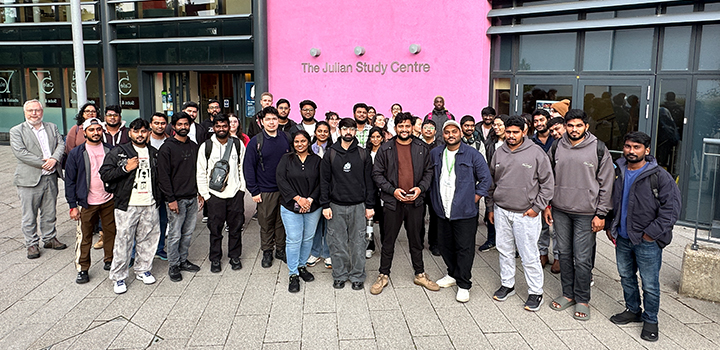
UEA Master's students begin industry placement preparation
More than 150 postgraduate students gathered on campus this week for the first workshop supporting the University of East Anglia’s new Master's degrees with a placement year.
Read more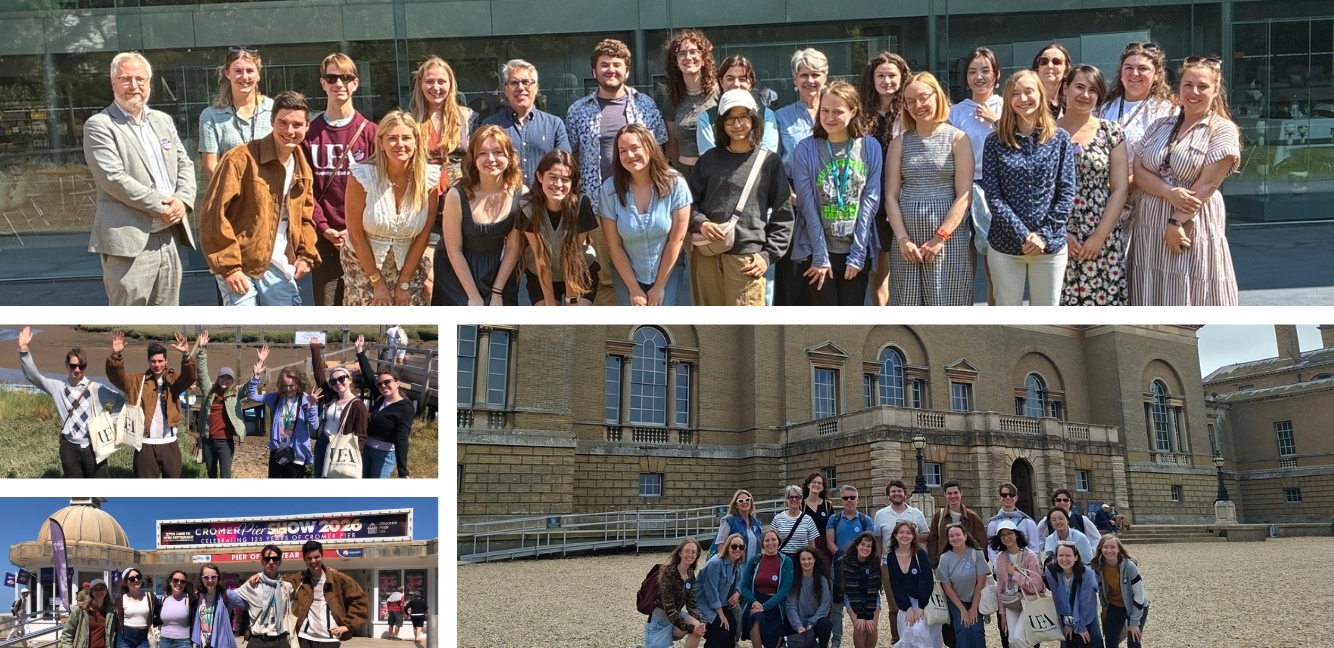
Applications open for UEA’s 2027 Creative Writing Summer School
Applications are now open for the 2027 Creative Writing Summer School at UEA, following the success of its inaugural programme this summer.
Read more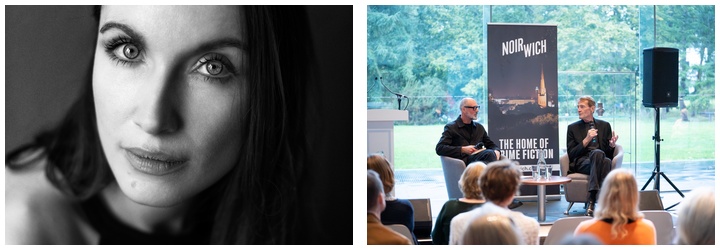
Bestselling novelist Nuala Ellwood appointed Lee Child Professor of Crime Writing at UEA
Nuala Ellwood will bring her experience as a bestselling novelist, lecturer, mentor and public speaker to the University of East Anglia's MA Crime Fiction when she joins the University in January 2027 as Lee Child Professor of Crime Writing.
Read more