Exposure to wildfires surged in past two decades - despite global fall in burned area
By: Communications
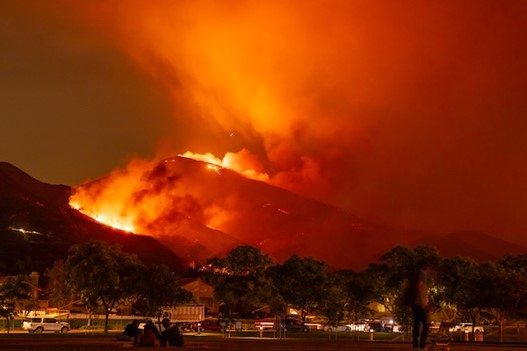
An international team of scientists has spotted a contradiction in worldwide wildfire trends: despite a 26 per cent decline in total burned area from 2002 to 2021, the number of people exposed to wildfires has surged by nearly 40 per cent.
The study, published today in Science, also revealed that while high-profile wildfire disasters in the United States, Canada and Australia often dominate headlines, 85 per cent of all human exposures to wildfires during that period occurred in Africa.
Just five central African countries – Congo, South Sudan, Mozambique, Zambia and Angola – accounted for half of all global human exposure to wildfire, primarily because a large amount of global burned area occurs on the continent. In contrast, the US, Europe and Australia collectively comprised less than 2.5 percent of the total.
Populations worldwide affected
The researchers, including Dr Matthew Jones from the University of East Anglia (UEA) in the UK, analyzed global population data and more than 18.6 million fire records from 2002 to 2021 to find that an estimated 440 million people worldwide were exposed to a wildfire encroaching on their home during this period – a number roughly equivalent to the entire population of the European Union.
They discovered that human exposure to wildland fire increased by 7.7 million people, an average of 382,700 per year during the study period. This surge in human exposure was driven mainly by population growth and migration into fire-prone landscapes.
The team revealed a significant rise in the intensity of wildfires in North and South America. This is linked to the climate change-driven amplification of ‘fire-prone weather’, due to the frequency of extreme heat, lower humidity and strong winds.
Dr Jones, Senior Research Fellow with the Tyndall Centre for Climate Change Research at UEA, said the study showed that growing exposures to intense wildfires are outpacing exposures to low-intensity fires.
“The apparent increase in damaging and destructive wildfire impacts on society has until now seemed perplexing because the area burned by fires globally has been falling,” said Dr Jones.
“By closely analysing the shifting geography of both fire and population, this study brings vital clarity – our work shows that wildfires really are becoming more frequent and intense in populated areas. These changes bring danger to life, damage to property, and threat to livelihood."
Frequency of extreme fire conditions increasing
Extreme fire weather has grown by more than 50 per cent over the past four decades globally.
When combined with human activities such as land development and historical fire suppression practices, this trend has led to an escalating risk of destructive fires in regions like California. The frequency of conditions conducive to extreme-impact wildfires - like the 2025 Los Angeles fires - quadrupled from 1990 to 2022 across the state.
In Europe and Oceania, the study noted a decline in wildfire exposures, mainly because of population shifts from rural to urban areas. This highlights how both social and environmental factors play critical roles in shaping wildfire risk.
“The global paradox of decreased burn area and increased human impacts we uncovered… is due largely to an increasing overlap between human settlements and fire-prone landscapes,” said co-author Amir AghaKouchak, UC Irvine Chancellor’s Professor of civil and environmental engineering.
“As climate change intensifies fire weather and global populations continue to expand into fire-prone zones, proactive mitigation will be increasingly critical to reduce the risk of future wildfire disasters.”
Underscoring a growing human vulnerability to wildfires, the research emphasizes the urgent need for proactive local and regional mitigation strategies to protect communities. These include vegetation management techniques like prescribed fires, public education and engineering solutions to reduce human-caused ignitions.
In addition, future increases in exposures linked to rising fire weather can be minimized by governments delivering on the agreements made under the Paris Agreement, to limit warming to 2°C.
The study was funded by the US National Science Foundation and the UK Natural Environment Research Council (NERC).
‘Increasing global human exposure to wildland fires despite declining burned area’ is published in Science on August 21.
If you are looking to start university in September 2025 and still considering your options, then consider joining a top 25 university this September through Clearing.
Related Articles
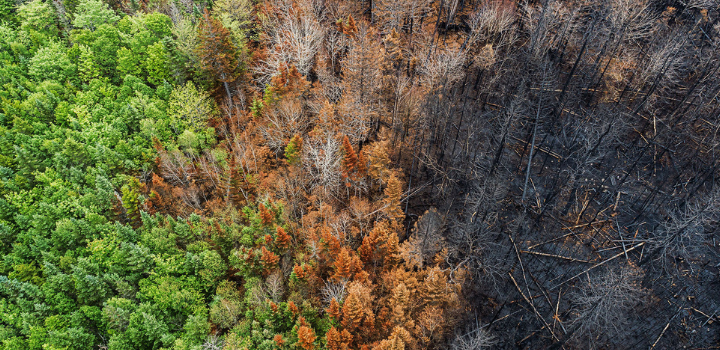
Understanding wildfires: An interview with Dr Matt Jones
Dr Matt Jones (NERC Investigator, School of Environmental Sciences) discusses the causes and effects of wildfires, and what we might do to combat them, in a new ClimateUEA interview.
Read more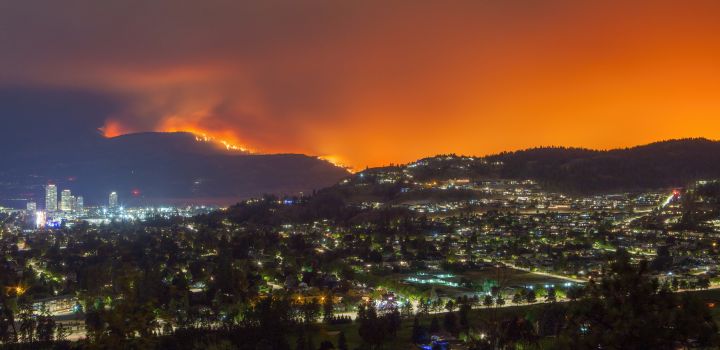
Willis and the University of East Anglia launch wildfire risk partnership in response to escalating global threat
The University of East Anglia has launched a major new partnership with Willis, a WTW business, to advance global understanding of wildfire risk in the face of intensifying fire seasons.
Read more
Climate change raised the odds of unprecedented wildfires in 2023-24
Unprecedented wildfires in Canada and parts of Amazonia last year were at least three times more likely due to climate change and contributed to high levels of CO2 emissions from burning globally, according to a new systematic annual review.
Read more