BBC film with UEA experts working on a potential ‘game-changer’ in the fight against prostate cancer
By: Communications
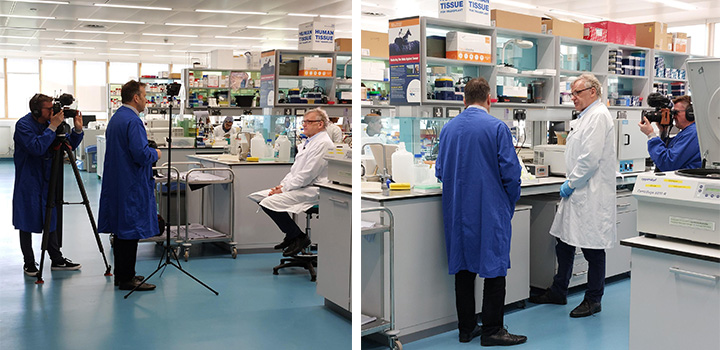
A film crew from BBC Look East recently visited the Bob Champion Research and Education Centre to interview Professor Colin Cooper about developments in the diagnosis of prostate cancer that are being labelled a potential ‘game-changer’.
The current PSA test, which requires a blood sample, is accurate at detecting the cancer which around one in eight men in the UK will develop, however it isn’t able to determine the severity of the cancer, and whether treatment is required, with many men able to live with the more harmless form without intervention.
The two key developments from the team at UEA, which includes Prof Colin Cooper and Dr Rachel Hurst, is a home urine-testing kit which is able to identify the existence and severity of prostate cancer, called the Prostate Urine Risk (PUR) test, and a type of biopsy analysis called the ‘tiger test' which explores a person’s genetics for clues to more aggressive types of the disease. 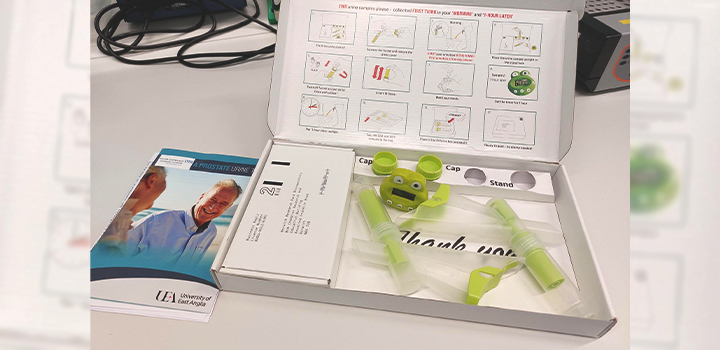 Image: The Prostate Urine Risk test which can be completed in the comfort of the home
It is hoped the PUR test, which is currently going through accreditation, will become available next year, with a regional trial in the works at the Norfolk and Norwich University Hospital, before possibly being expanded UK-wide afterwards.
The exciting developments at the Bob Champion Research and Education Centre over the past eight years have been made possible thanks to £8m in grants and charitable donations, much of which has been driven by the work of the Development, Alumni and Campaigns team.
Related Articles
UEA secures share of £90 million to train next generation of medical researchers
The University of East Anglia will help train a new generation of researchers to tackle some of the biggest challenges facing human health – thanks to funding from the Medical Research Council (MRC).
Read more
Norwich Medical School graduate ready to whisk up success on Bake Off
The UEA community is hoping Norwich Medical School graduate Dr Yannis has the perfect recipe for Great British Bake Off glory.
Read more
Scientists uncover genetic fingerprints linked to aggressive prostate cancer
Scientists have uncovered new clues that could help identify which prostate cancers are most likely to spread, and which are less likely to become life-threatening, in the first major findings from an international project co-founded by UEA.
Read more